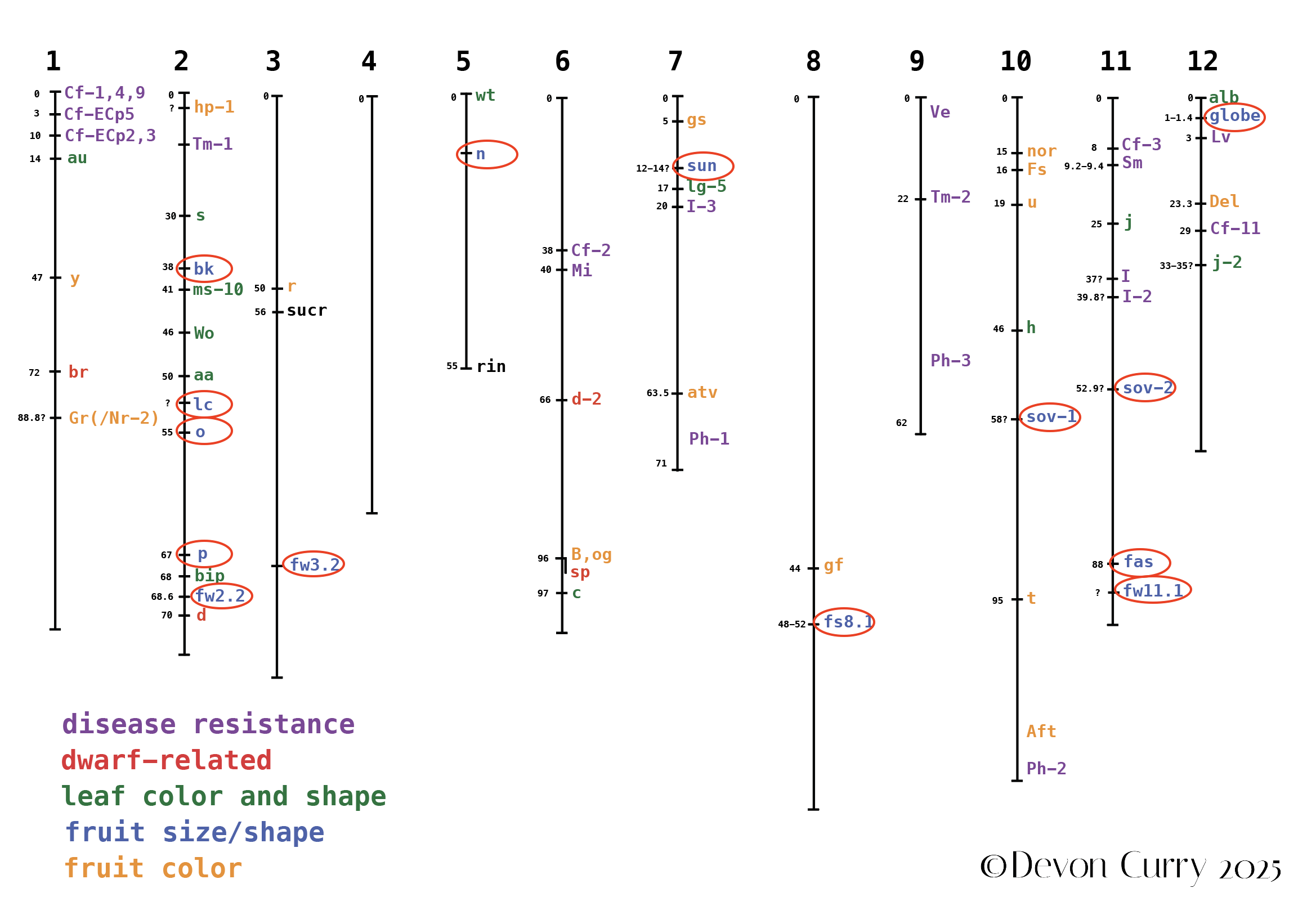
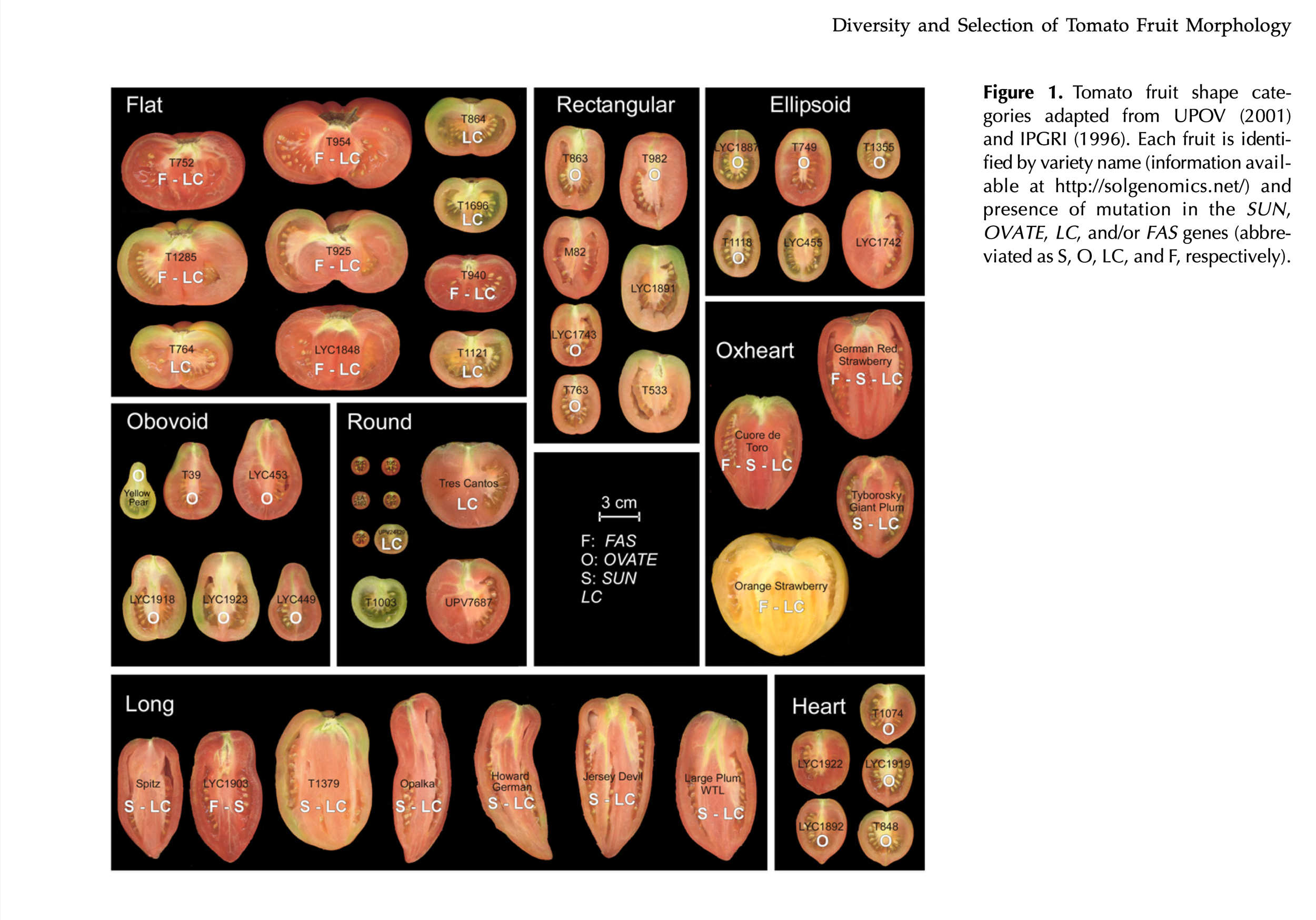
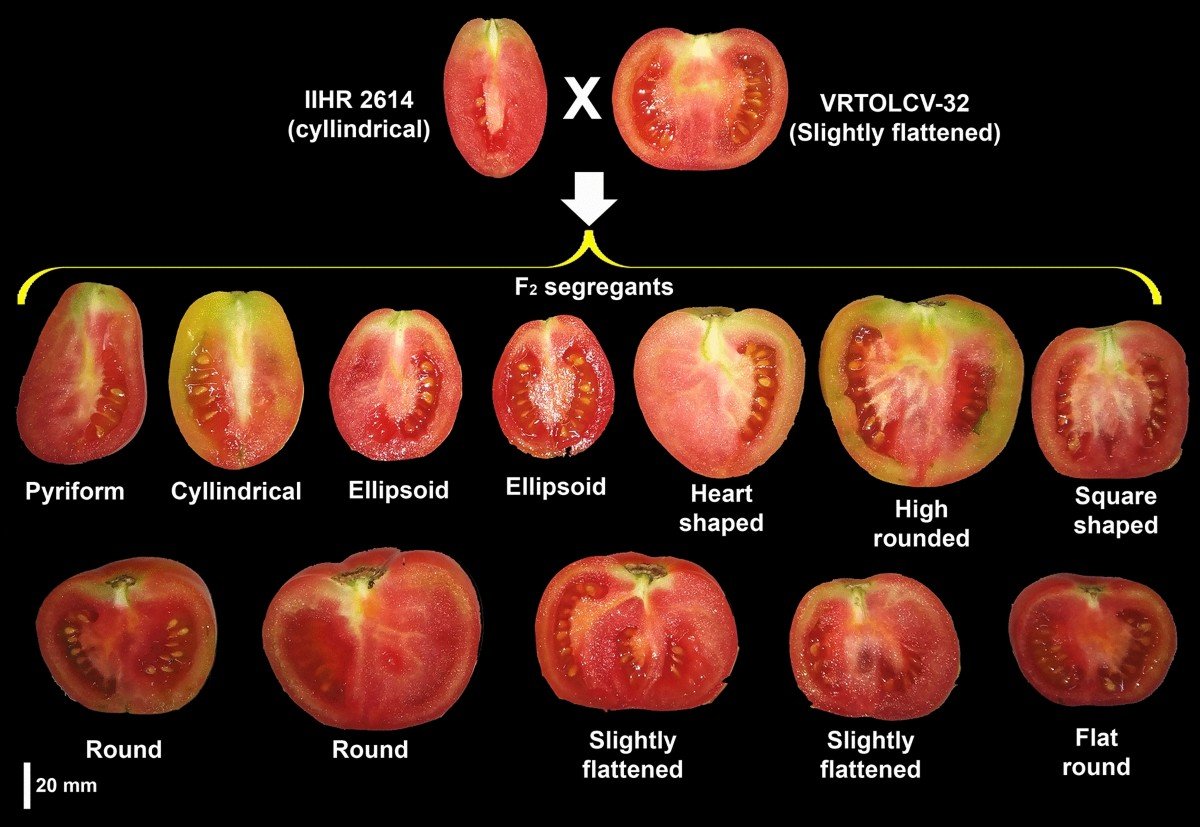
These genes influence the size and shape of the fruit.
Keeping in mind that all tomatoes evolved from the pea-sized common ancestor of Solanum pimpinellifolium (Currant tomato), each variation in shape is from a different gene.
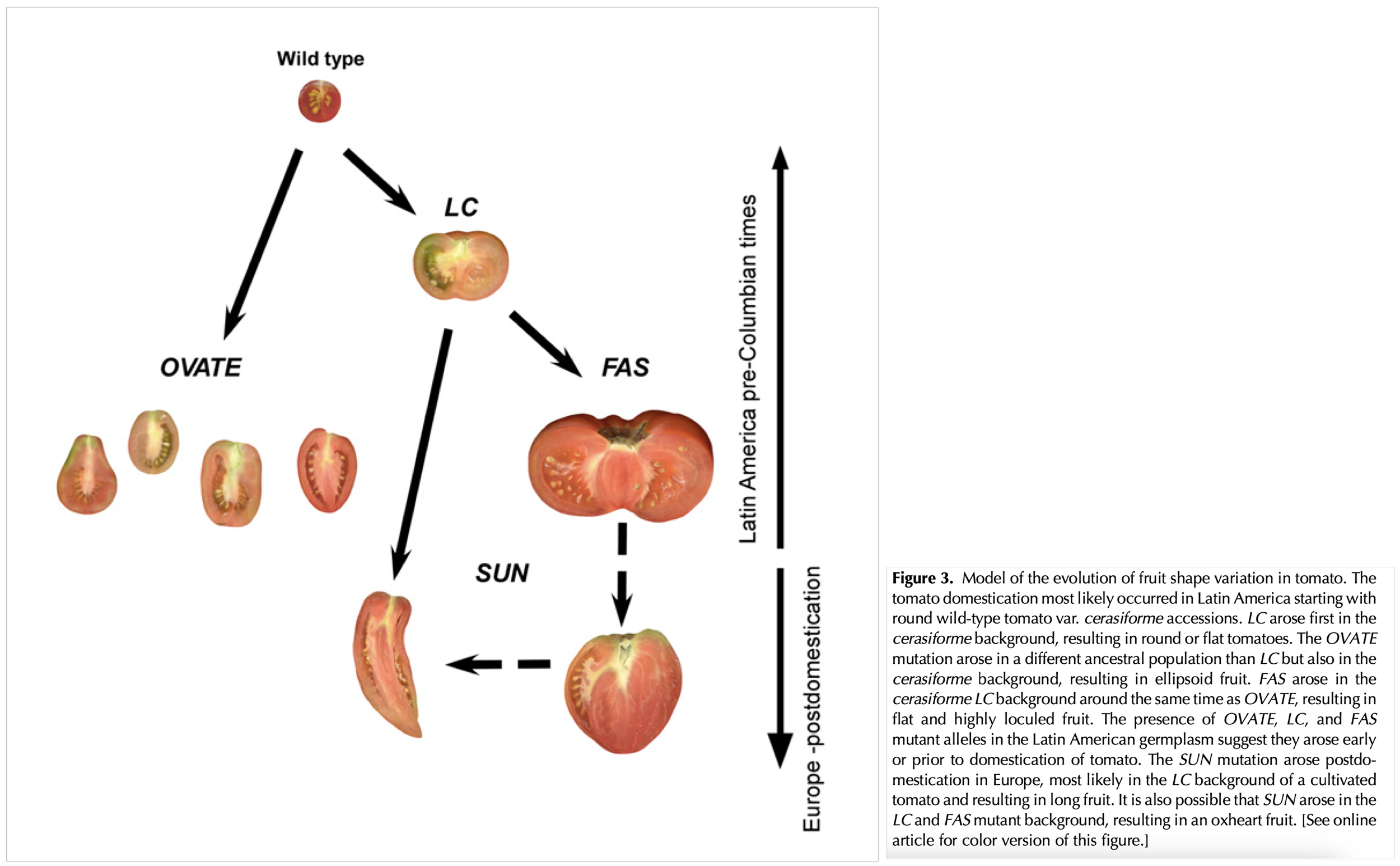
The first shape genes emerged through natural selection or pre-European domestication.
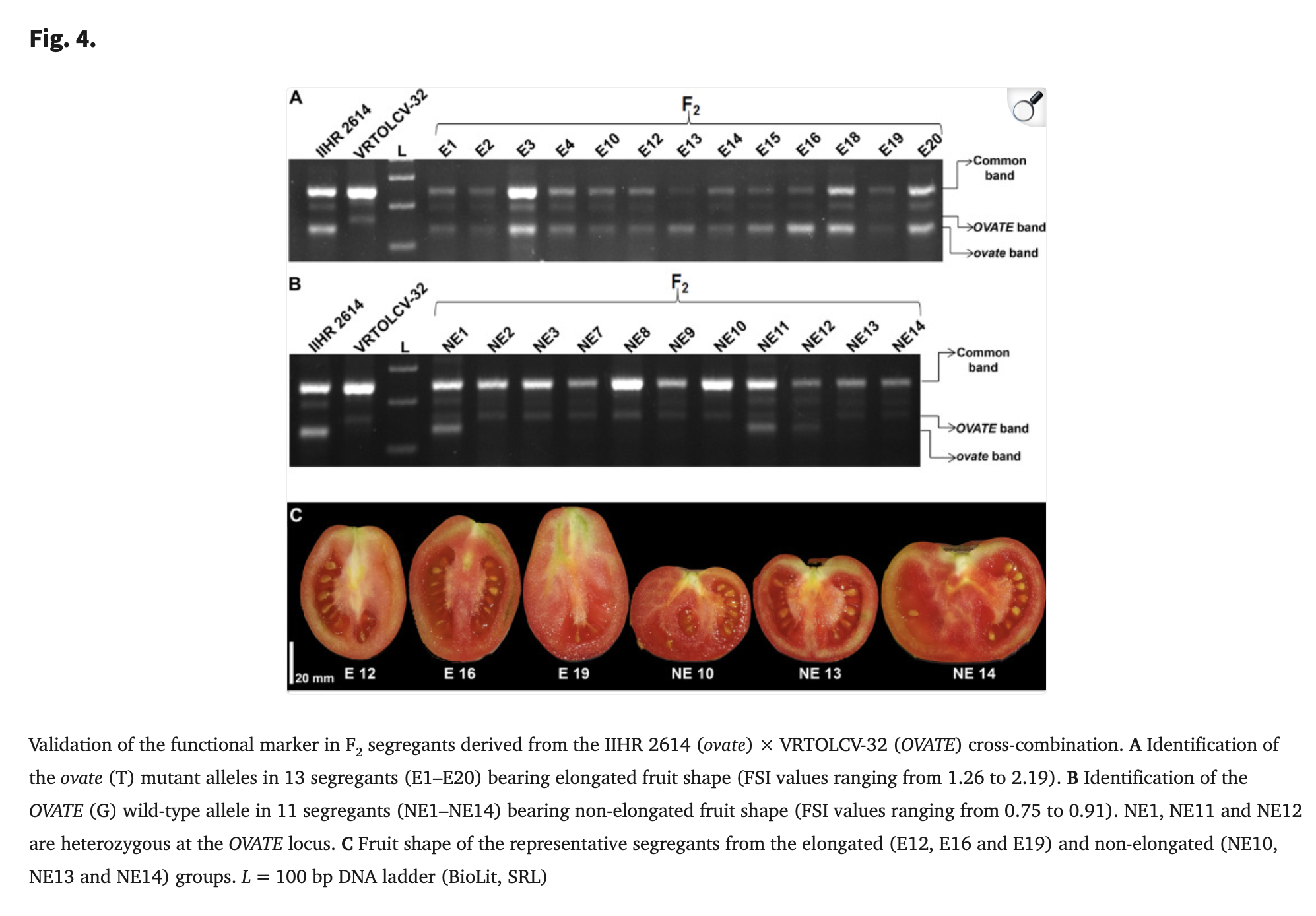
(0) - ovate (which actually has an effect on firmness and shelf-life),
(lc) - locules, more locules;
(fas) - fasciated, merged locules
(sov-1) - suppressor of ovate- creates pear-shape in combination
(sov-2) - suppressor of ovate 2- creates more elongation in combination
Then post-European domestication:
(sun) - elongation
(and (sun) together with (lc) and (fas) = heart-shape)
(fs8.1) fruit shape 8.1- in the processor tomato lines they identified and bred in this gene for the squareness it provides in combination with (o) ovate, desirable to keep them from rolling off conveyor belts.
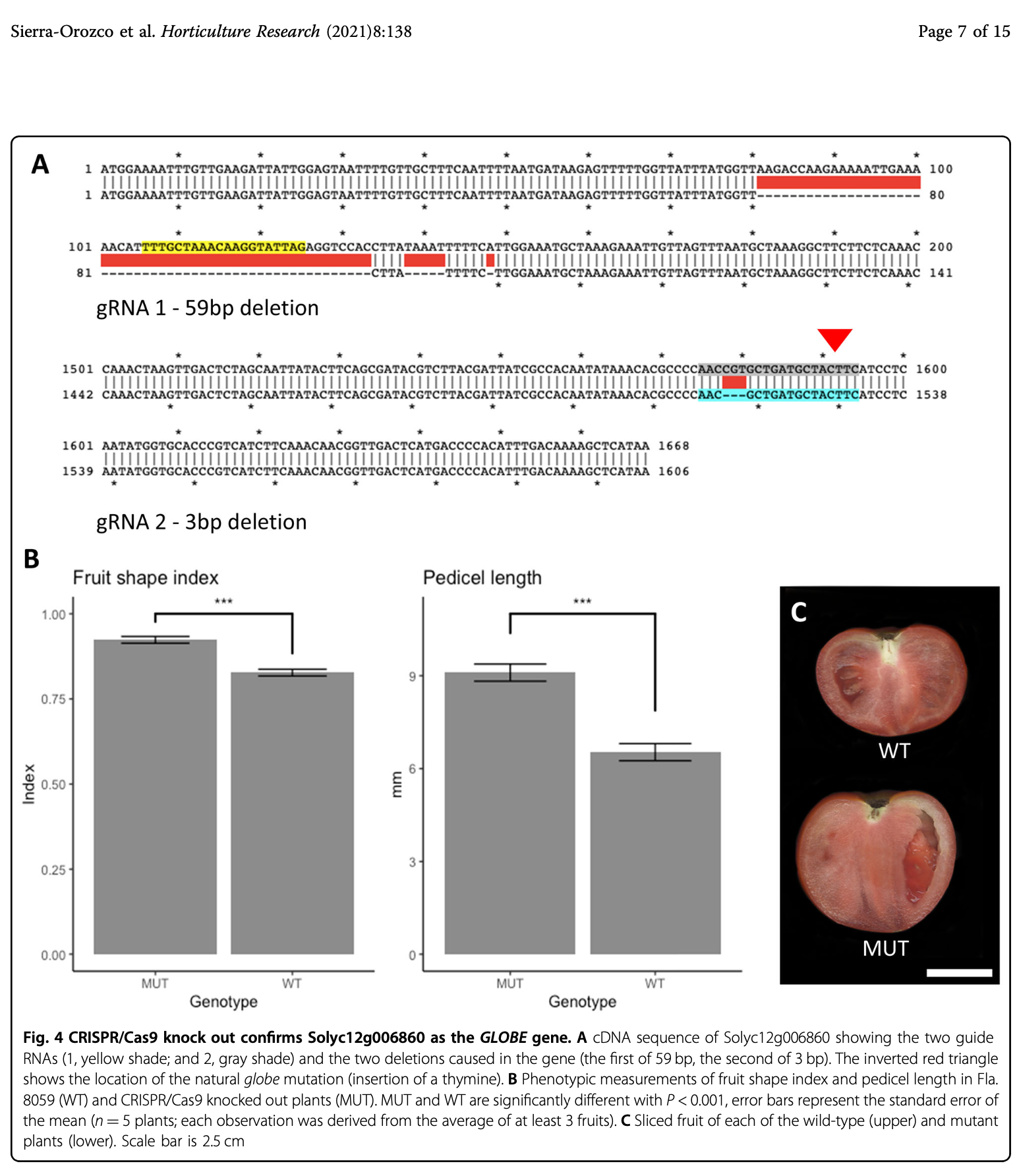
(globe) - rounded bottom instead of flat; while a round shape was selected for in varieties like Livingston’s Globe, this particular gene was found to be a very recent development. Of more than 500 varieties tested, only 3 had the gene, all modern breeding lines. It causes the shape to be more round and the firmness to increase.
It’s apparent from detailed genetics studies that track effects of hundreds of genes that it’s a bit simplistic to attribute too much to a particular gene.
QTL - quantitative trait loci - assign percentage determination for each gene, so that the role of each gene can be understood more holistically, keeping in mind that other genes are in play, and that they can have additive or multiplicative effects.