This grew out of a talk I had the opportunity to give to Novella Carpenter’s Urban Agriculture class at University of San Francisco in 2026.
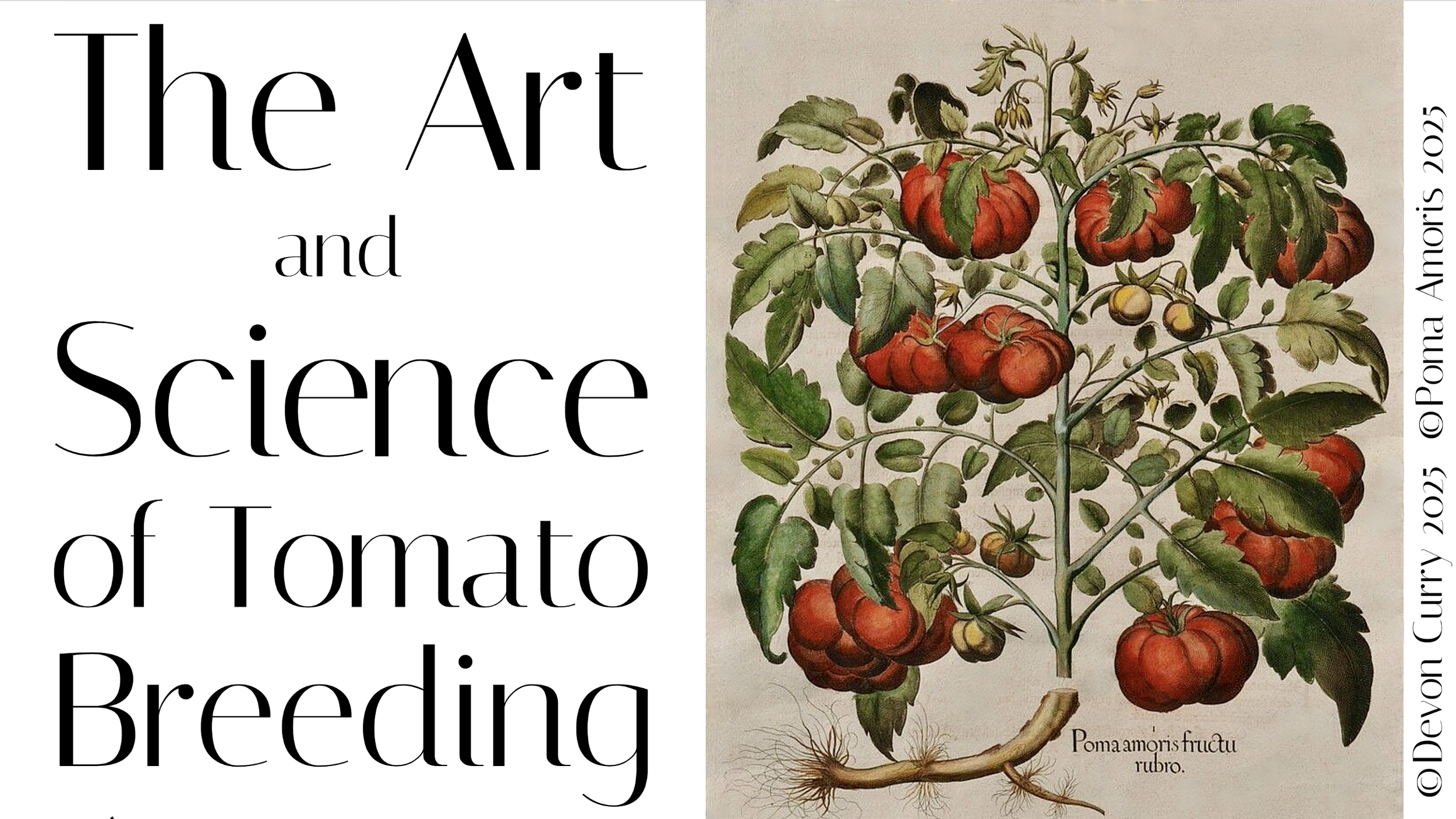
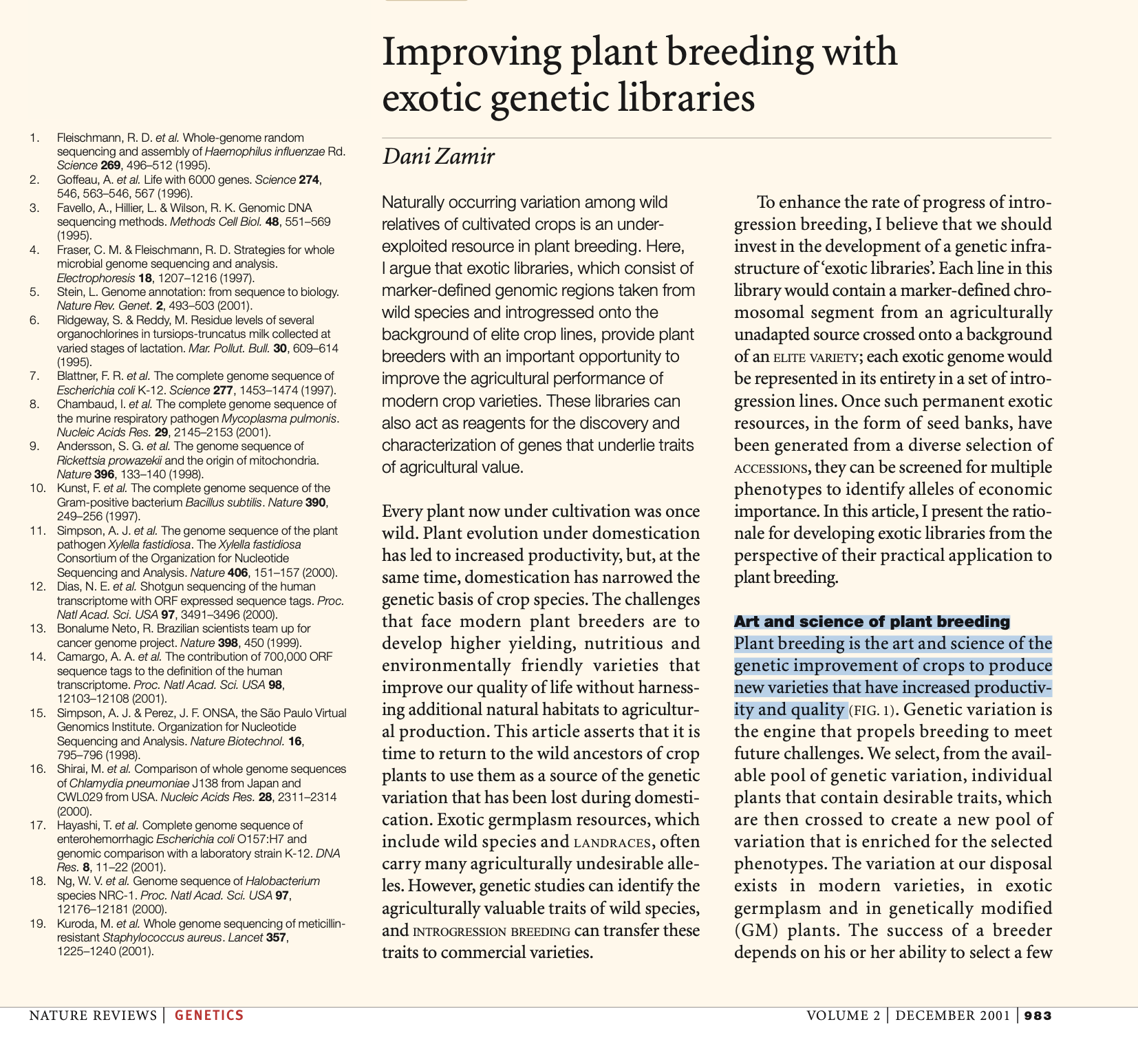
I was inspired for a title by this article authored by Dani Zamir, a big deal in the world of plant breeding, real plant breeding, not just amateur breeding like me.
But even at my level, I see it as an art and a science. It is an art because it is a creative expression, I am guided by intuition and joy and curiosity and beauty.
Which leads to the science part- taking careful notes, trying specific experiments to see what will happen, learning more to be able to guess what might happen and then compare the actual results.
I am inspired in my artistry by my mom, natural perfumer Mandy Aftel, by Gregory Mendel, by Charles Darwin, by Charles Ricks, Tom Wagner, Craig LeHoullier, Fred Hempel, Karen Olivier, Bill Yoder, and the so many others working to make beautiful, tasty, healthful, adaptive tomatoes.
In trying new varieties, I estimate that 1 in 20 will be unusually interesting, vigorous and flavorful. So I try many. The same for creating new varieties from crosses, I am estimating that 1 in 20 more or less will be interesting, and I am not attached to any particular idea. I am viewing it as creative work, as searching and sifting. The genes themselves are another level of sifting; and some crosses have 1 in 64 that is what you want or 1 in 256, or might not even be possible without multiple steps. That’s where having a rough map (it doesn’t need to be 100% accurate, but it needs to be useful and to be able to be updated easily as you learn more) and some knowledge will help guide you. Part of what makes it so fun, is all the work that’s already been done. Honoring that work is helpful to understand the mechanisms. Knowing what’s out there, what’s possible. Tomatoes have come a long way from their pea-sized ancestor, Solanum pimpinellifolium, but they also lost some of their adaptive genes as they were selected for domesticated traits.
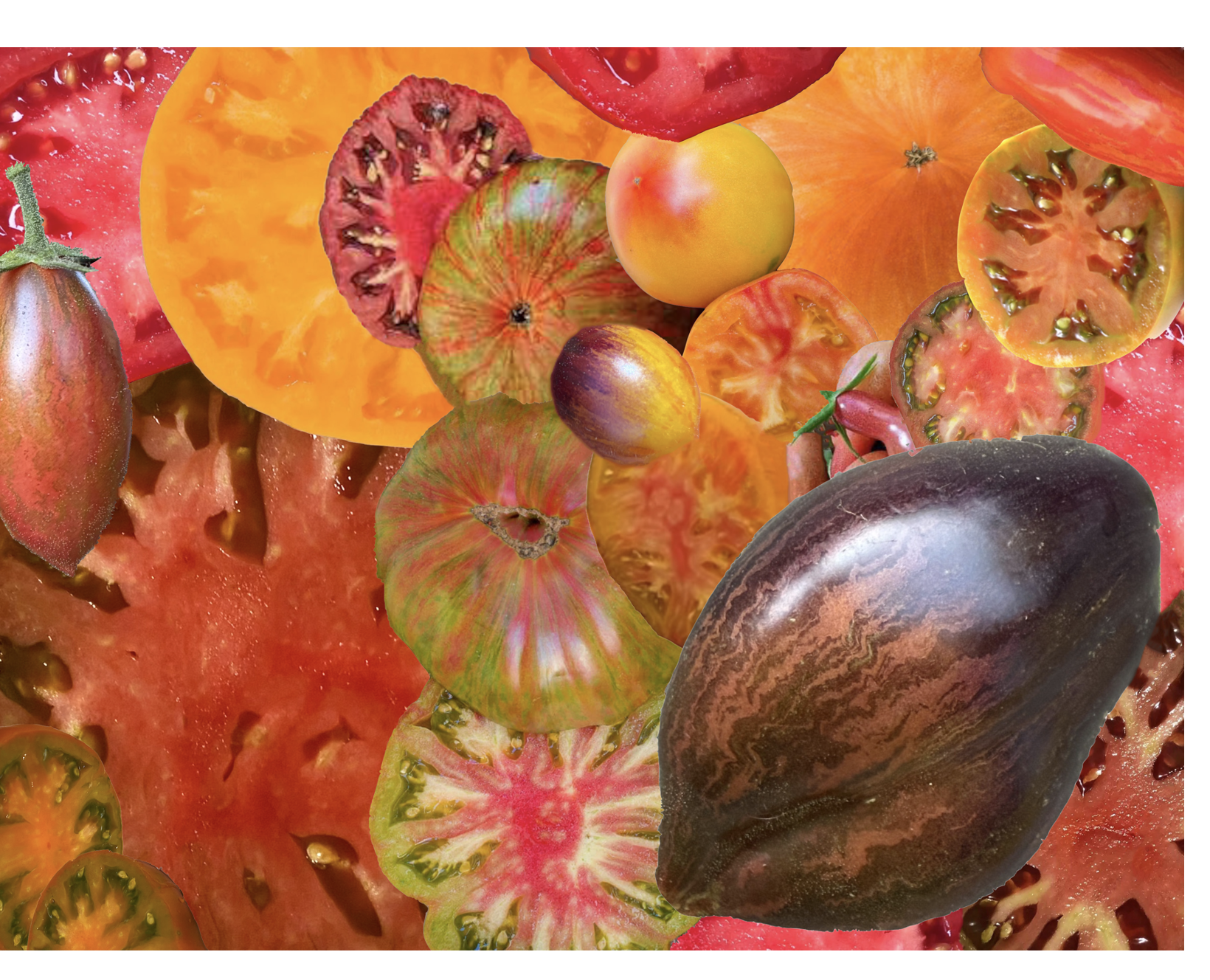
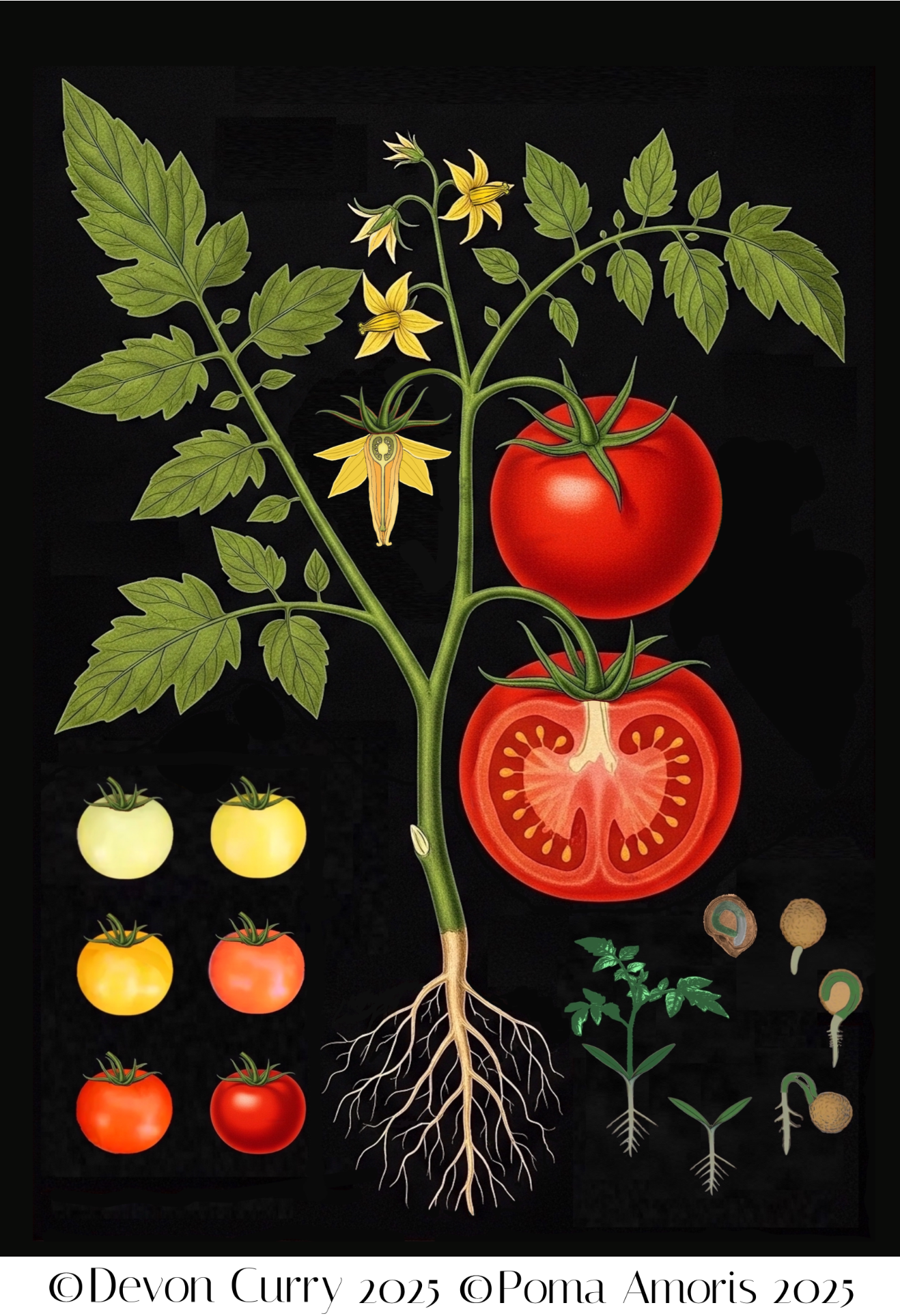
Besides the visual beauty, there is a kind of beauty in a plant that grows well, and in food that tastes fantastic. So to be able to have all three would be a really beautiful thing. Saving seeds can help select for vigor and flavor within the local environment, if you save and keep seeds year after year, this is like the process of heirloom seed saving. It’s wonderful to grow your favorites year after year, and to share them with friends and family and even generation after generation. Cross-breeding allows new combinations of colors and shapes and flavors, and the possibility to incorporate the genes of tomato wild relatives into them for new traits like disease resistance, flavor and new color combinations. (I created this collage mostly with my own photos, and borrowed a few elements from MerakiSeeds and TomatoFifou).
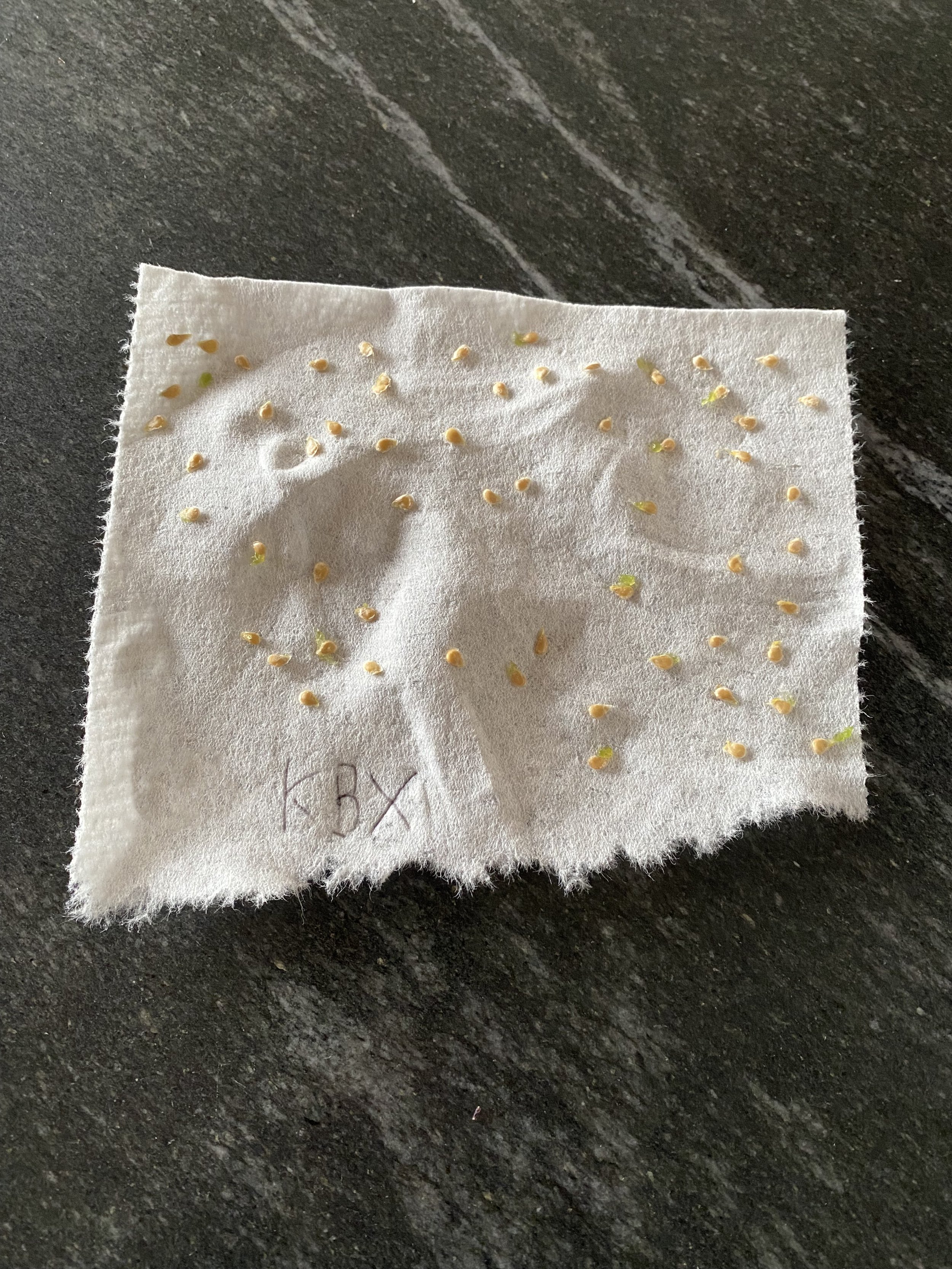
Saving seeds is the first step. You can save seeds from existing varieties, year after year selecting the ones that grow most vigorously and taste best to you. That’s very fulfilling in itself. If you’re saving a few, all you need is a paper towel, a pen and a piece of tape. If saving more, then cups or buckets, and a strainer, and paper plates (for drying); ferment 3-5 days and pour off scum and add water and swirl pouring off bad floating seeds and rinse until clean and strain, spread thin on paper plates and dry for a few weeks. Hybrid varieties (F1) seeds won’t be true, can be frustrating to save, but also an experiment. Some varieties are patented and the seeds are not legal to save.
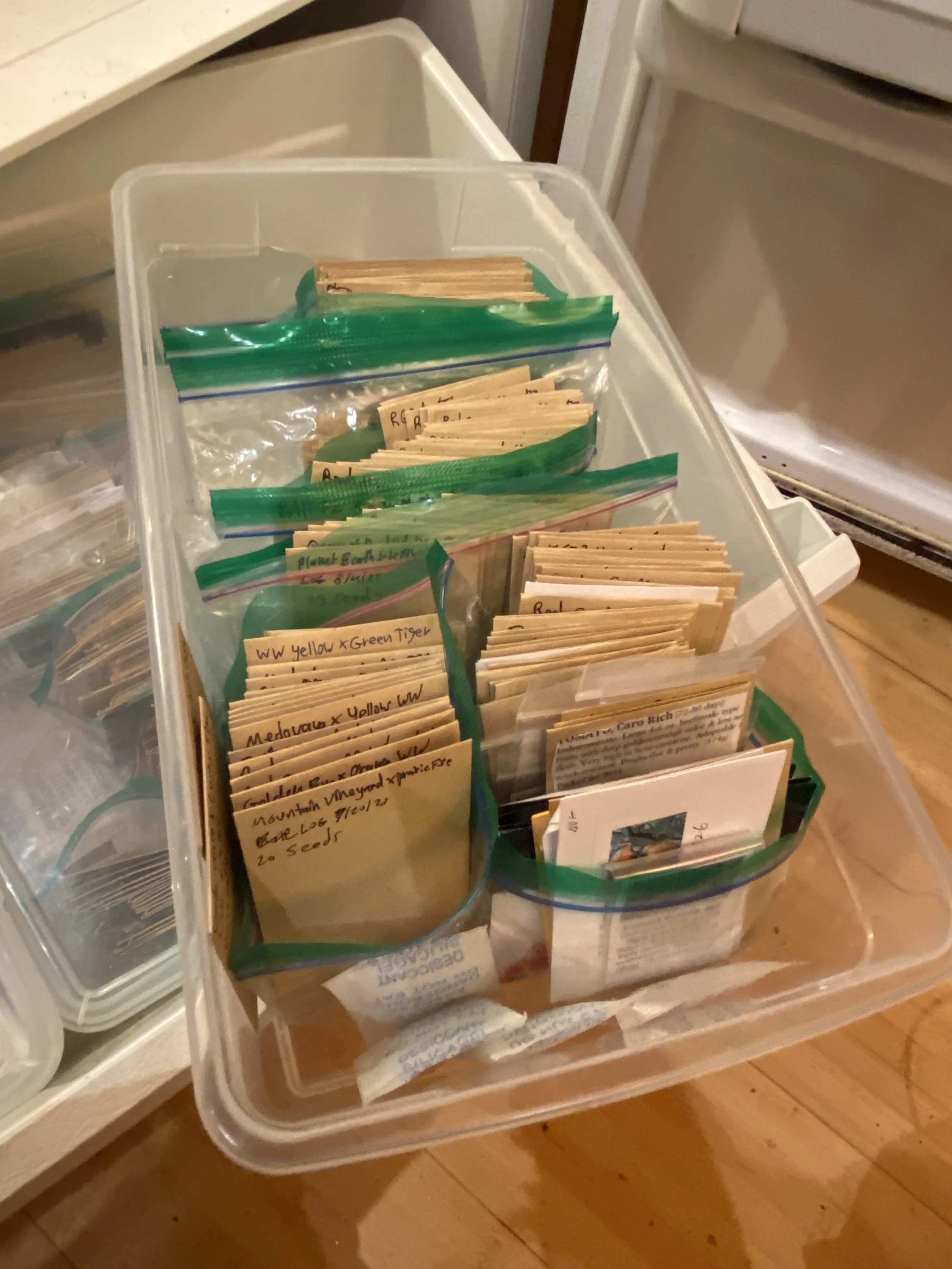
It’s not necessary, but if there’s one thing that makes a big difference it’s saving your seeds in the fridge. My germination rates are really excellent, I have ten year old seed that almost all are germinating. For fresh seed, make sure they air dry for a few days, before putting them in a paper envelope (breathable) and store in gallon bag or Tupperware with desiccant packs. They like to be cold and DRY. This is worth doing if you are serious about any kind of seed saving.
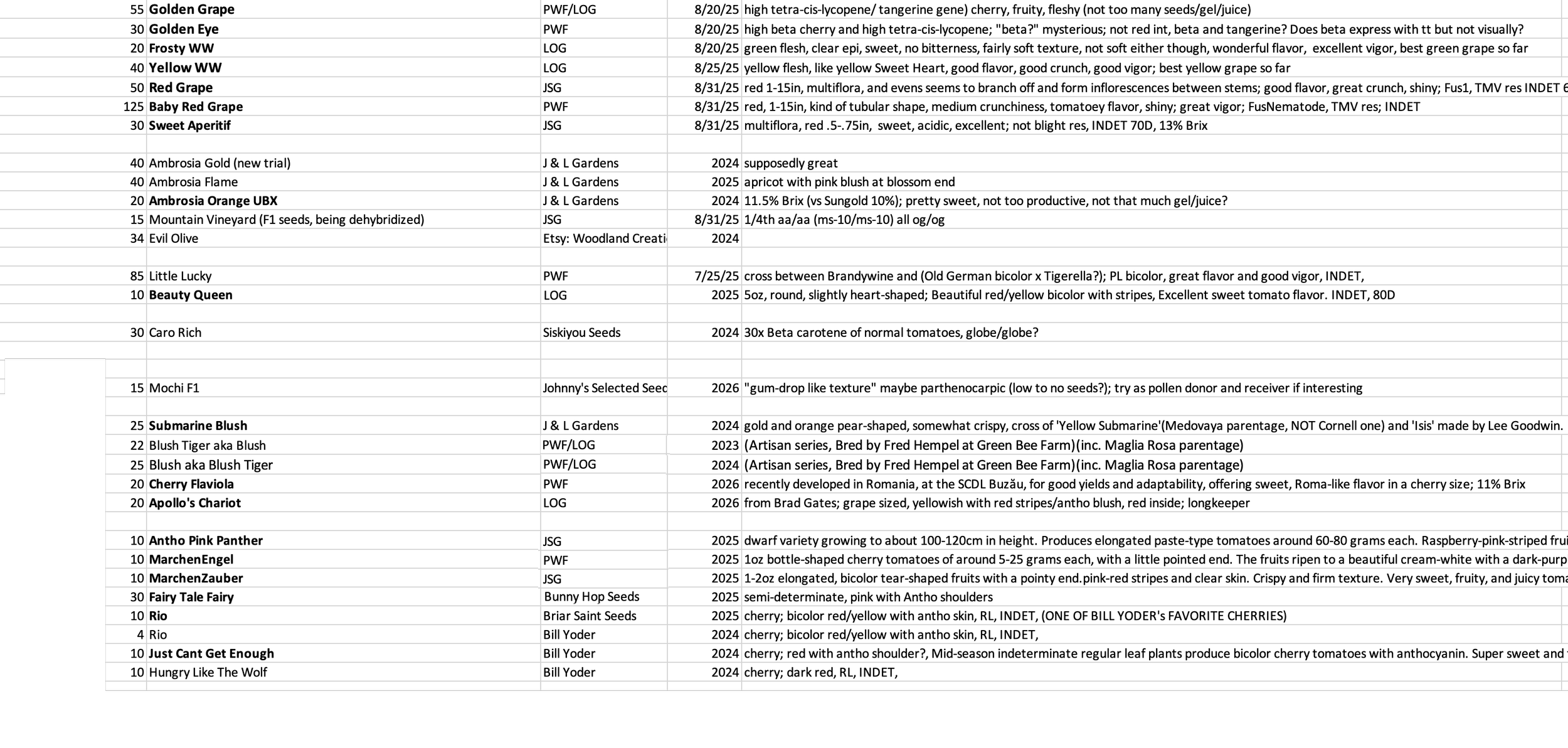
Organization is important. I use a spreadsheet to count number of seeds, origin, date, and notes on genetics, flavor, etc. Trying similar varieties and comparing them is a great way to notice more subtle differences, so it makes sense to try a bunch of large purple ones or a bunch of red cherry tomatoes to be able to compare flavor and vigor.
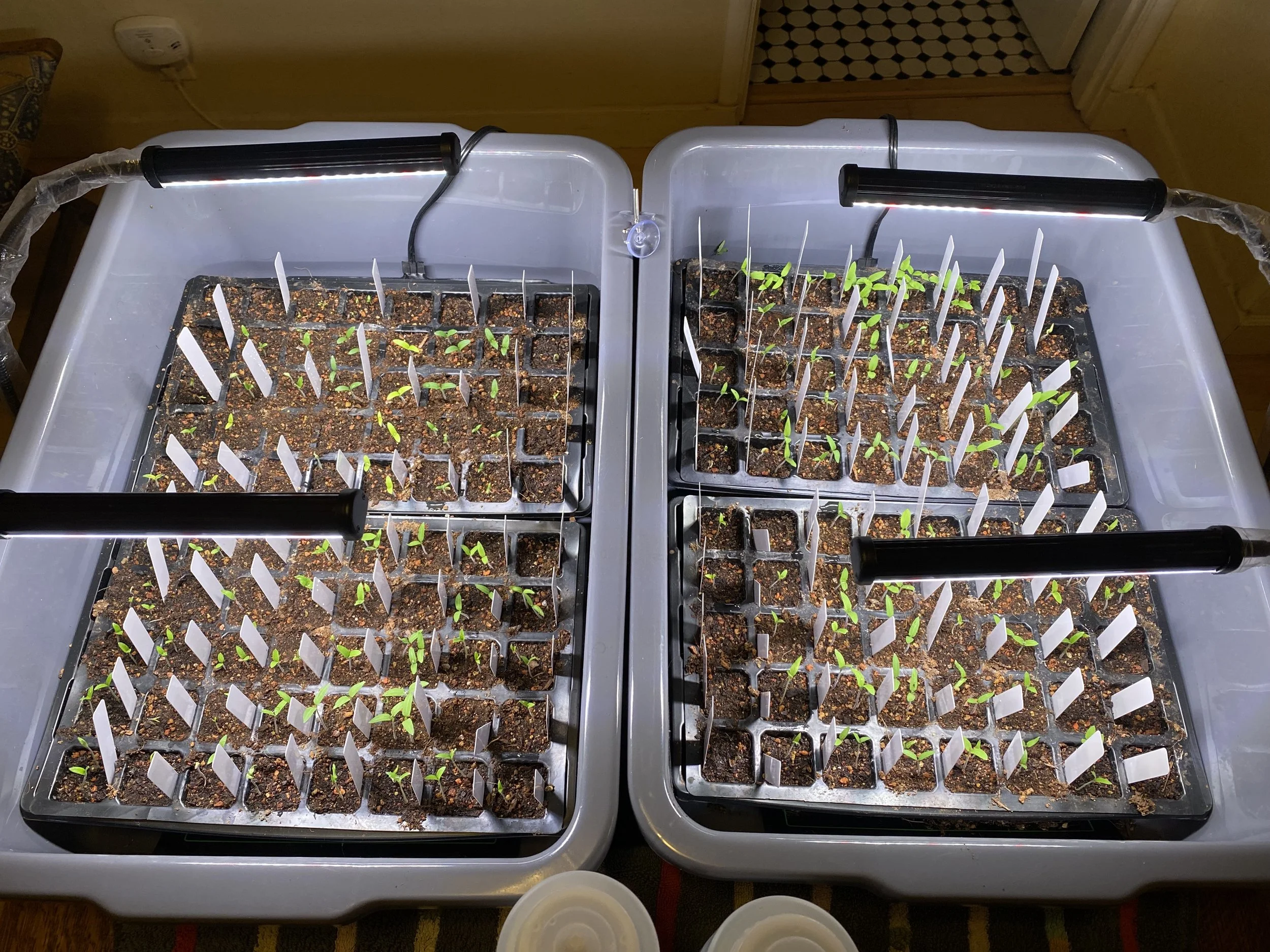
After 1 week
I used a well-draining coir based soil mix, full spectrum grow lights, heat mats at 80 degrees,
and then went on to pot them up between 1 and 2 weeks.
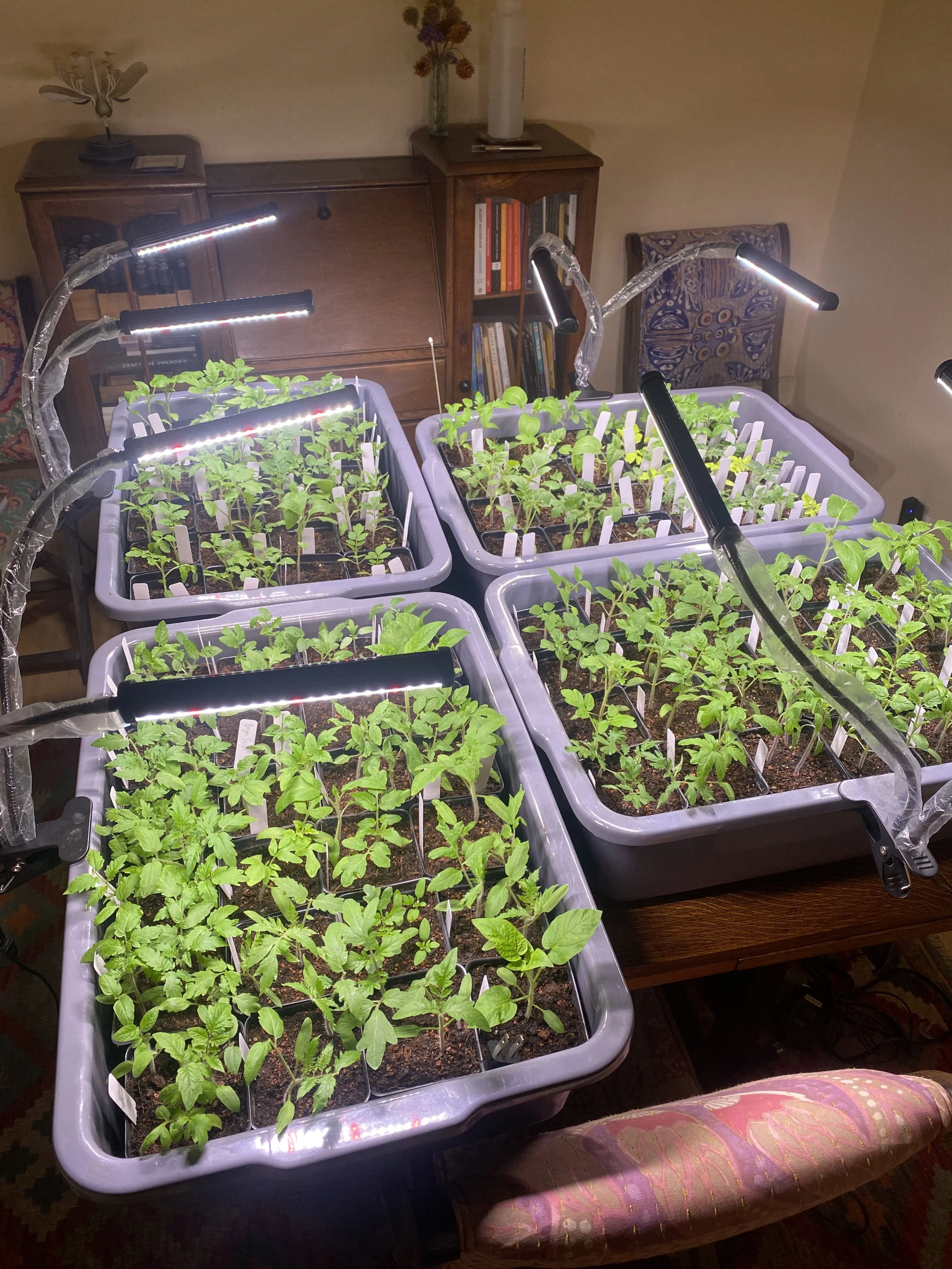
After 1 month
These are ready to be set out and put in bigger pots or planted in the ground after about a week or two of adjusting and growing outside.
(The nighttime temp must be 50 degrees or above to avoid potential damage to tomato plants,
so don’t start seeds more than a month before that if you’re planning on setting them outside then).
I started them here in mid-March, and set them out mid-April (partially covered as they adjust to sun exposure).
Once you know how to save seeds, you can also try cross-breeding different varieties, and save seeds from those and end up with a new variety.
It typically takes about seven cycles of saving seeds and growing plants and saving seeds and selecting for certain traits to stabilize a new variety.
This can mean 4-7 years. Adapting to them to the environment and to your specific likes is a really neat process.
You need to know something about the tomato biology and the flower parts in order to make a cross.
Tomato flowers are known as perfect flowers, containing male and female parts.
The male parts: stamen including the anthers and filaments- on a tomato the anthers are fused into an anther cone.
The female parts: carpel containing ovary (and ovules inside) with style and stigma on end (pollen receiving part).
Tomato flowers are able to self-pollinate and usually do- more than 95% of the time,
especially because the modern varieties have a stigma that is not exserted, does not protrude out of the flower.
The anther cones mature and dry out or “dehisce” or release the pollen before the flower is fully open, fertilizing the ovules.
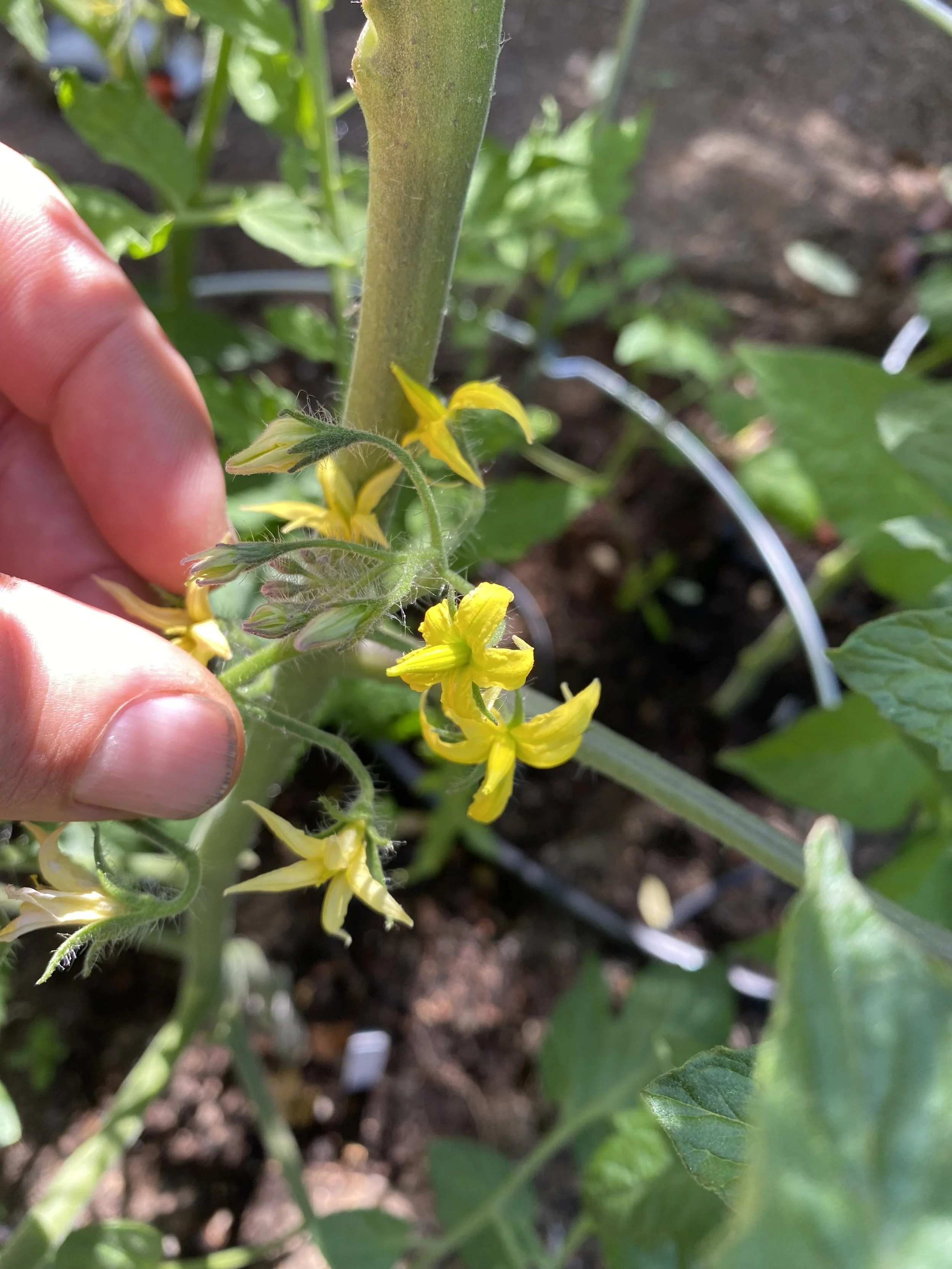
In order to make a cross, the anther cone must be removed just after the sepals (outer green things covering the petals) begin to lift open,
but before the petals have begun to open and the pollen has been released.
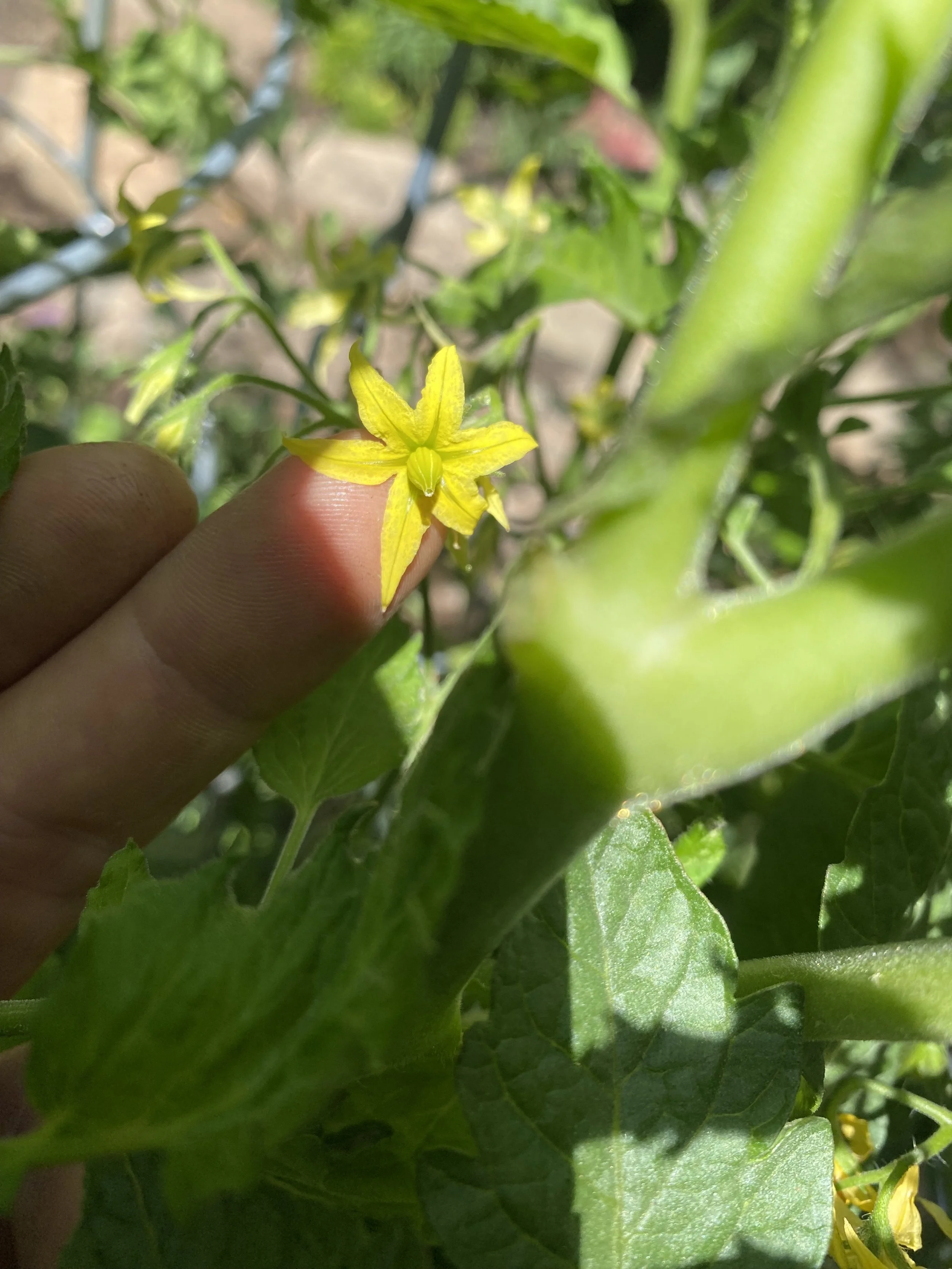
The flower on the left is opened, and too late to pollinate, but is about right to collect pollen from.
In the inflorescence on the right, there is one flower in which the sepals have just begun to open, and is a prime candidate for crossing.
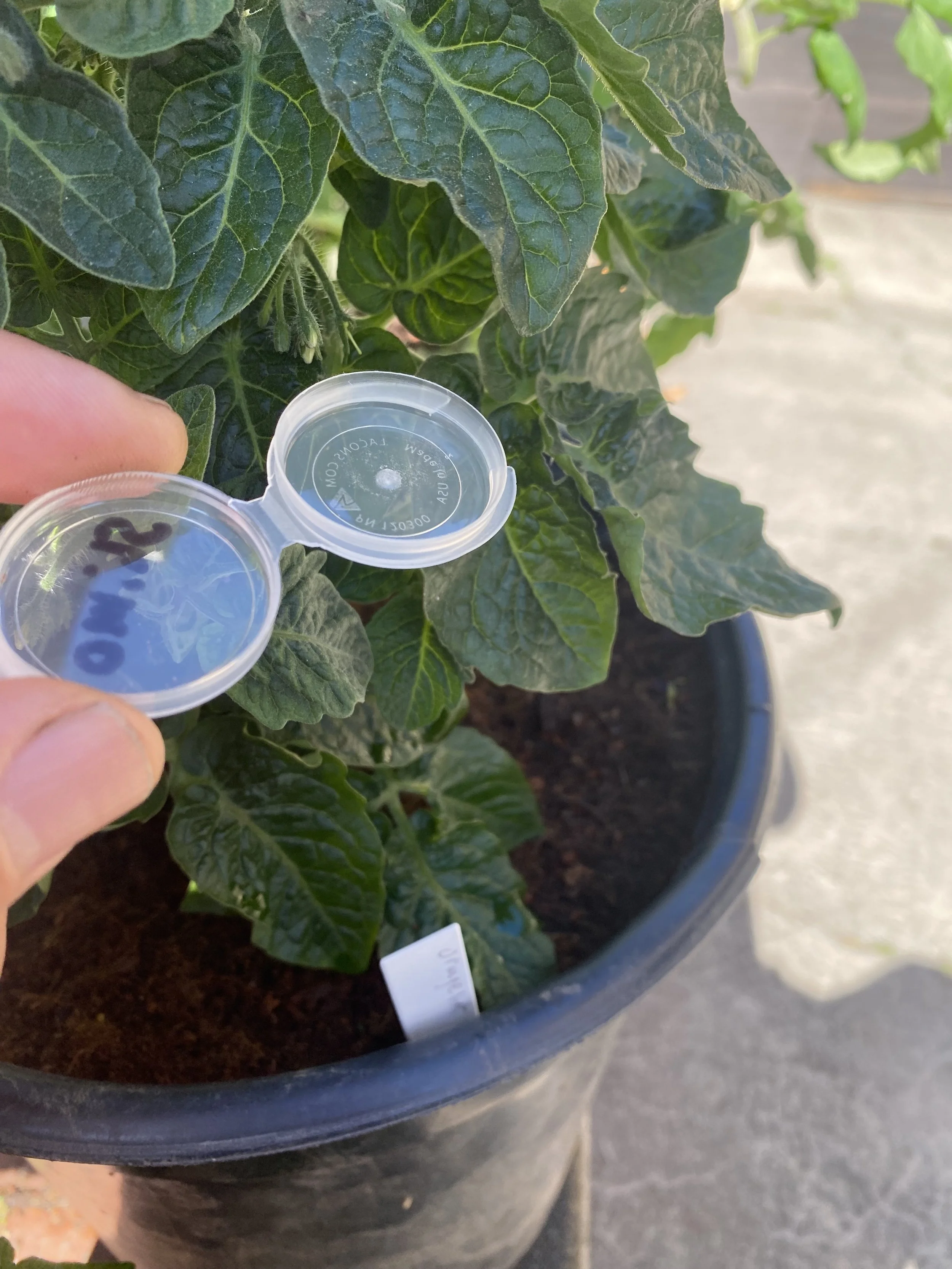
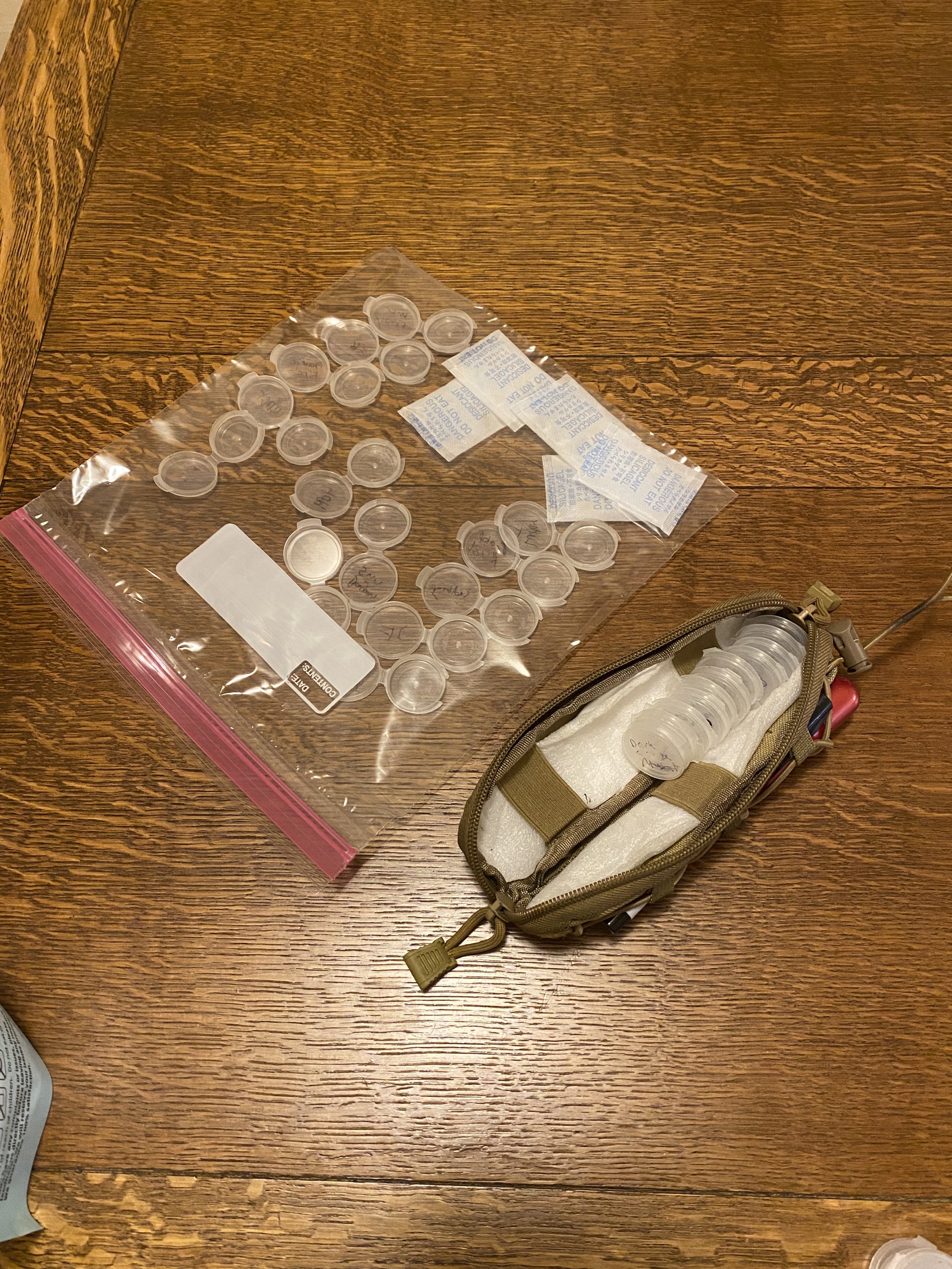
On the left, I’m about to dab the stigma of a flower I’ve emasculated (removed the anther cone from) into some of the pollen I’ve vibrated into a little container using a cheap electric toothbrush.
Pollen lasts at least a week under normal conditions, and up to a month dried and stored in the fridge.
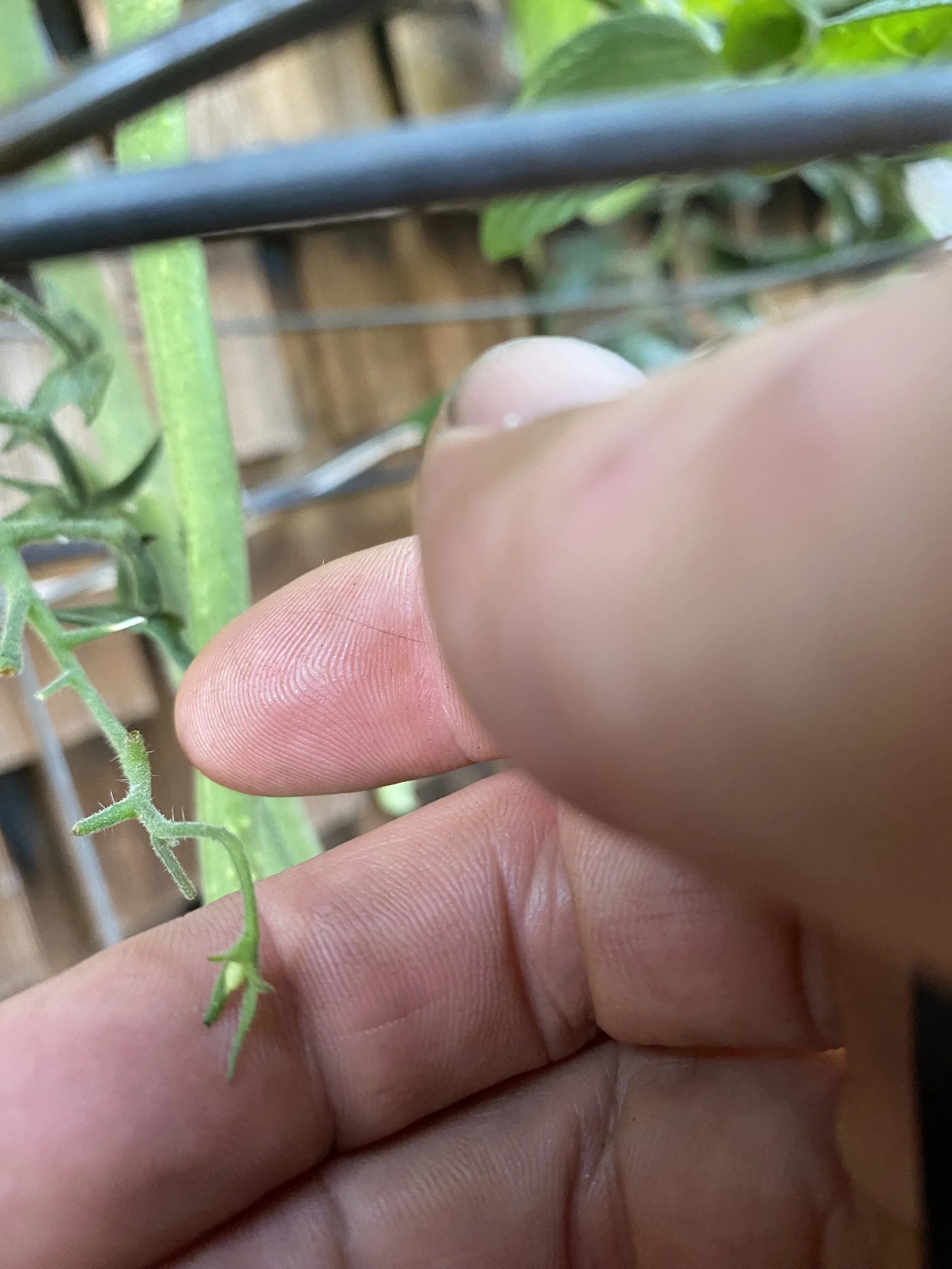
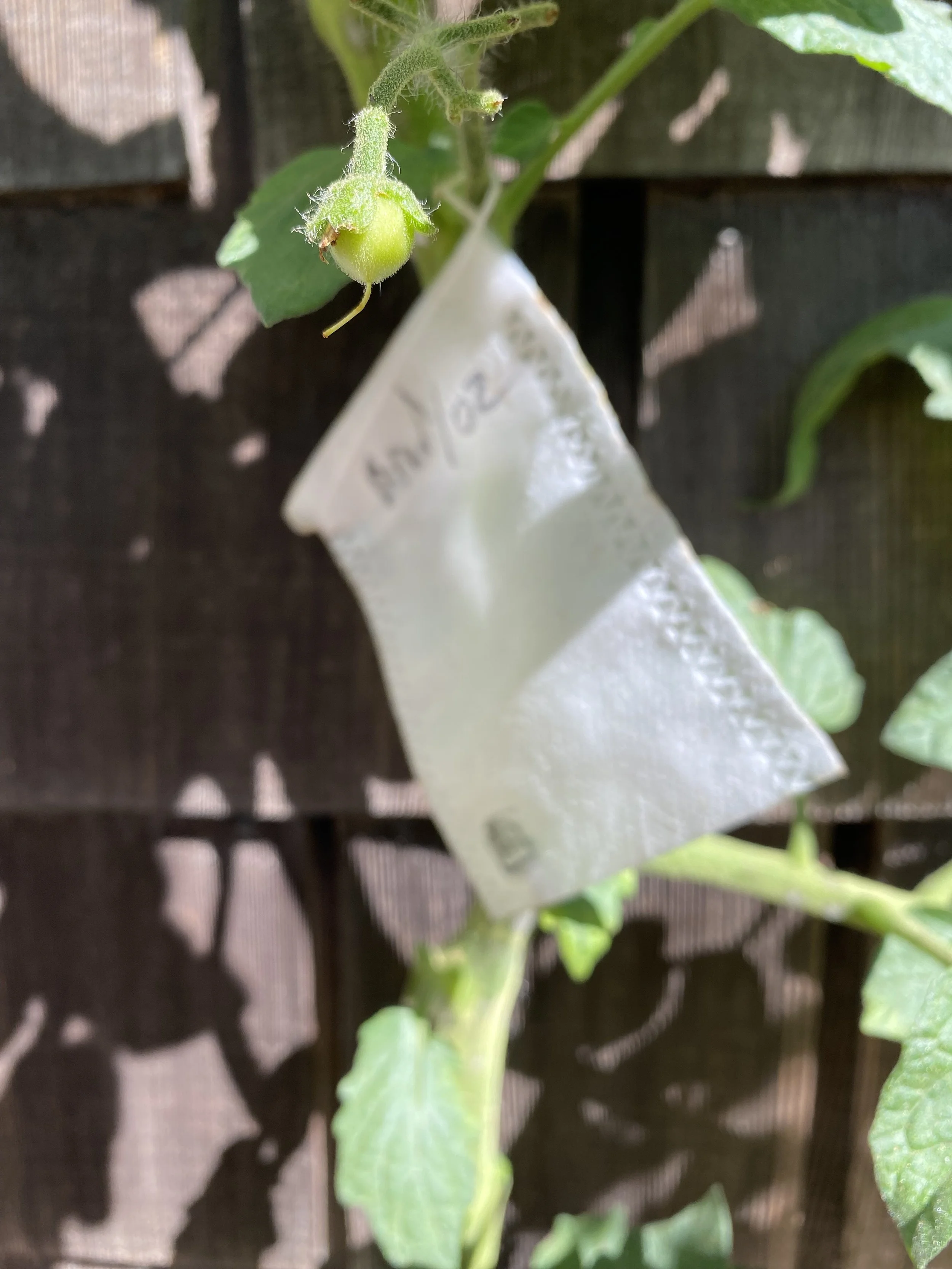
These are good signs.
Once a fruit is well on its way to forming, I put a teabag around it to keep track of it and keep it safe.
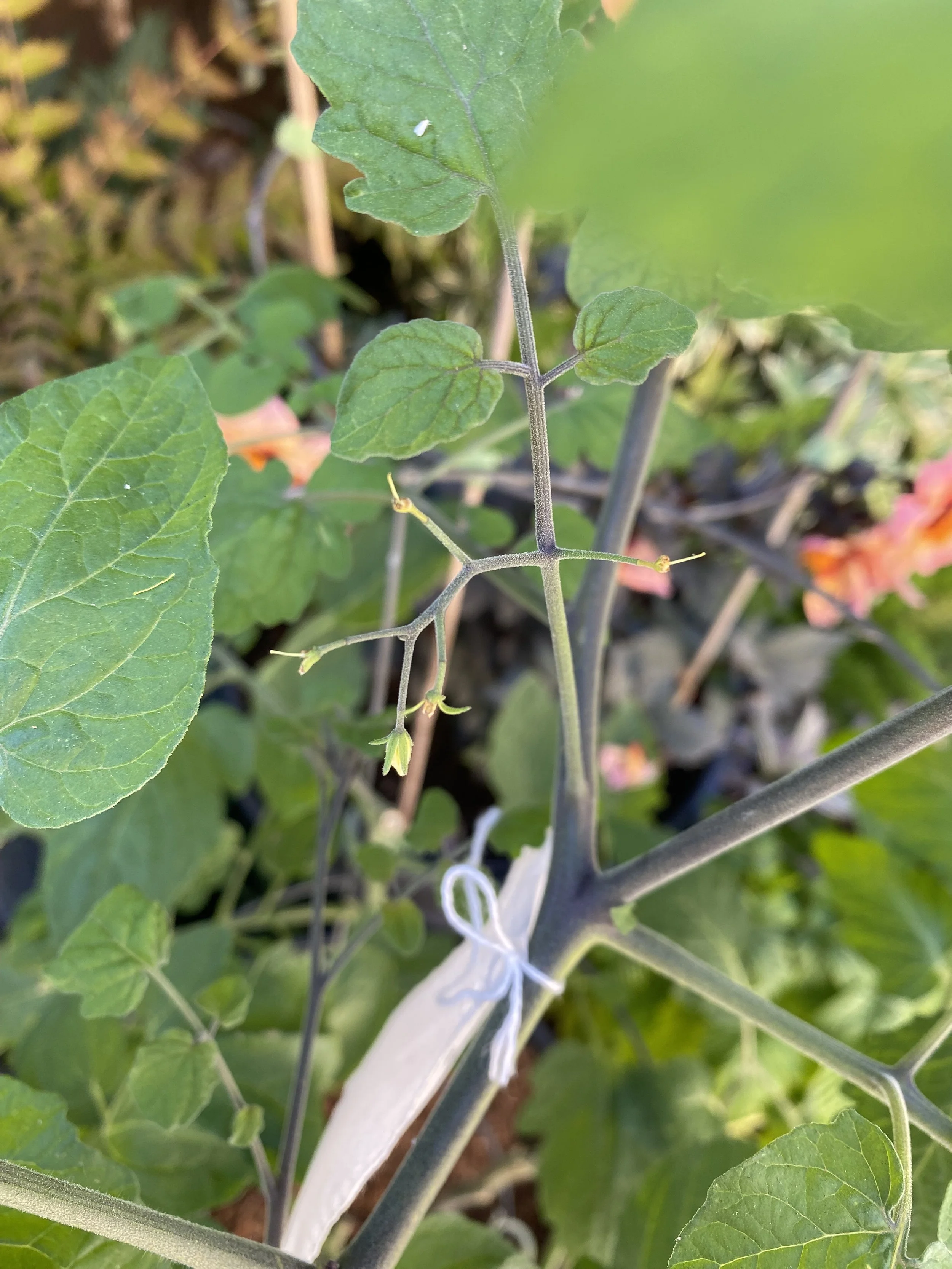
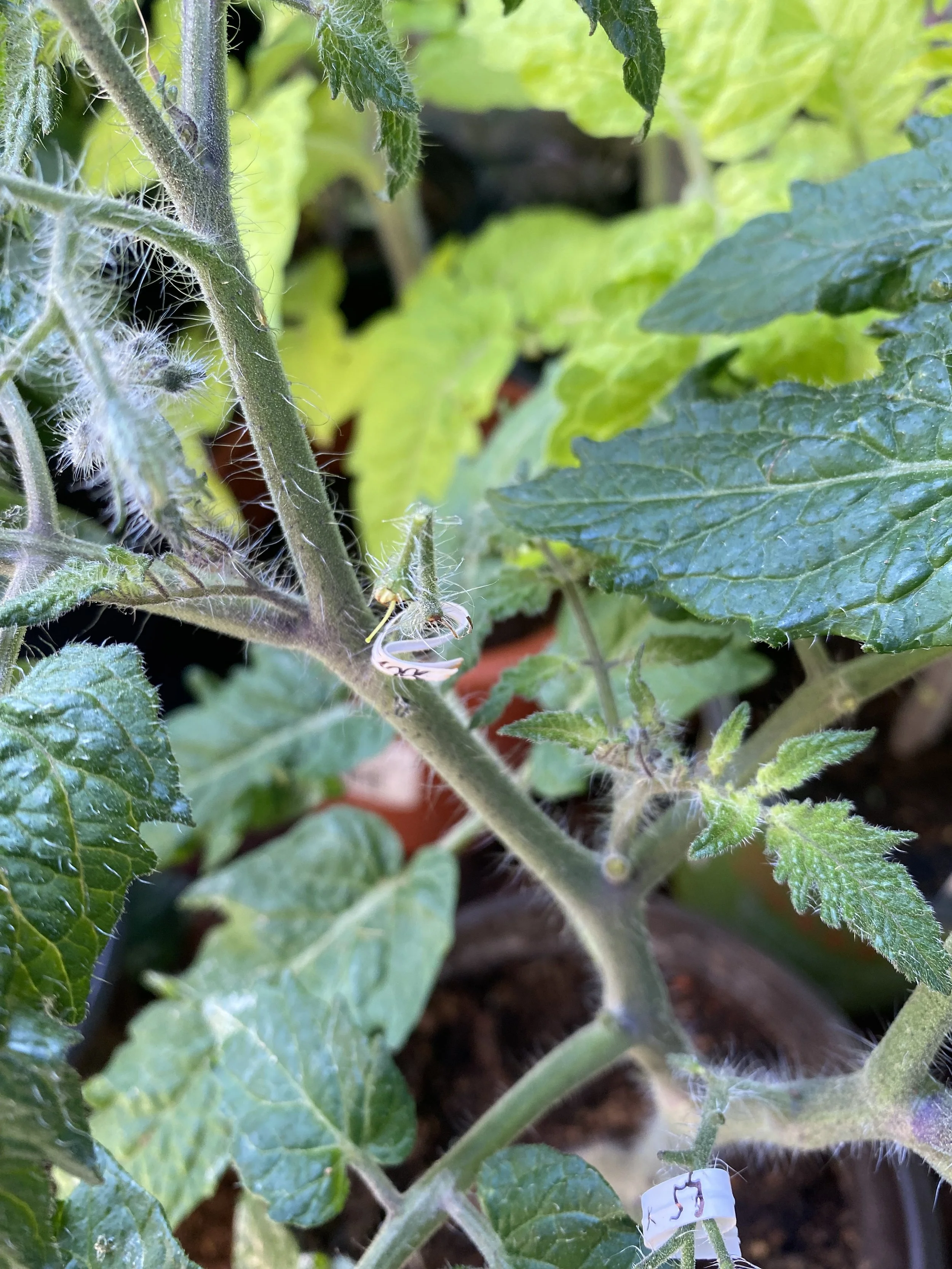
These are bad signs, not successful pollinations.
I try pollinating multiple times over a few days, and stop when I see the good signs (or bad signs obviously).
I use a twist tie with the names on it until a fruit forms, then cover it with a tea bag.
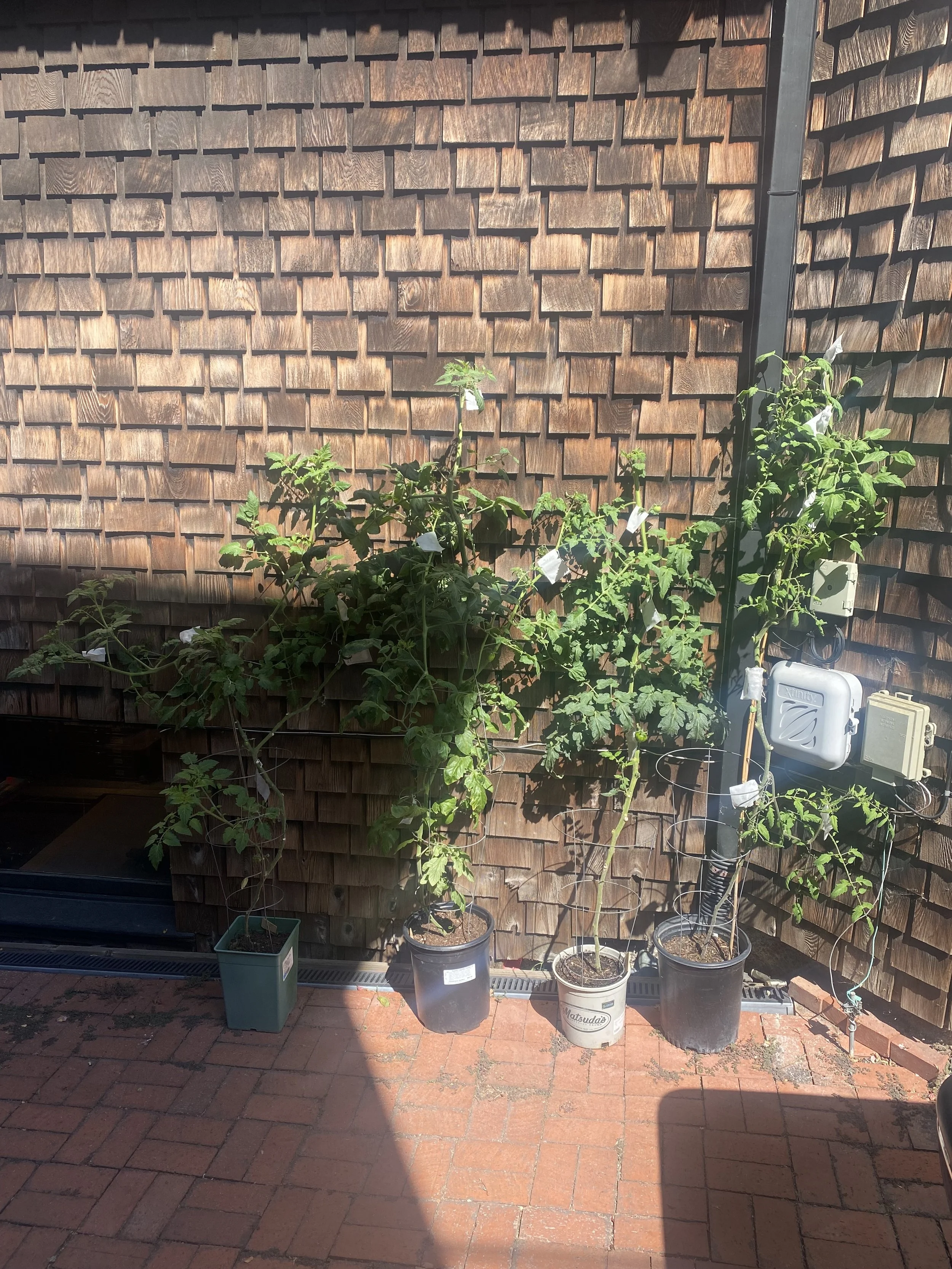
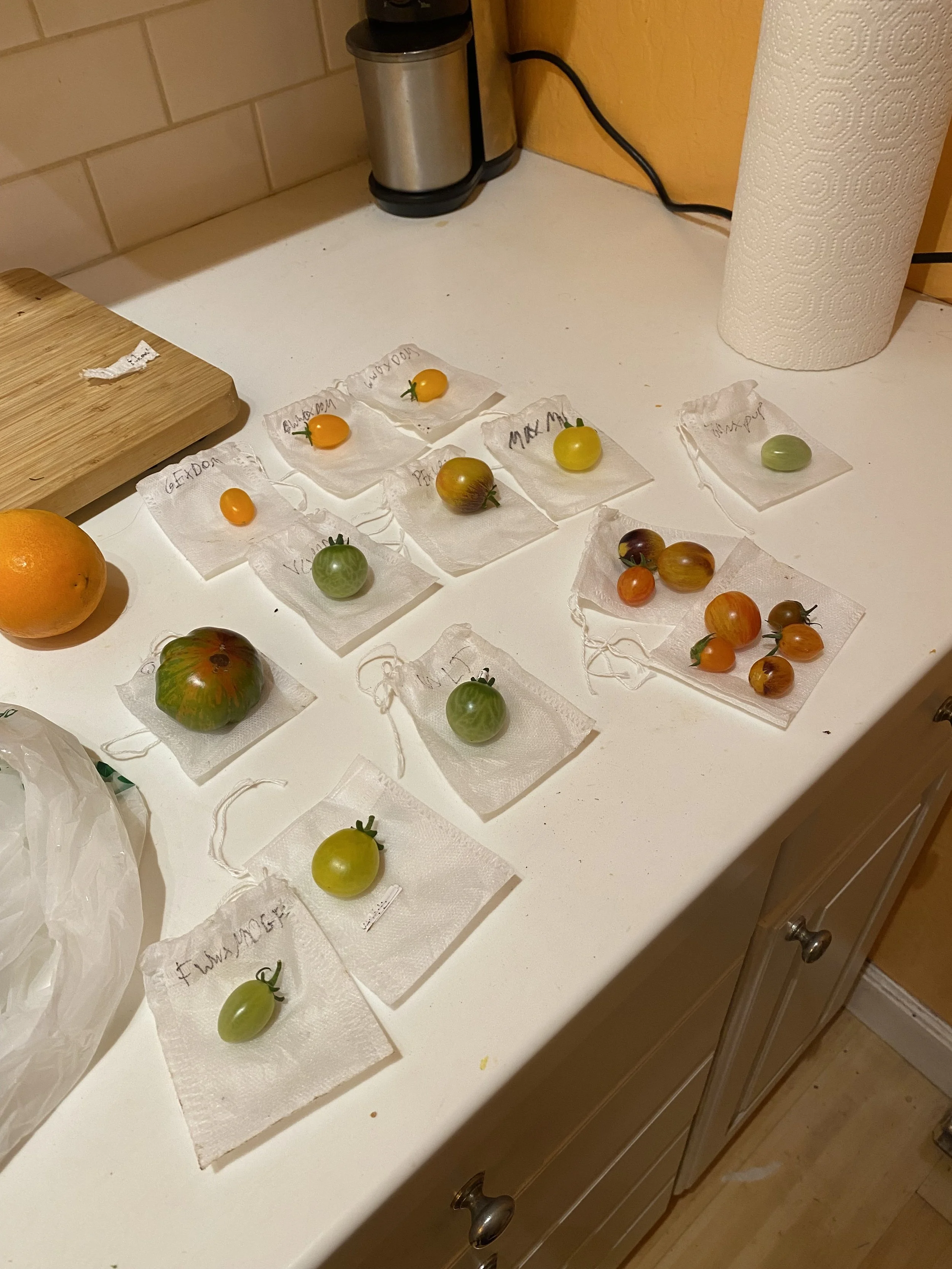
3 to 5 gallon pots and a sunny spot. Several successful crosses collected and ready to be saved.
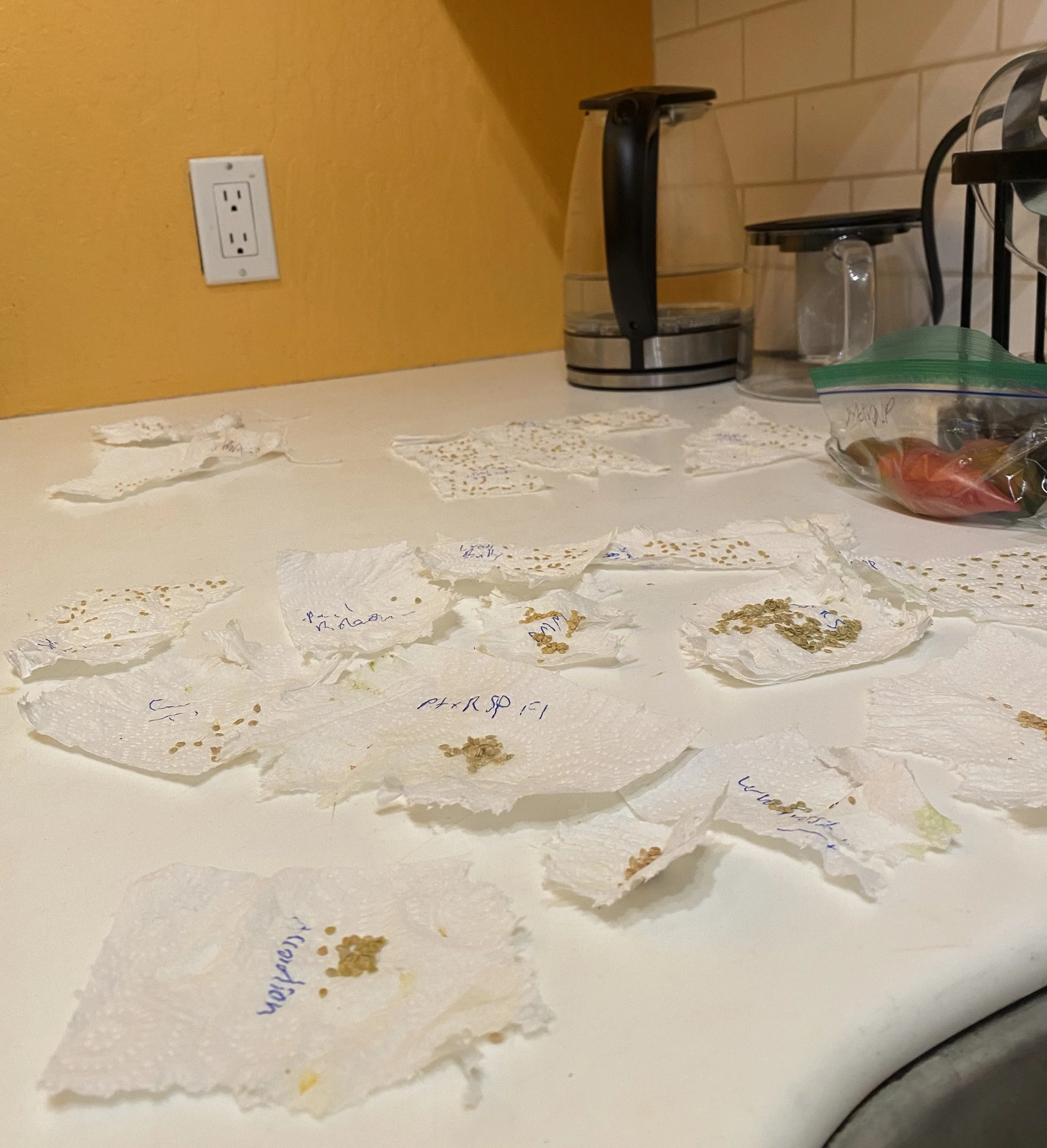
Seeds to add to the possibilities of what to grow next year.
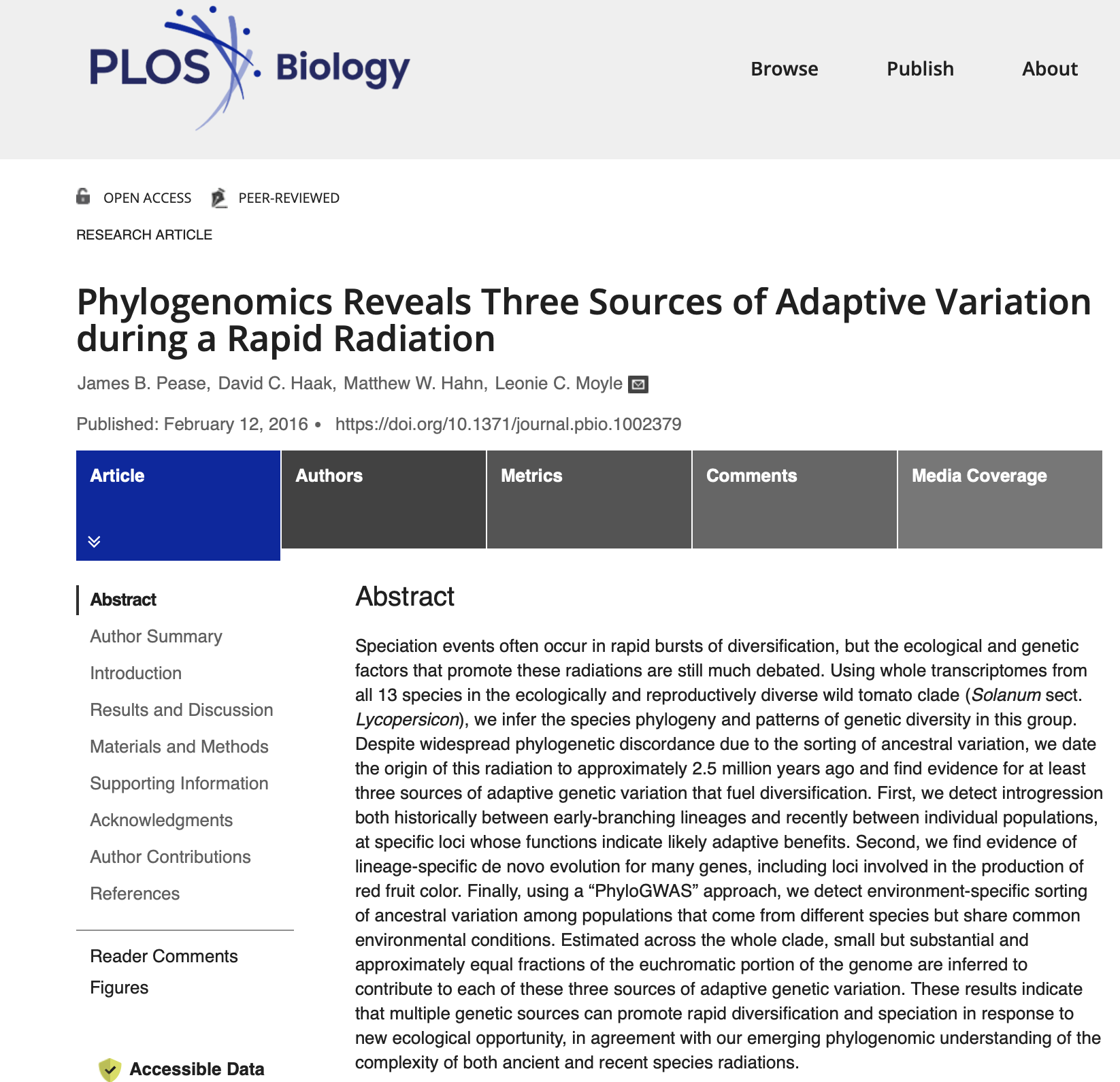
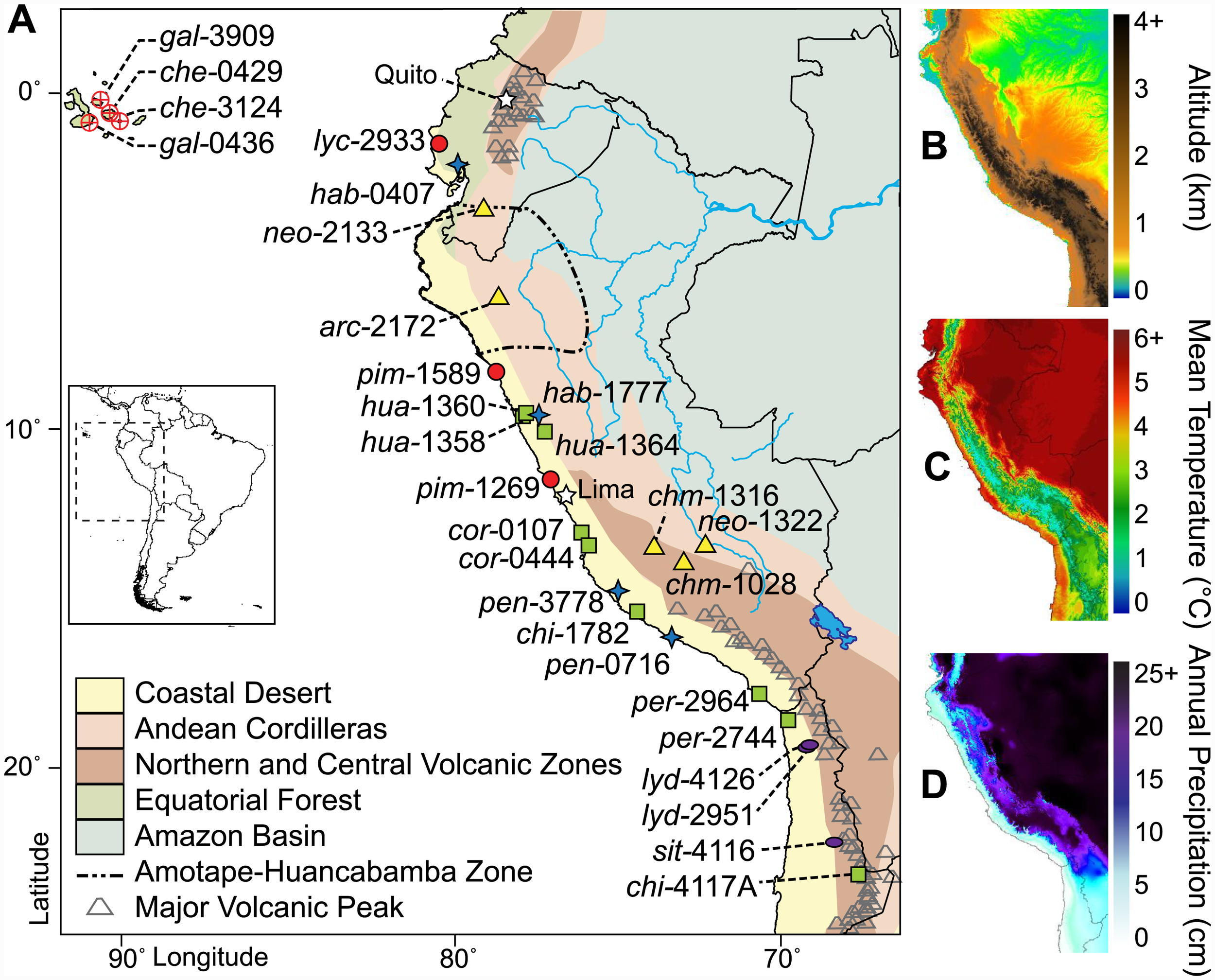
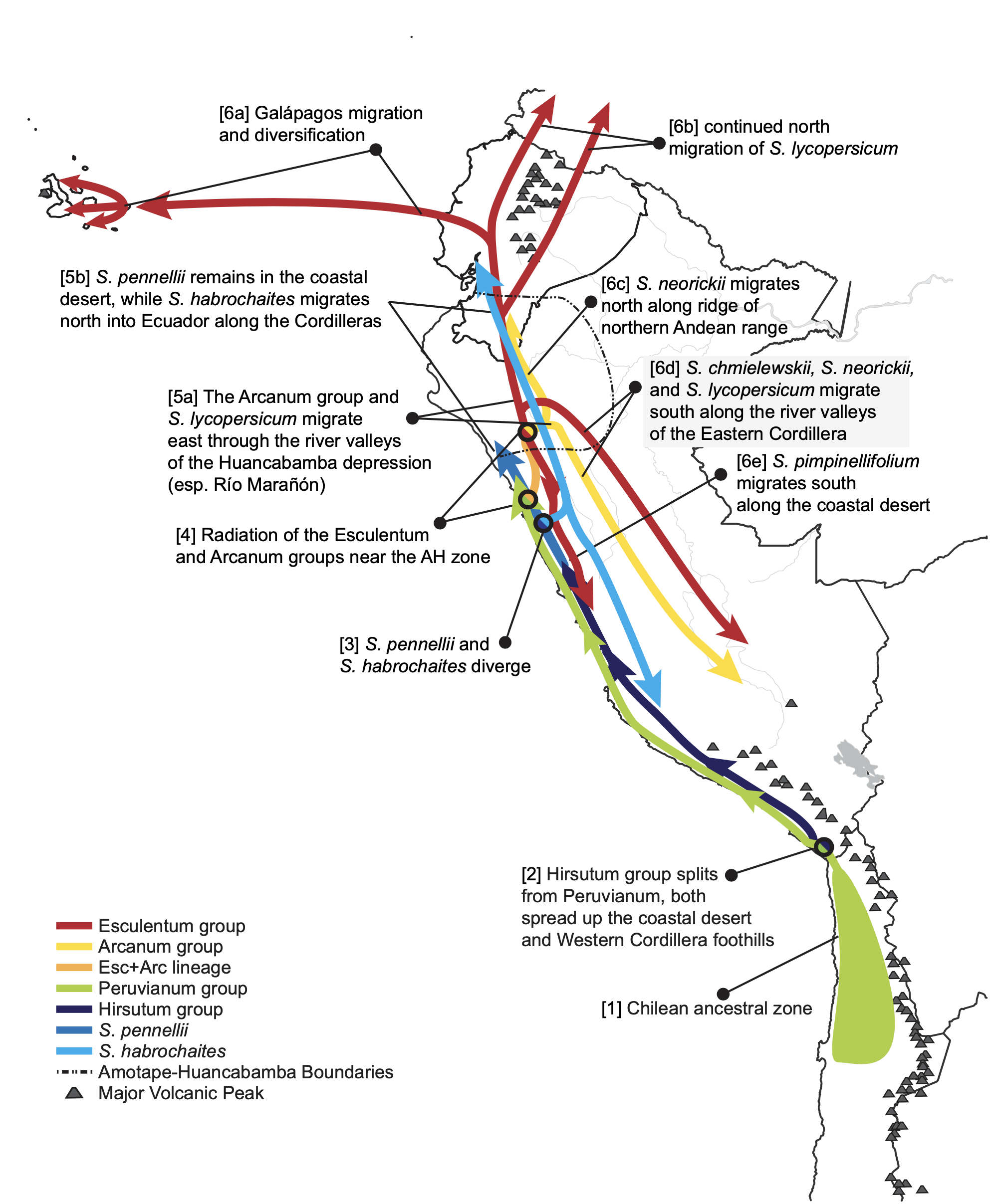
For any plant it is useful to know where it came from, it’s original environment, the conditions it evolved in, adapted to. How much sun exposure, how much precipitation and how is that precipitation distributed throughout the year (for instance many CA natives evolved to have a summer dry period). Tomatoes originated in Peru and Ecuador over 80,000 years ago, where it is warm and relatively dry. The genes evolved from those places, from those conditions; a dance between the plants and their environment, and so that is where a discussion of the genes begins.
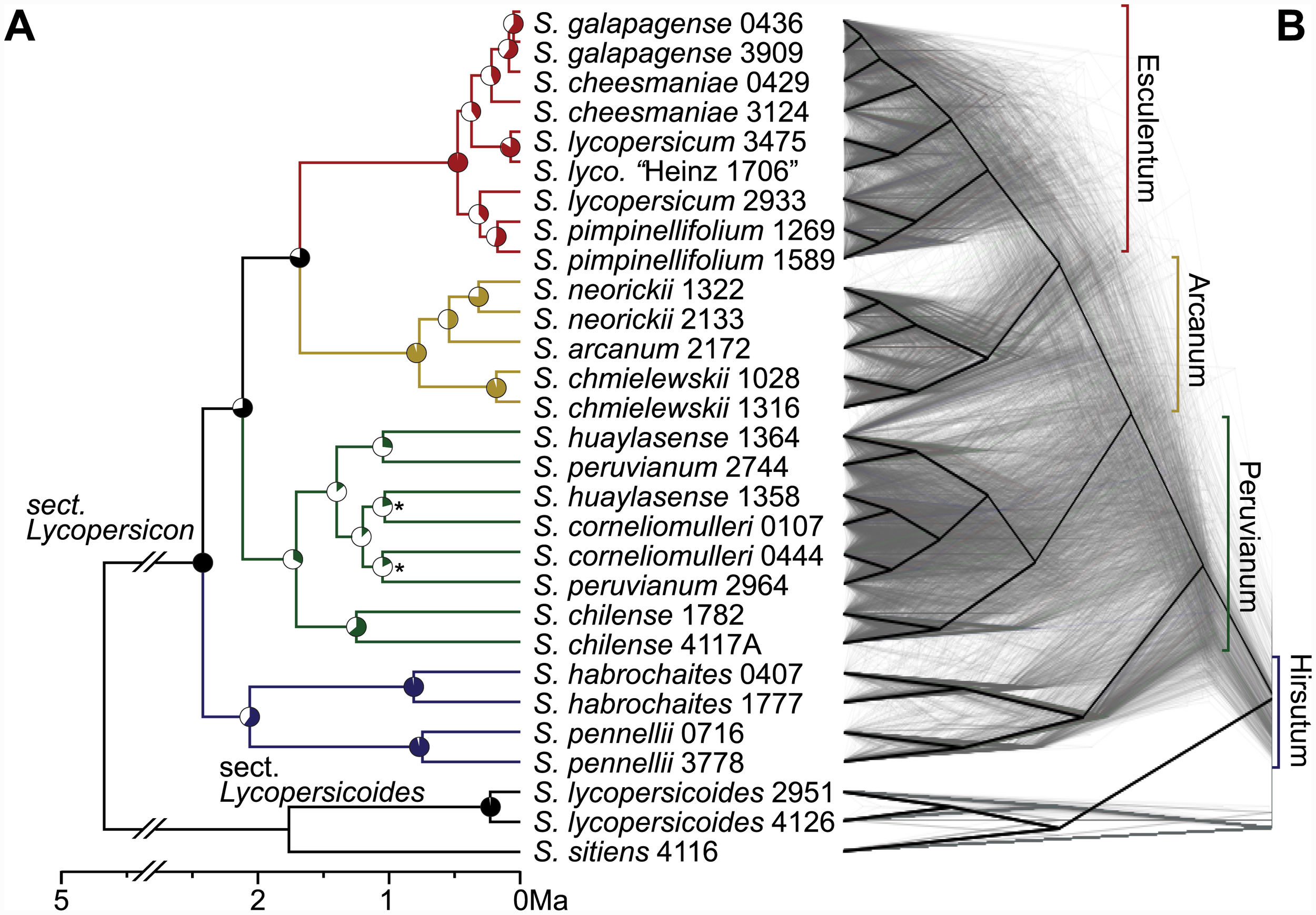
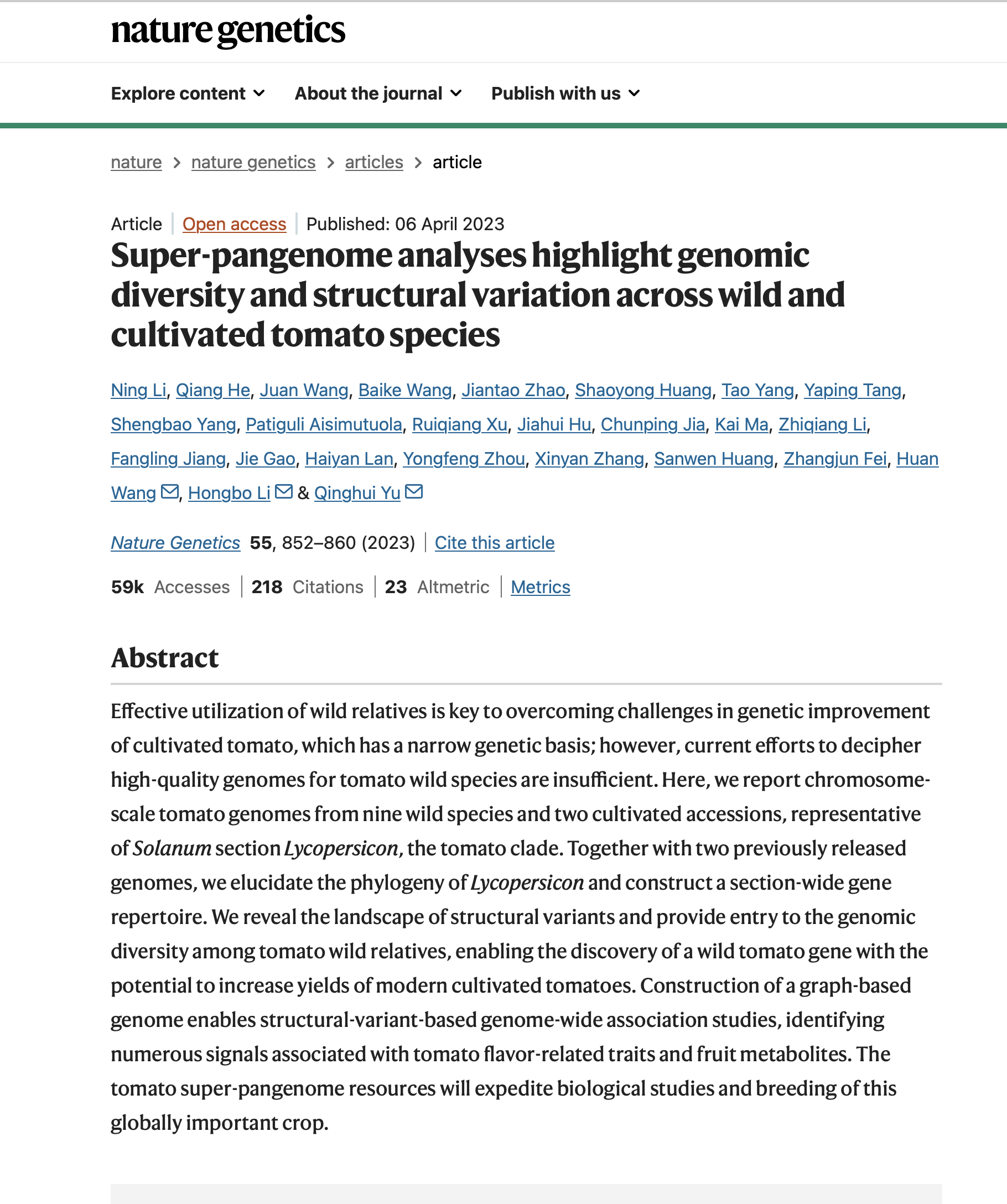
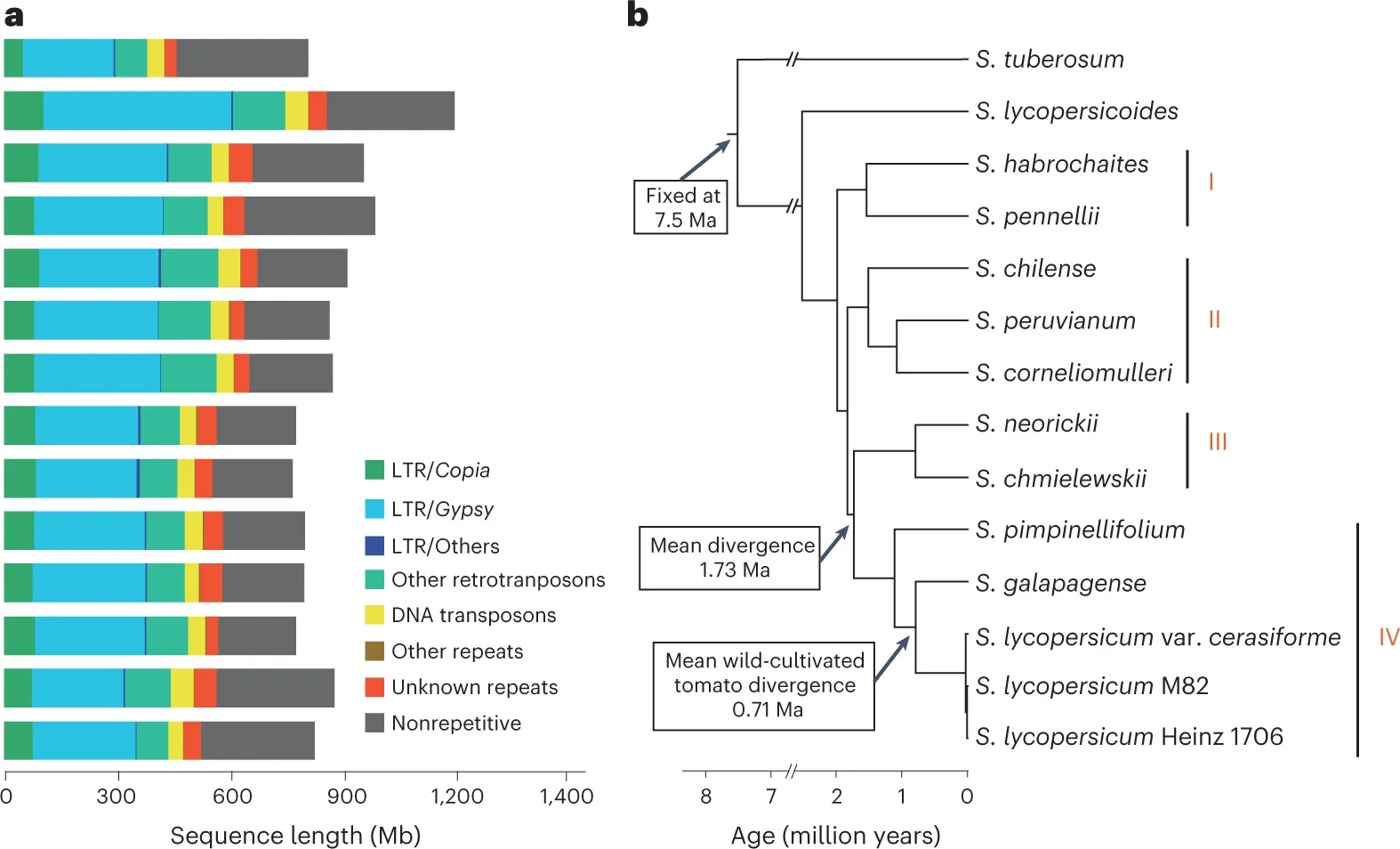
As these research papers show, tomatoes are related to other species of Solanums, some more closely related and able to interbreed with tomatoes. The closest related is called Solanum pimpinellifolium (Currant tomato) which phylogenetic studies show is the common ancestor of all cultivated tomatoes.
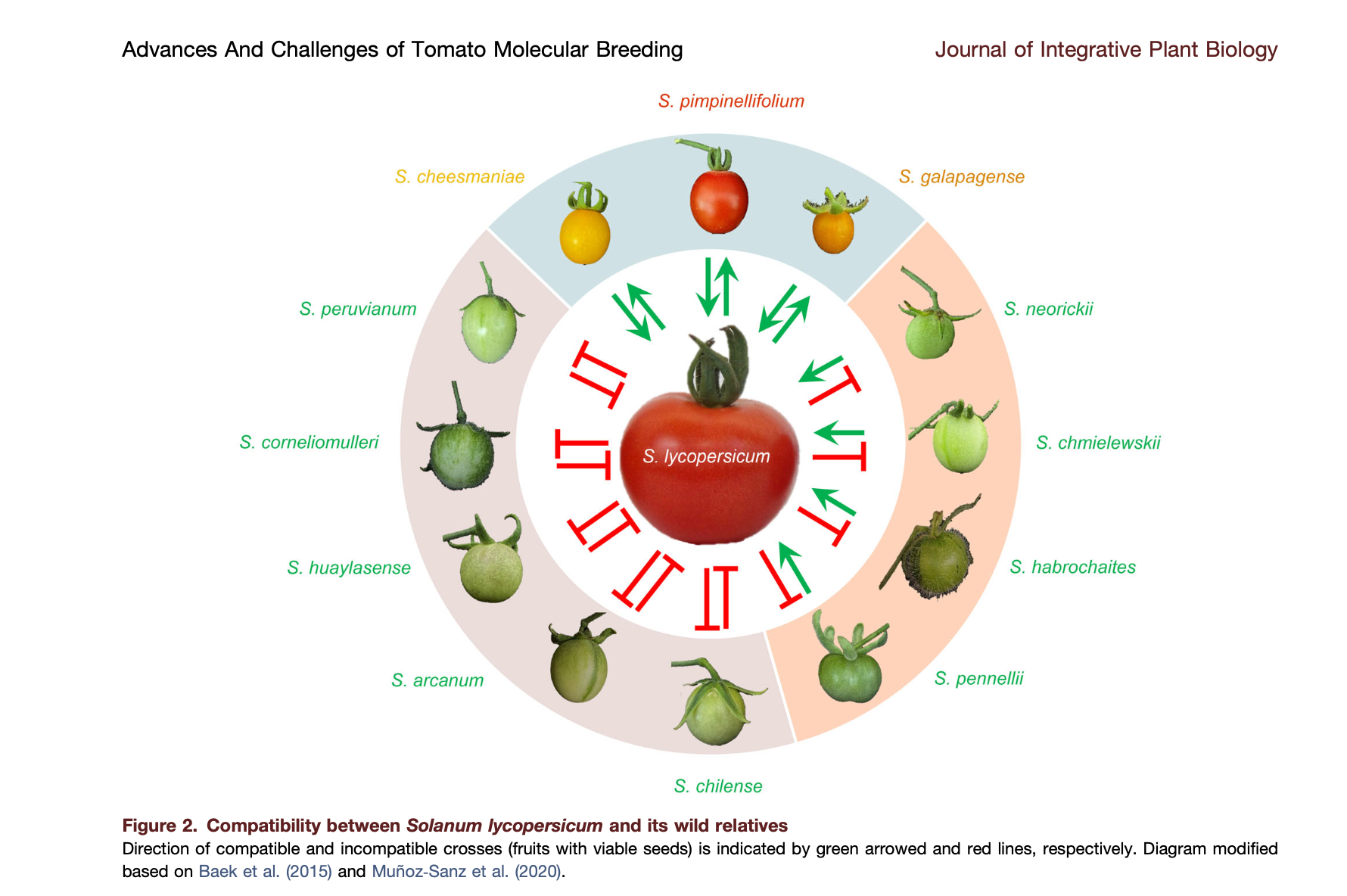
This diagram illustrates what the fruit of many of those wild relatives look like, and indicates whether that species is able to interbreed with the tomato (Solanum lycopersicum).
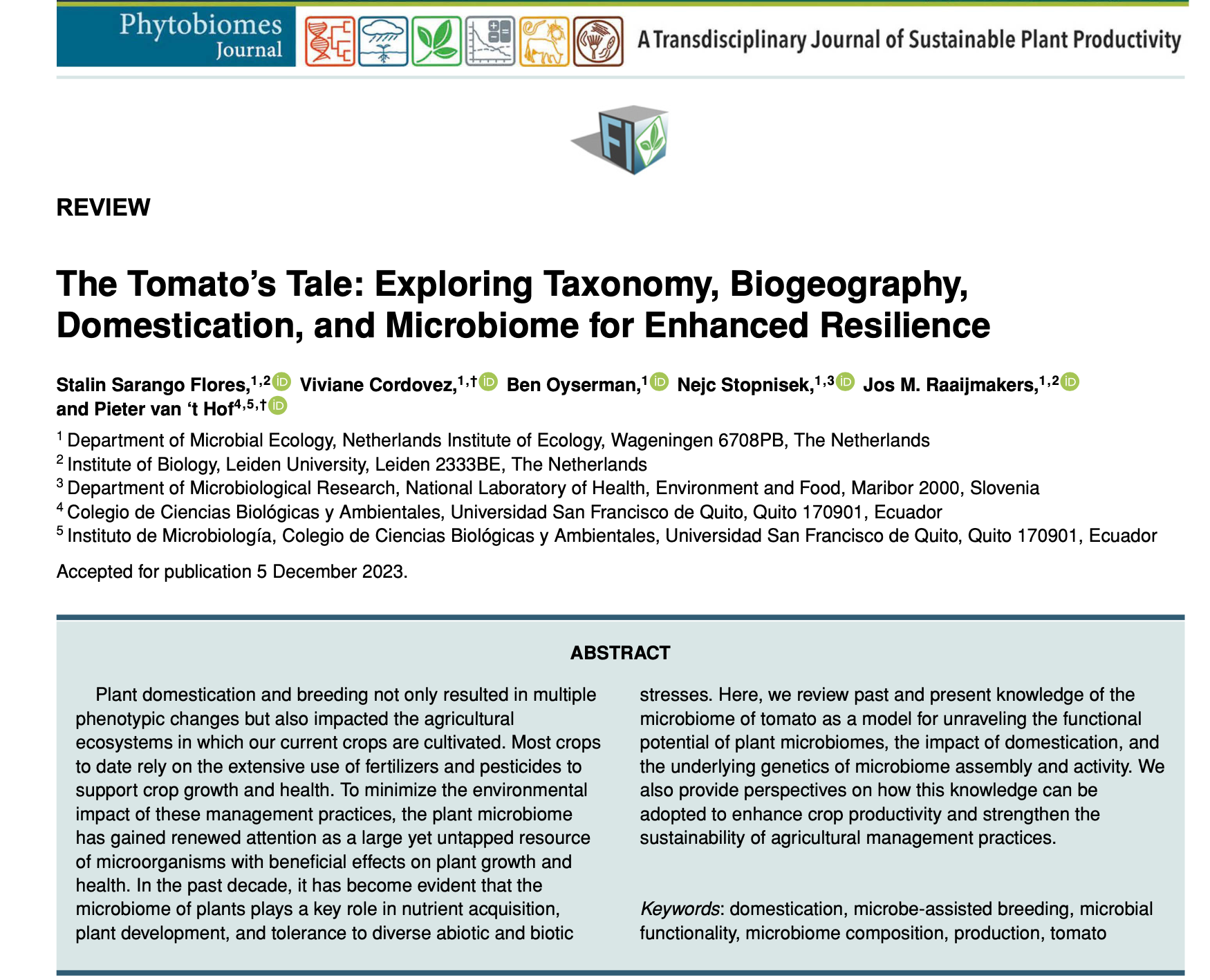
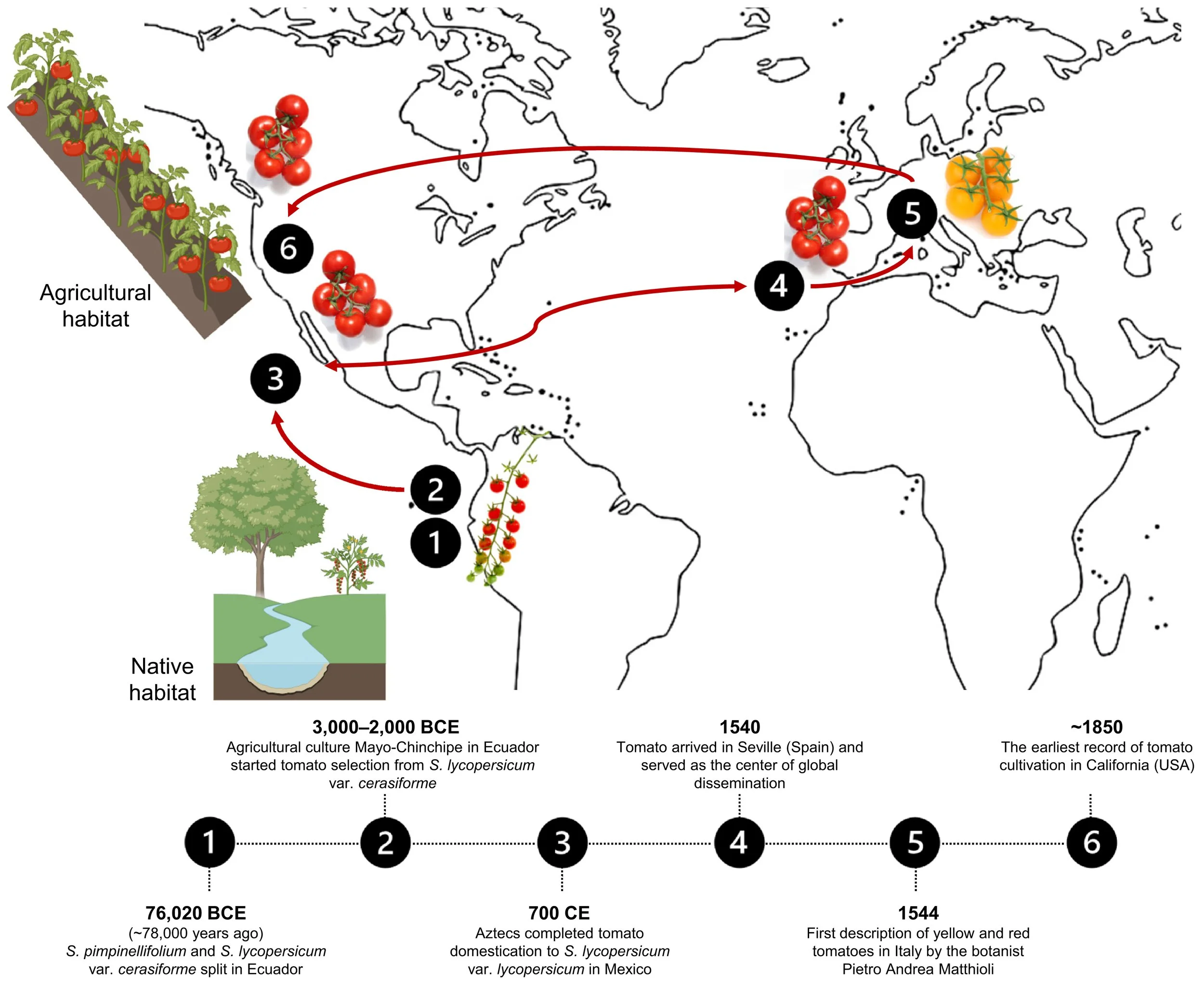

This paper shows their journey of domestication.
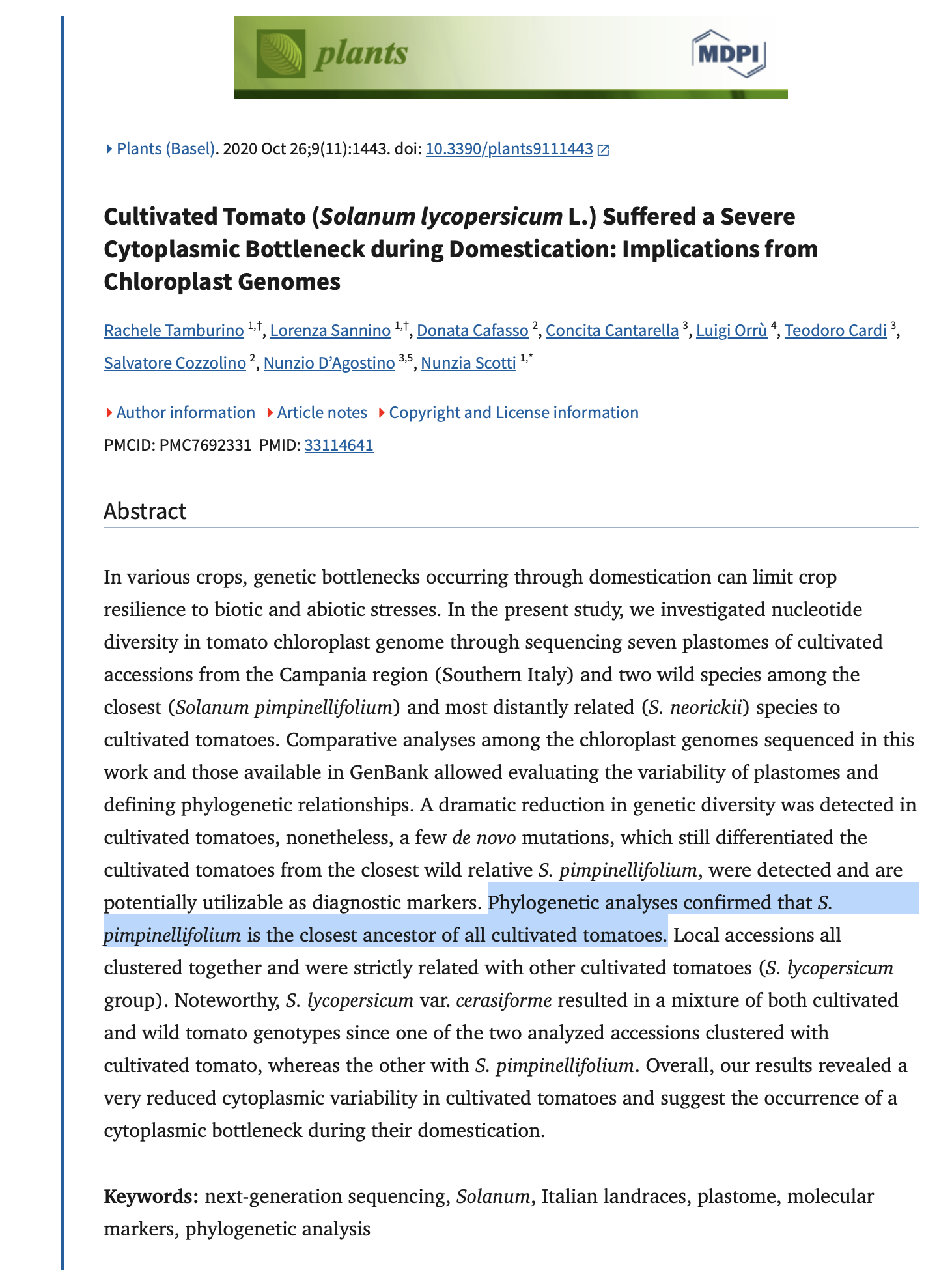
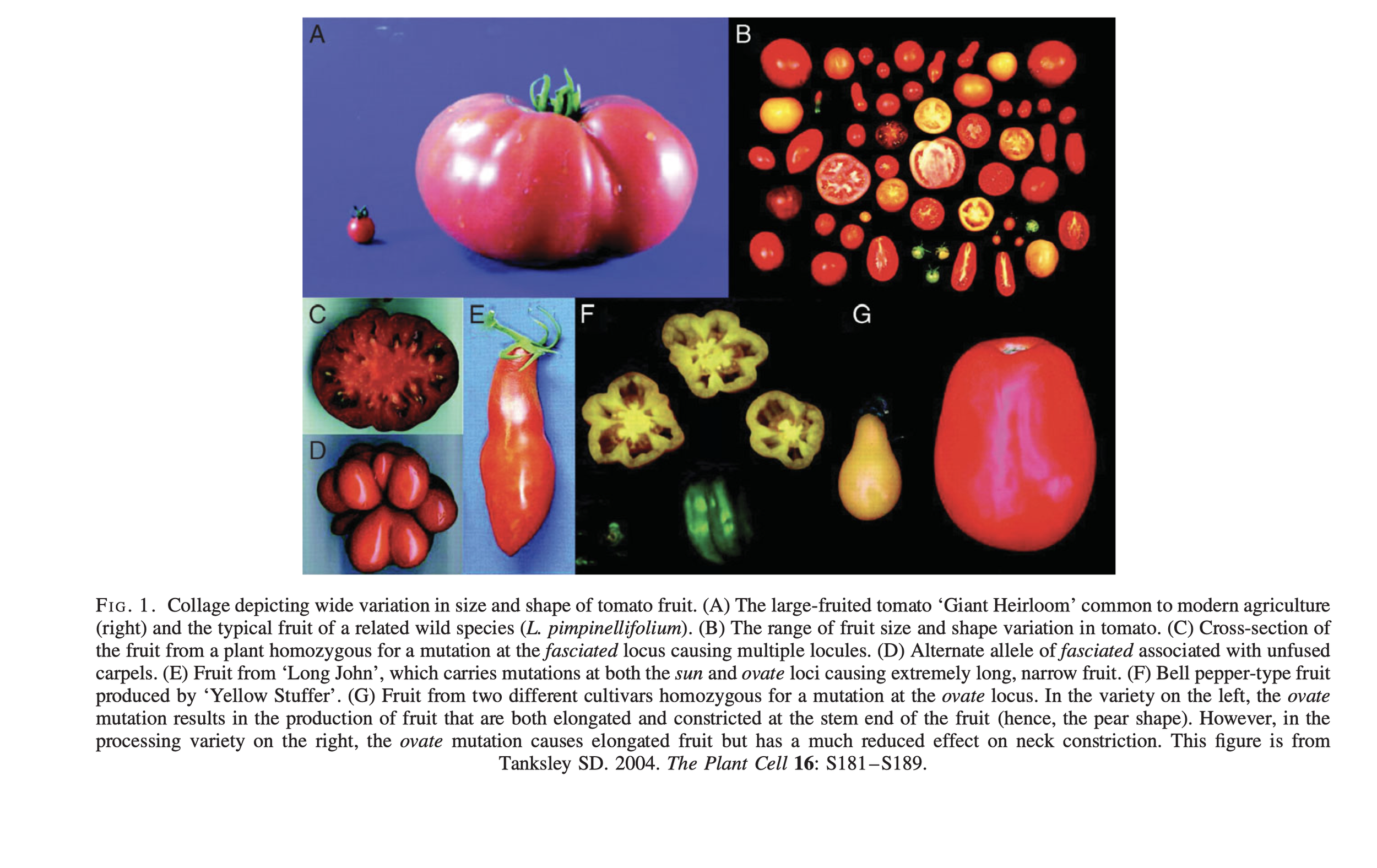
This image illustrates some of the variations that tomatoes picked up during their domestication.
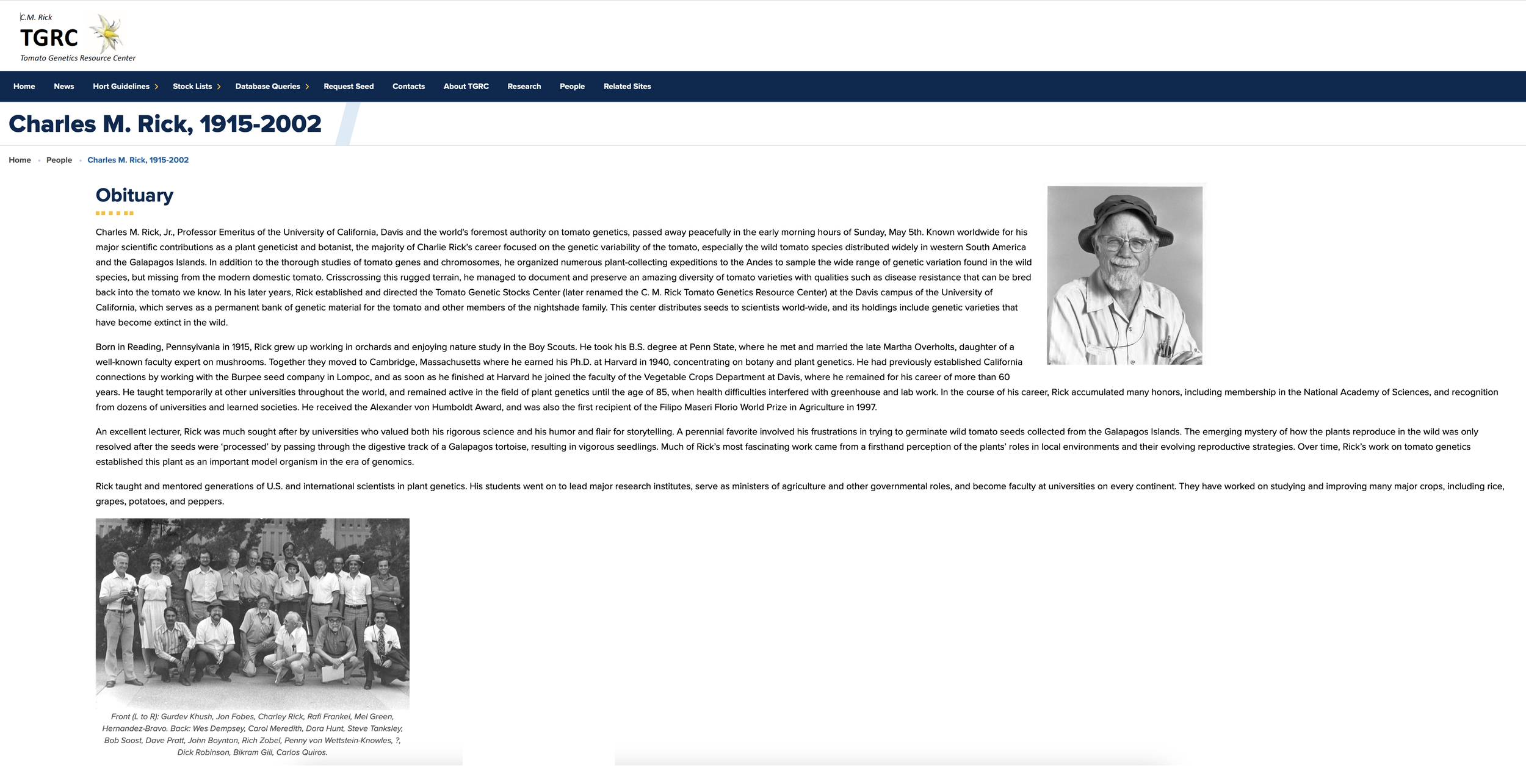
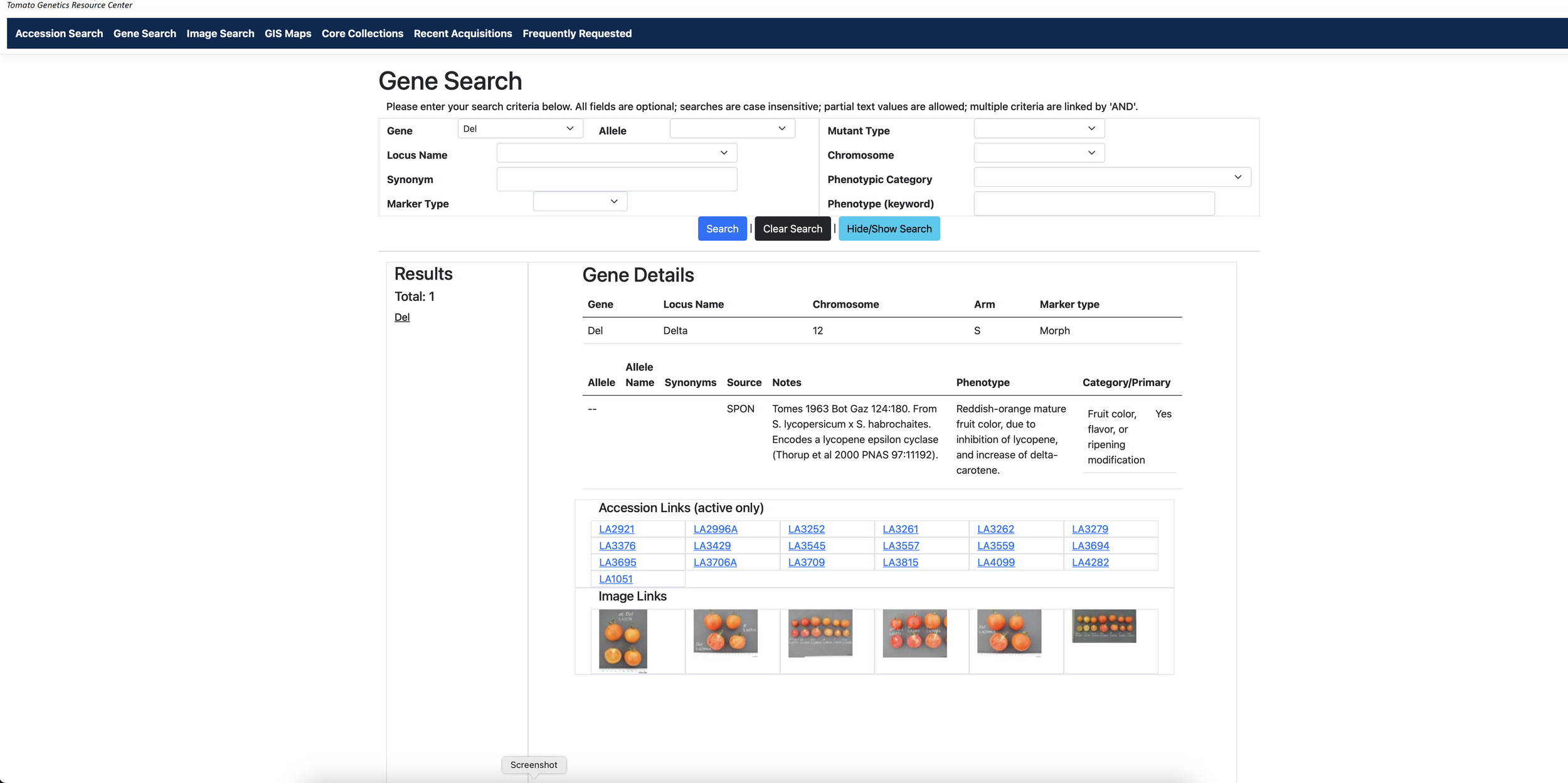
Charles Rick really opened the door to incorporating wild species genes into tomatoes and to understanding tomato genetics.
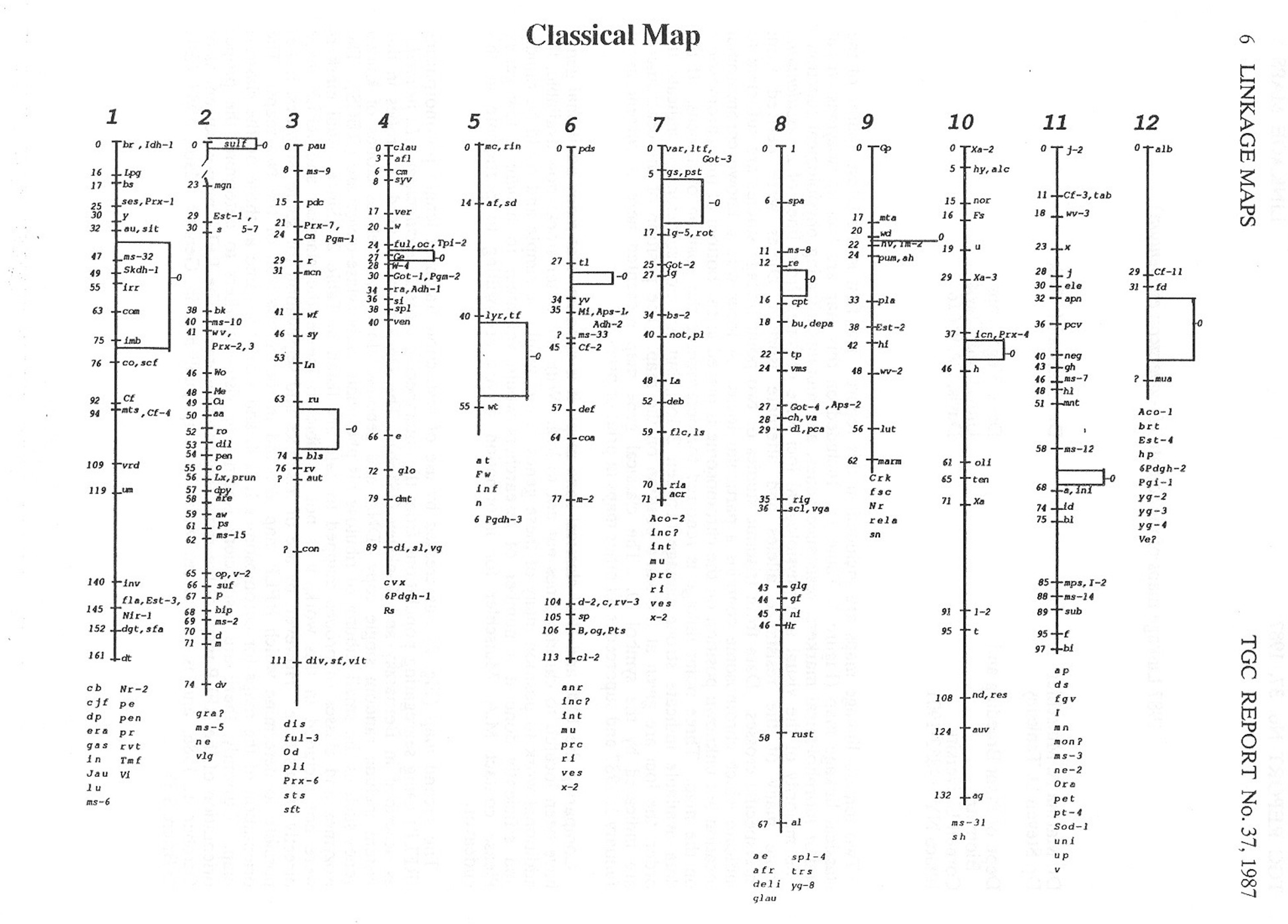
The tomato contains 12 chromosomes, and thanks to the pioneering work of Charles Rick and so many others, the location of
many genes are well-documented (some locations have been refined since; from TGC Report No. 37, 1987)
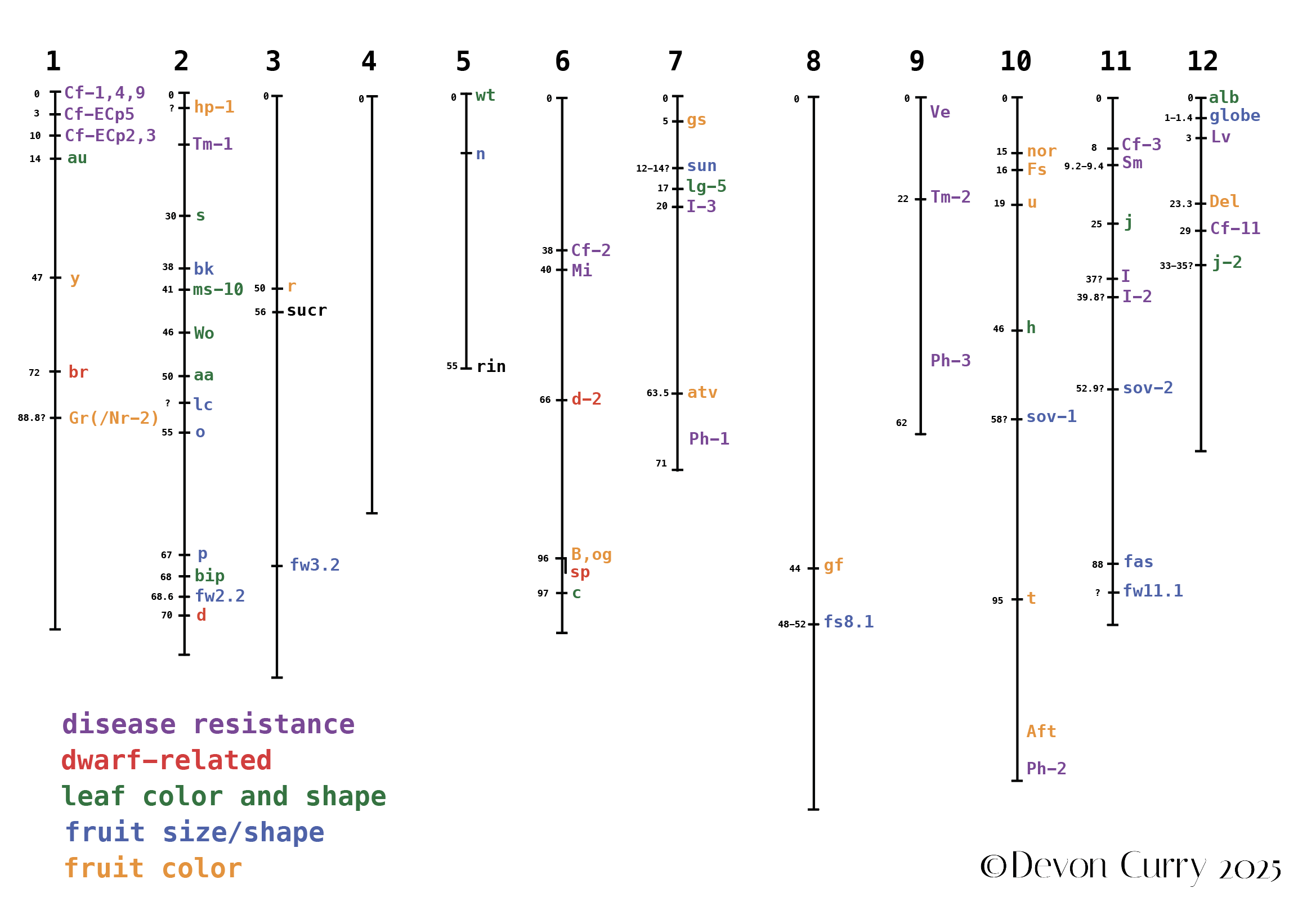
This is a working copy I use to keep track of genes and to look for potentially linked genes,
so that I can better interpret results of my breeding experiments.
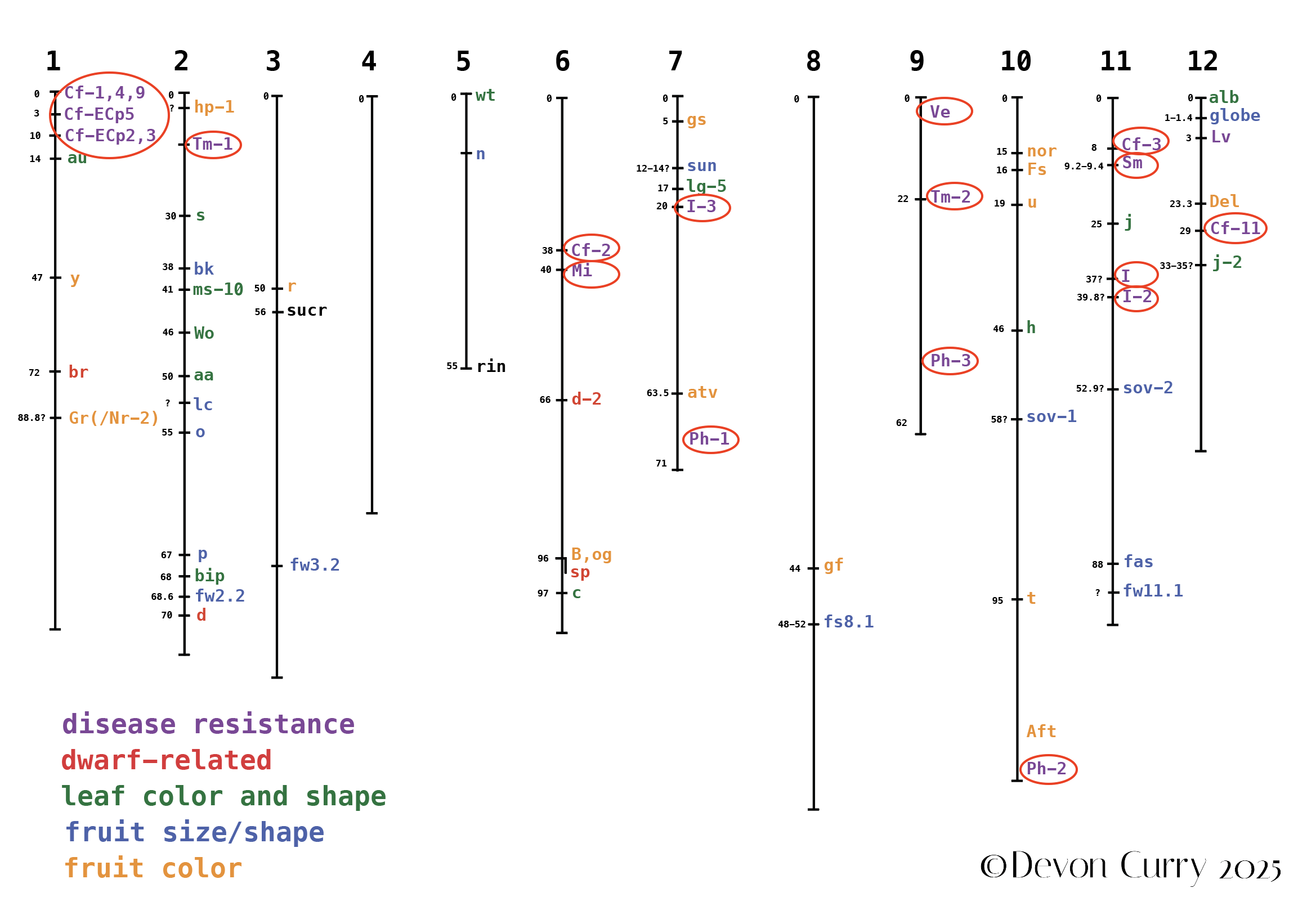
The disease resistance genes
(Cf)- Leaf mold resistance
(Tm-1)- Tobacco mosaic virus resistance
(Mi)- nematode resistance
(I-3)- fusarium resistance, race 3
(Ph-1)- blight resistance
(Ve)- verticilium resistance
(Tm-2)- Tobacco mosaic virus resistance
(Ph-3)- blight resistance
(Ph-2)- blight resistance
(Sm)- Stemphylium lycopersici (gray leaf spot) resistance
(I)- fusarium resistance, race 1
(I-2)- fusarium resistance, race 2
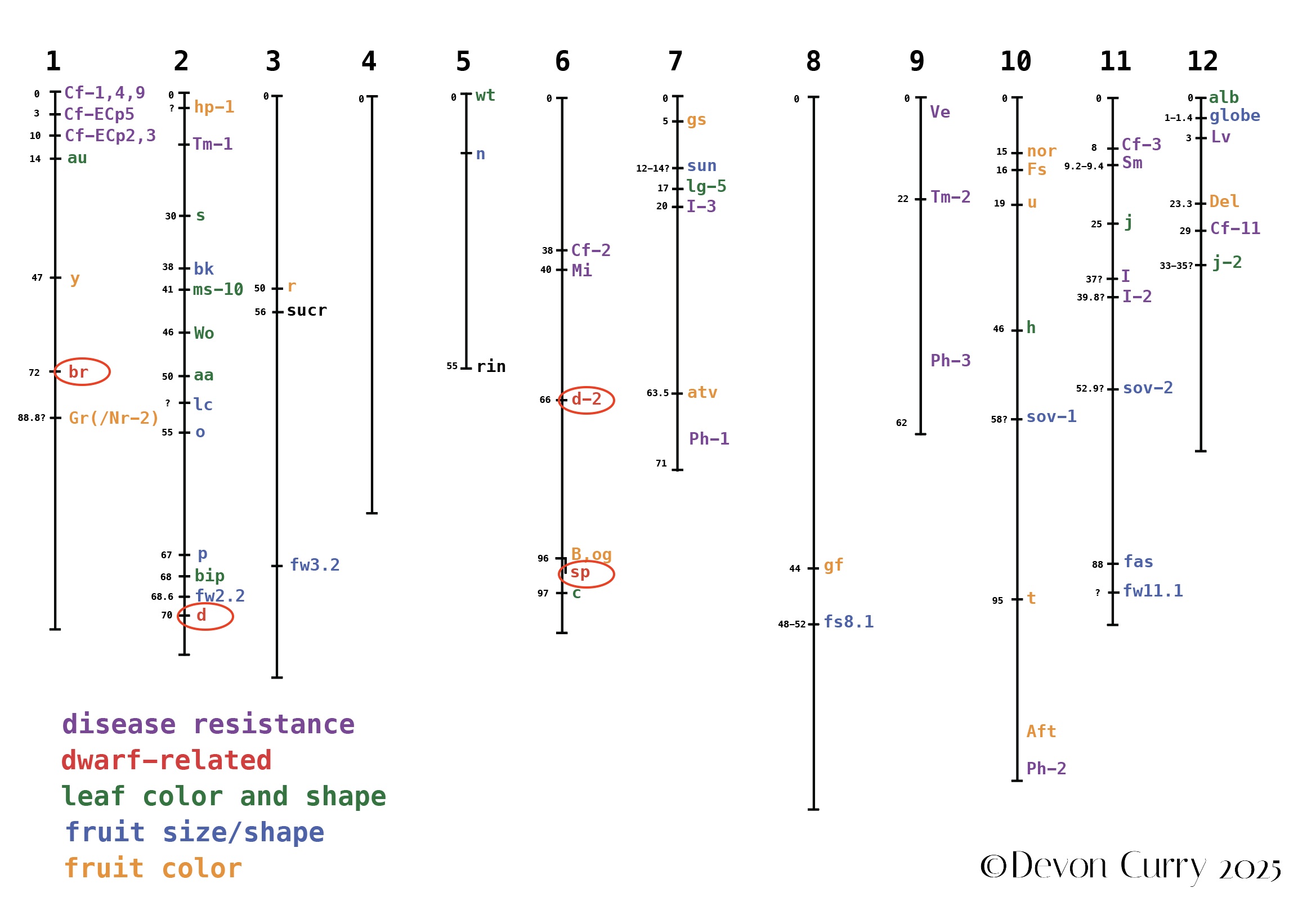
Dwarf-related genes
(br)- brachytic causes shortened internodes
(d)- dwarf
(d-2) -less common, similar to (d)
(sp)- self-pruning, or determinate, causes new growth to be flowers instead of shoots,
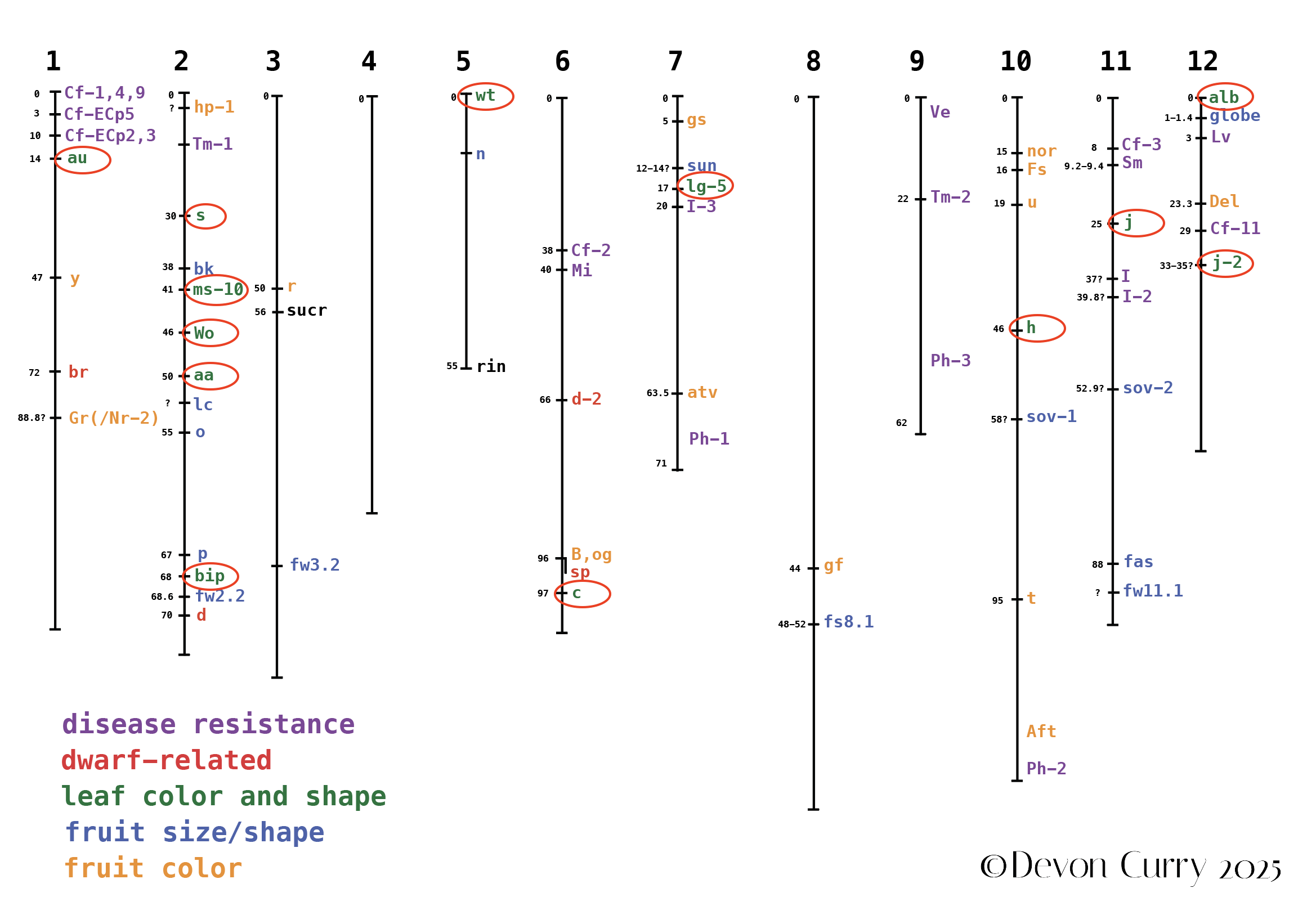
Leaf color and shape genes
(au)- some kind of light green leaves (that aren’t homozygous lethal like many other genes)
(s)- multiflora; inflorescences have multiple flowers; Barry’s Crazy Cherry and others
(ms-10)- male sterile, anthers don’t release viable pollen; sometimes used in making hybrids (happens to be in one parent of Mountain Vineyard)
(Wo)- woolly; causes leaves and stems to have elongated trichomes or hairs; stable varieties are most likely Wo(m) allele, others are homozygous lethal
(aa)- anthocyanin absent; there is no anthocyanin in the stem/leaves, visible in seedlings and is handy as marker for ms-10 in Mountain Vineyard
(bip)- bipinnate; leaves are subdivided into smaller segments
(wt)- wilty; leaves are wilty, typical of heart-shaped tomatoes (possibly linked to (n)- nipple tips fruit shape gene)
(c)- compound leaf or potato leaf;
(lg-5)- light green 5; some kind of light green leaves (that aren’t homozygous lethal like many other genes)
(h)- hairy
(j)- jointless pedicels
(alb)- variegated leaves
(j-2)- jointless pedicels 2; Mountain Vineyard and others
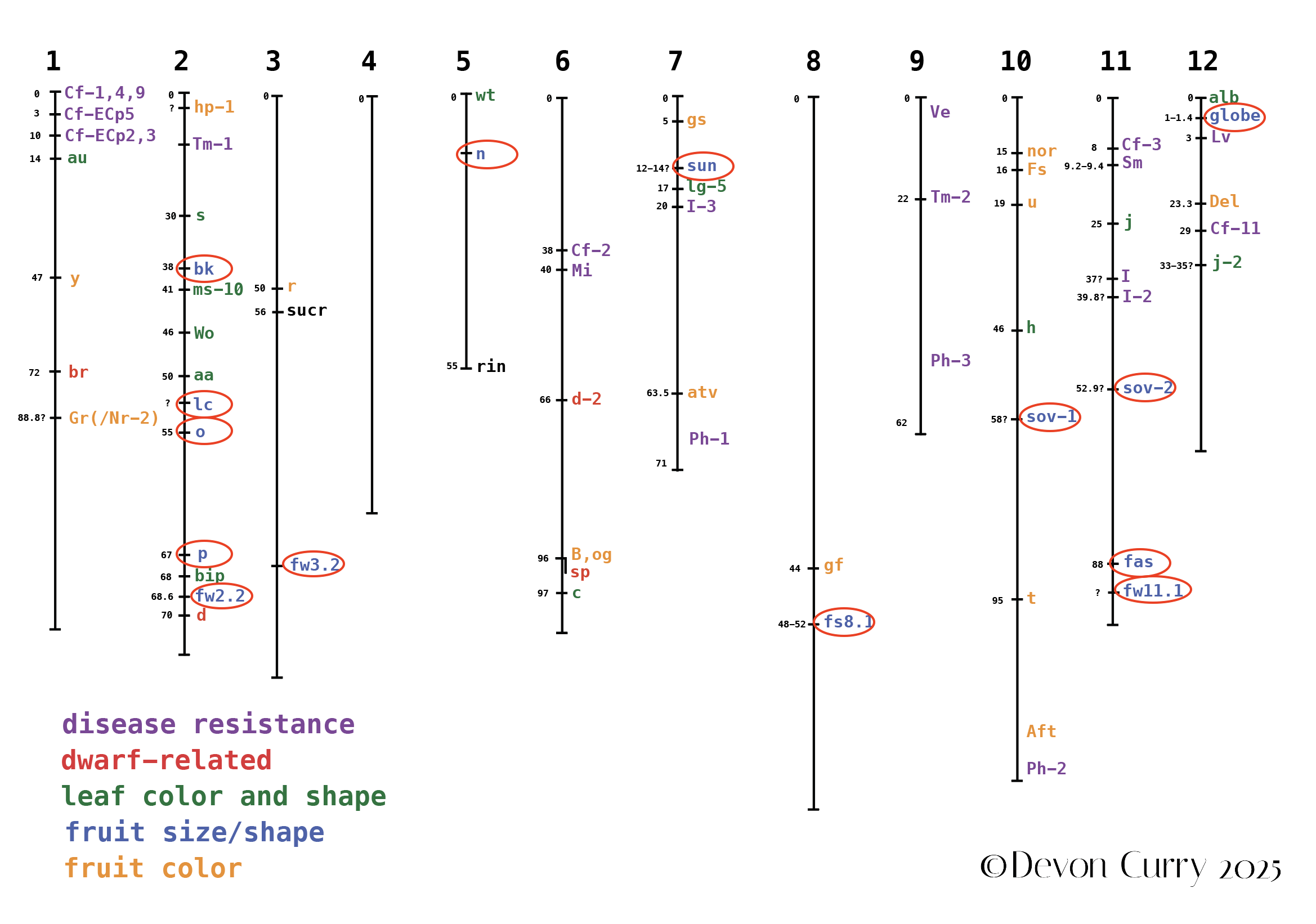
Fruit shape and size
(bk)- beaked; fruits have sharp tip
(lc)- locules; combine to form bigger fruit, also with (fas)
(o)- ovate; oval shape, combines with sov-1 for pear shape, and sov-2 for elongation
(p)- peach; fruit has fuzz
(fw2.2)- fruit weight 2.2;
(fw3.2)- fruit weight 3.2;
(n)- nipple tips; possibly the same as PT (pointed tip)
(sun)- elongated;
(fs8.1)- fruit shape 8.1; related to squareness developed for processing tomatoes so they won’t roll off conveyor belt
(sov-1)- suppressor of ovate 1; degree of pear-shapedness
(sov-2)- suppressor of ovate 2;
(fas)- fasciated; carpels(ovary unit) combine to form larger fruit
(fw11.1)- fruit weight 11.1;
(globe)- globe shape; rounded instead of flat-bottomed
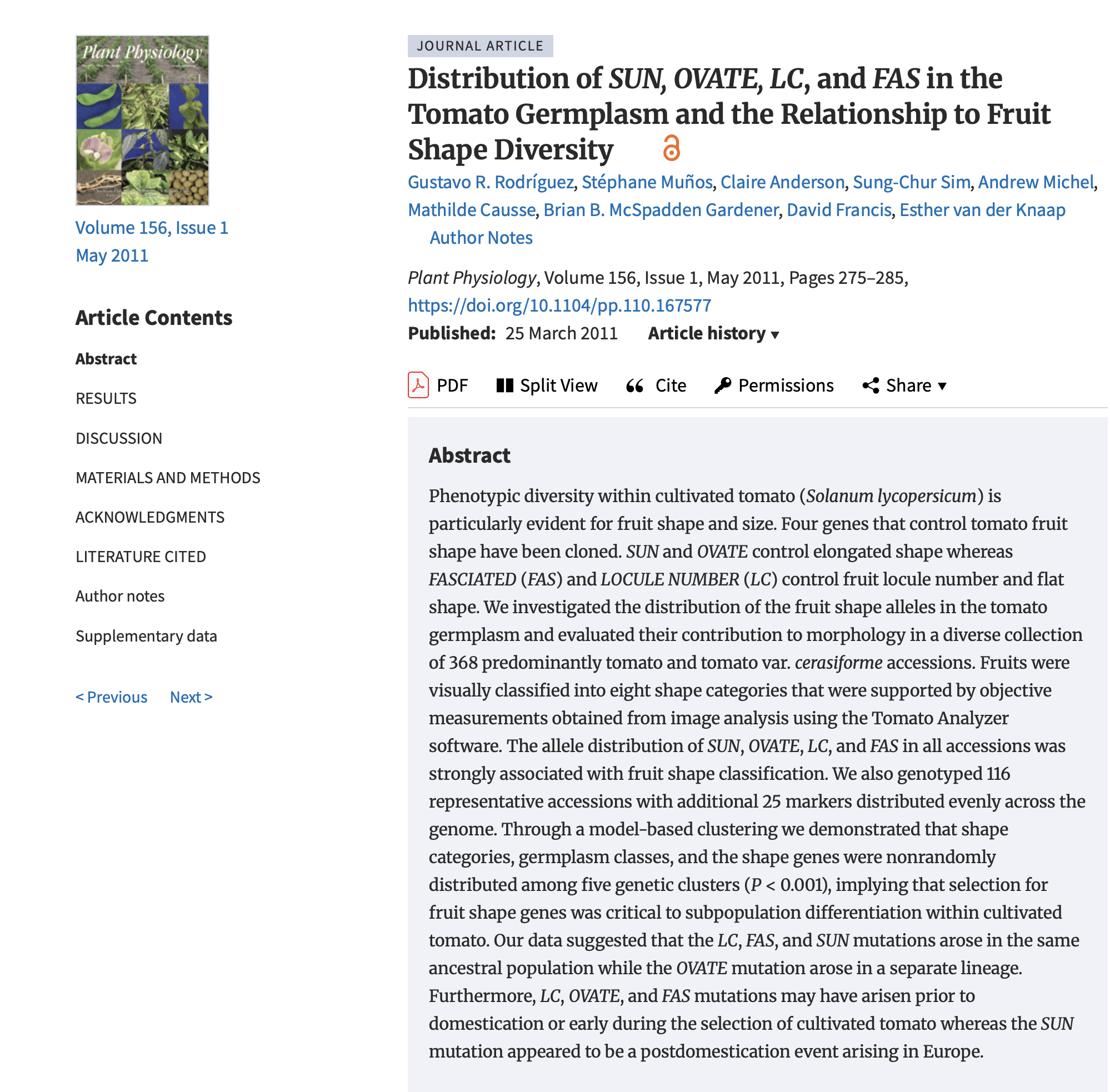
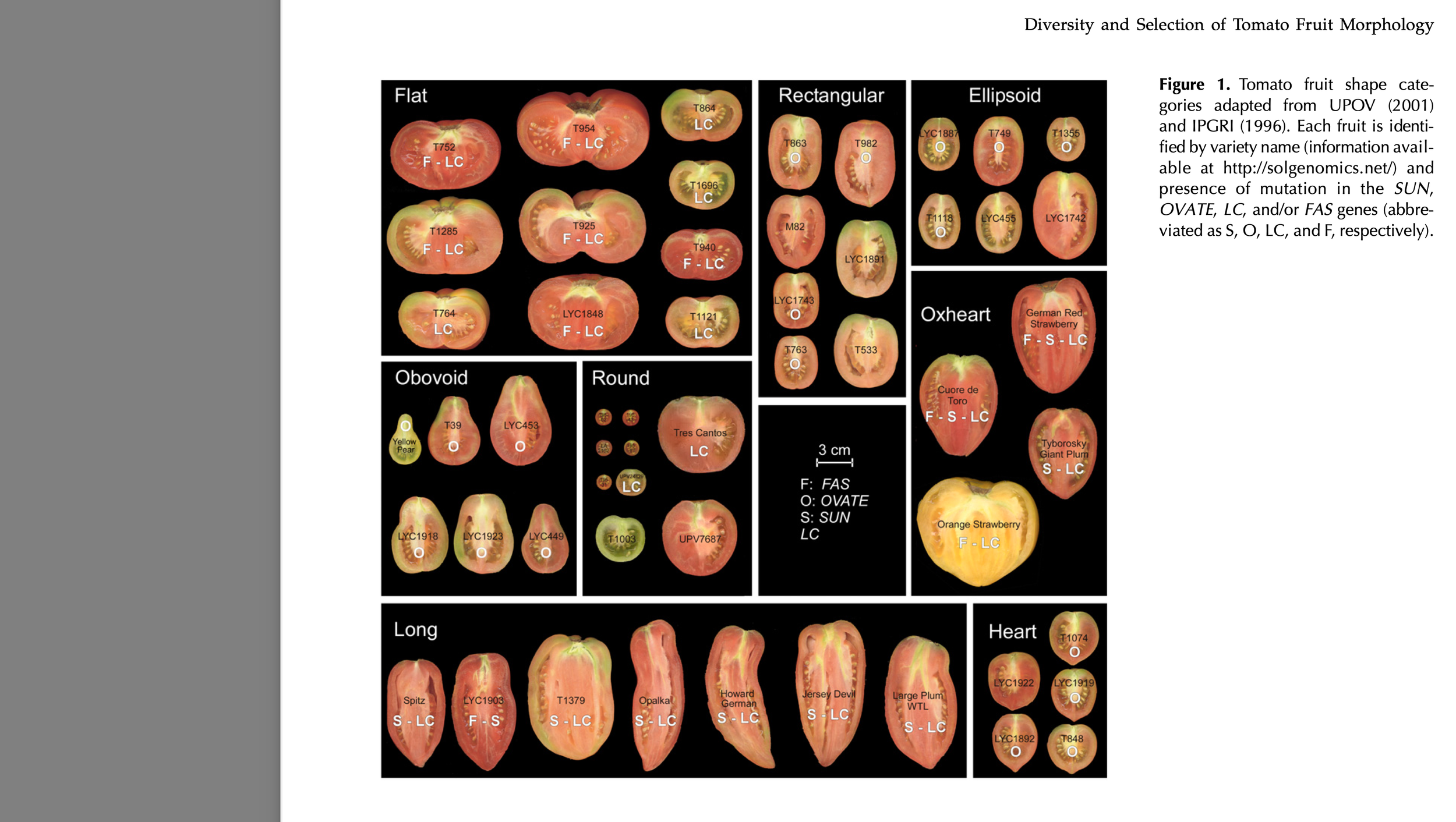
This paper shows the effects of different combinations of size/shape altering genes.
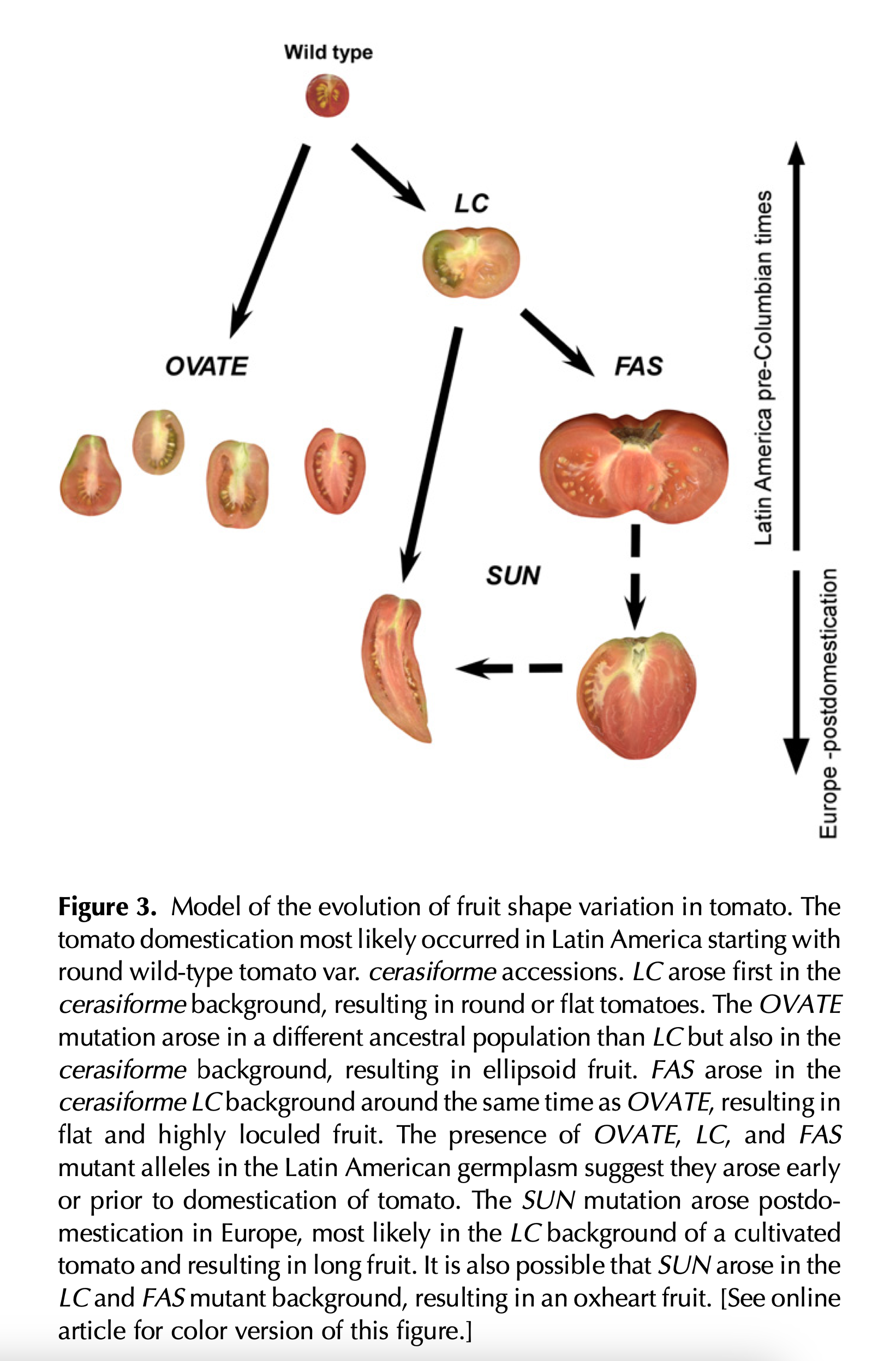
Sun evidently developed as a genetic mutation in Europe, either in combination with or separately from fas. Embodies the typical San Marzano shape.
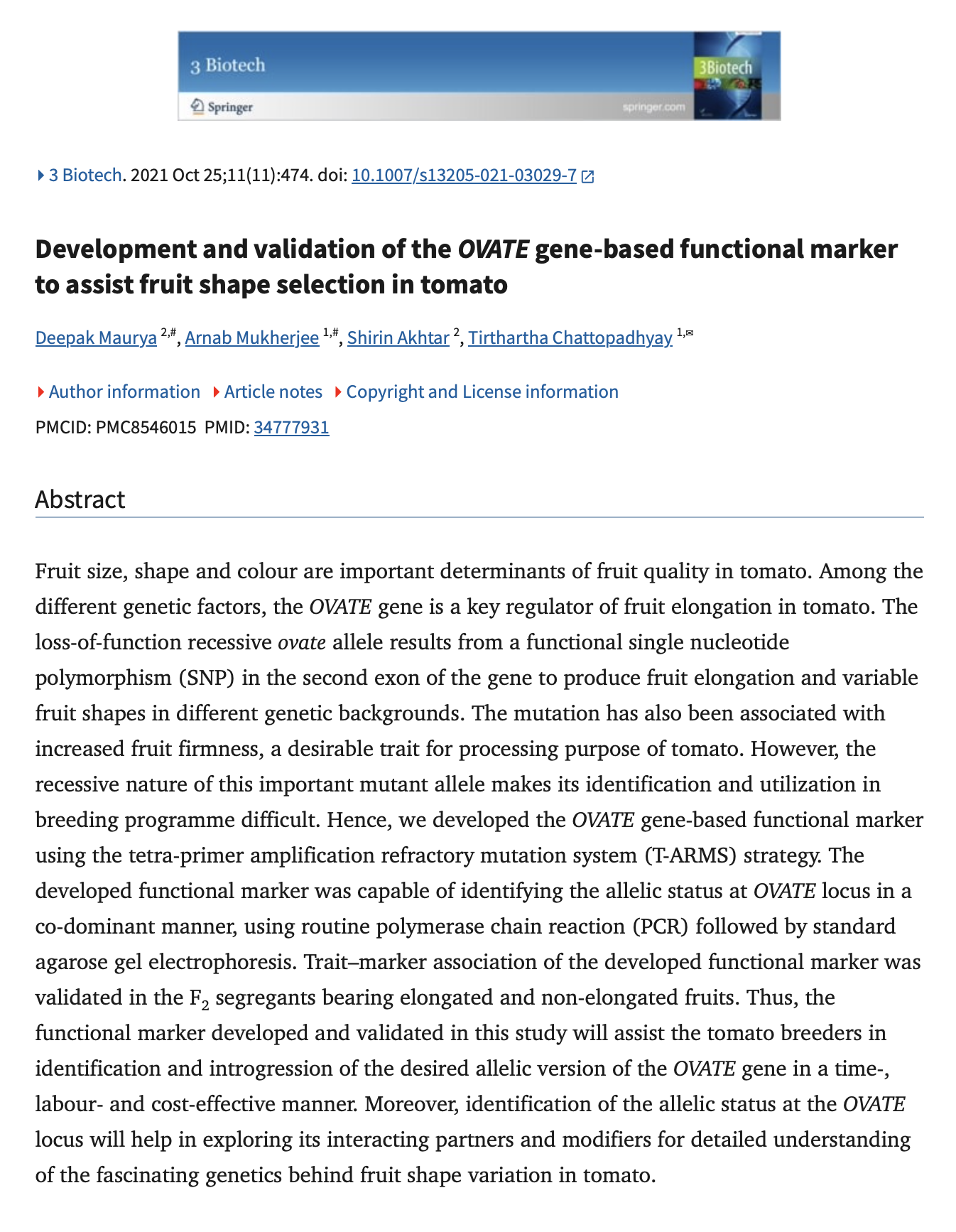
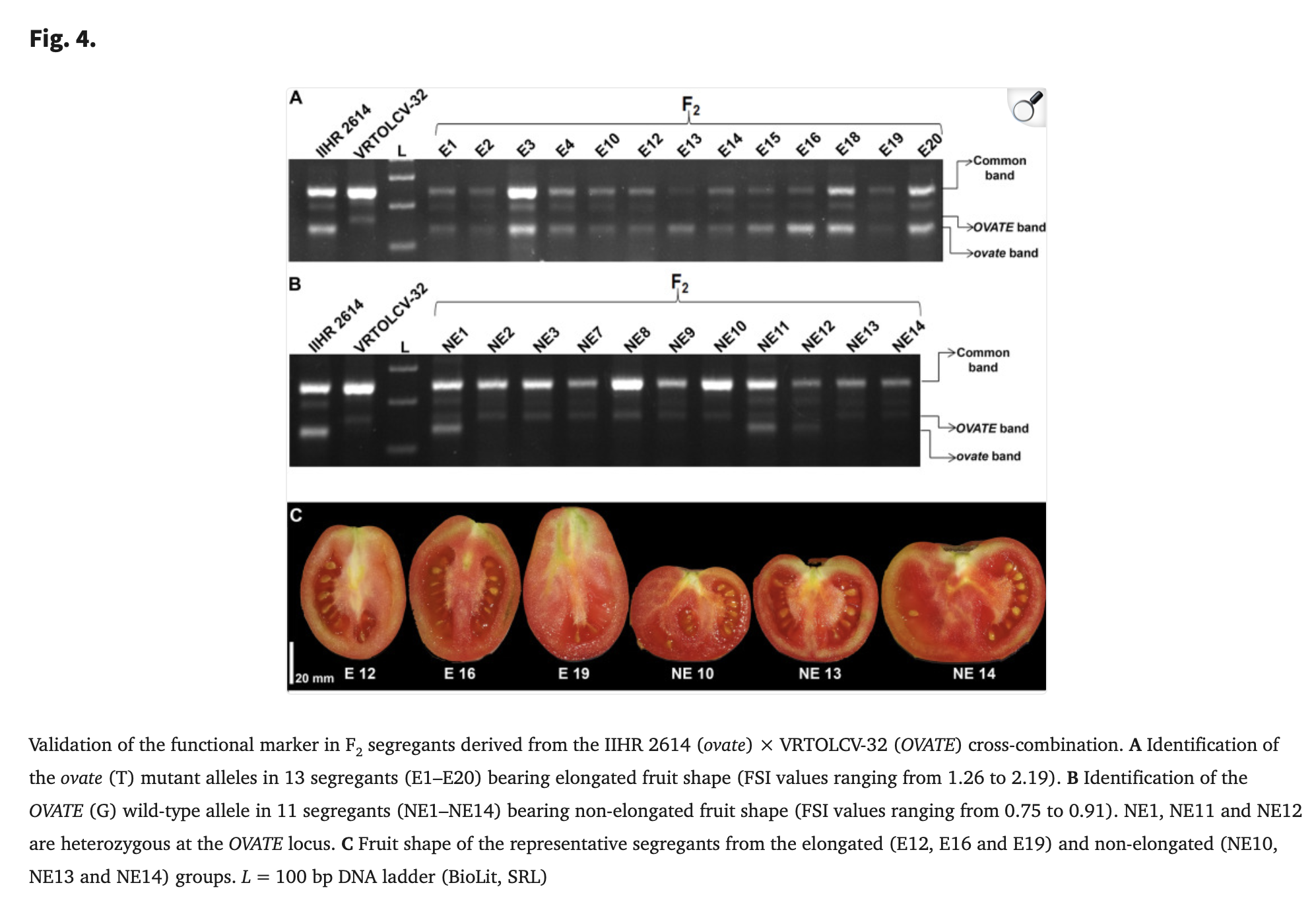
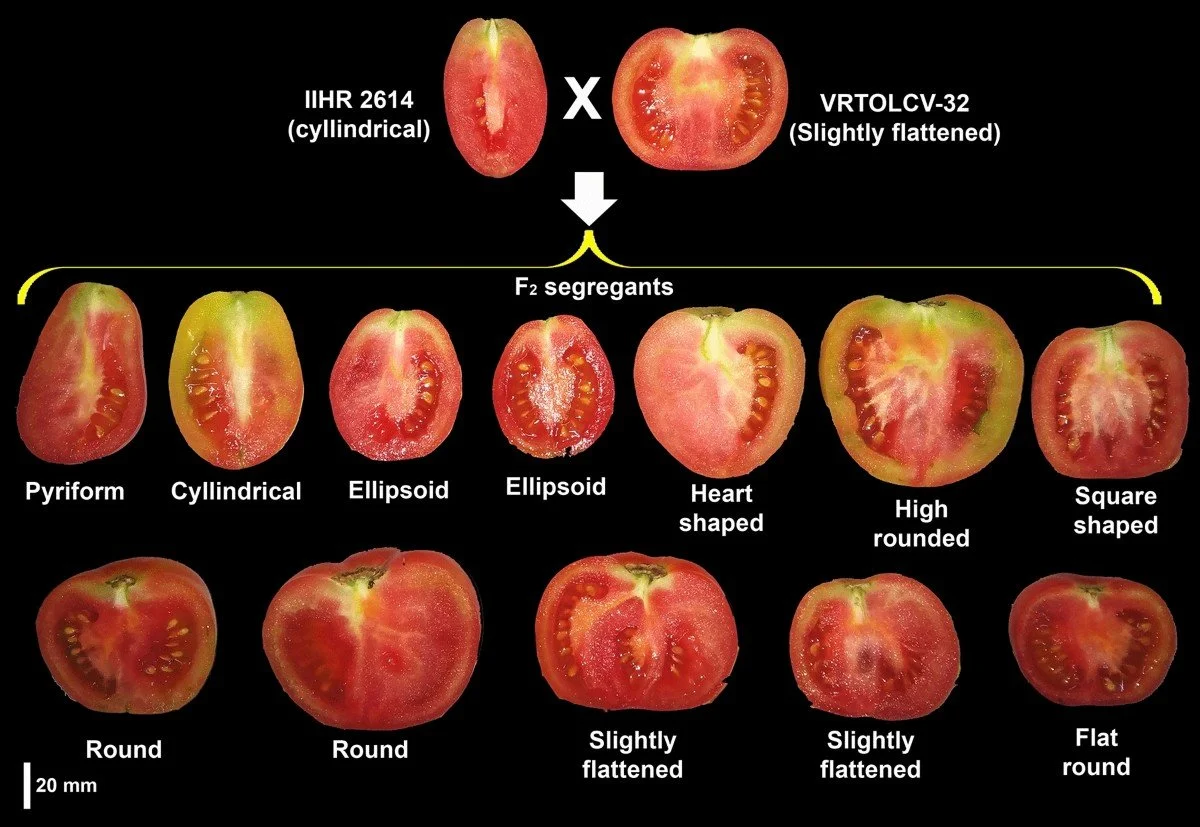
This shows how a combination of ovate and other genes produces a wide variety in the F2 generation.
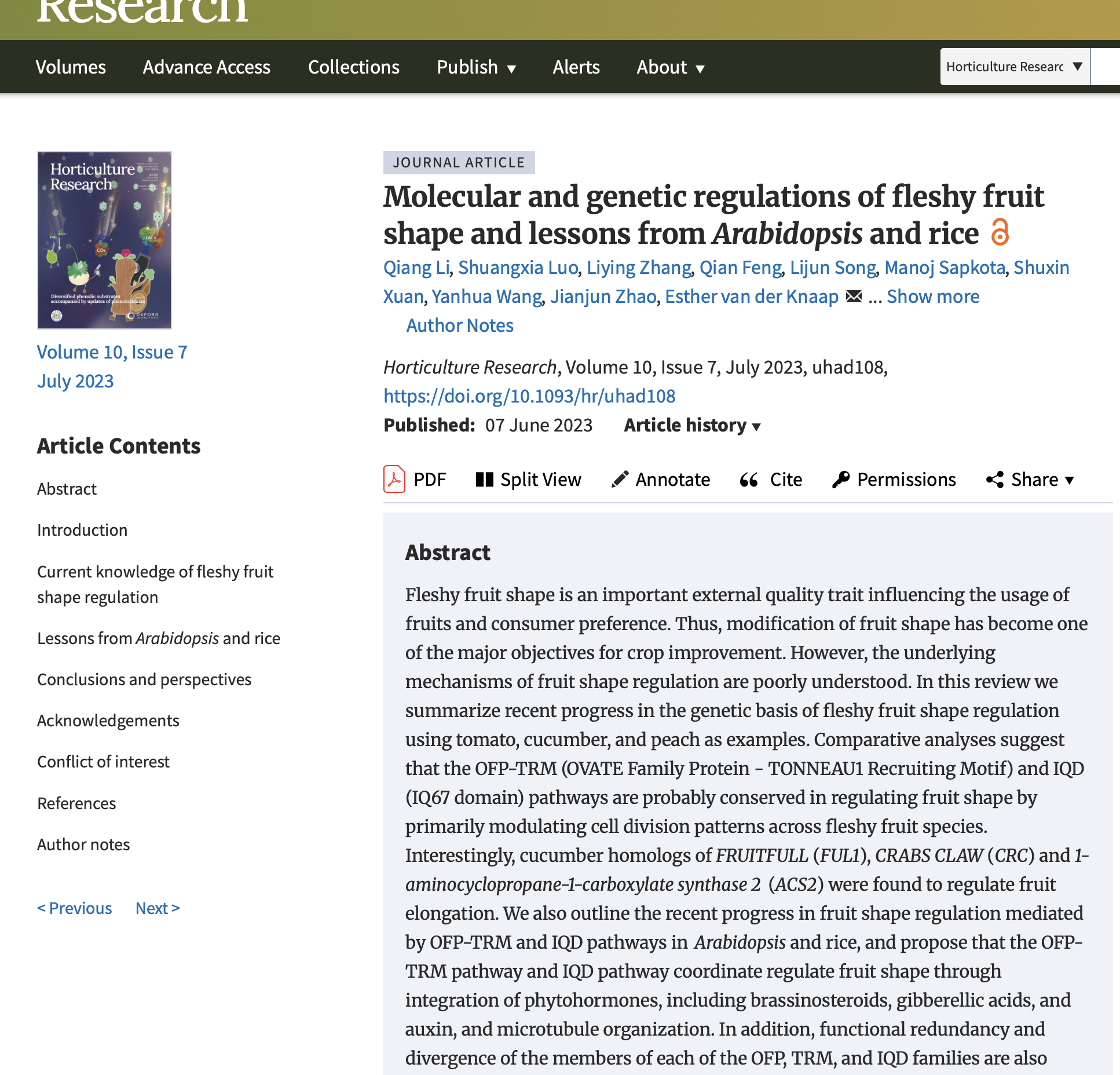

Are fas and lc involved here too?
Is globe involved?
It’s interesting to note that ovate also increases the fruit firmness.
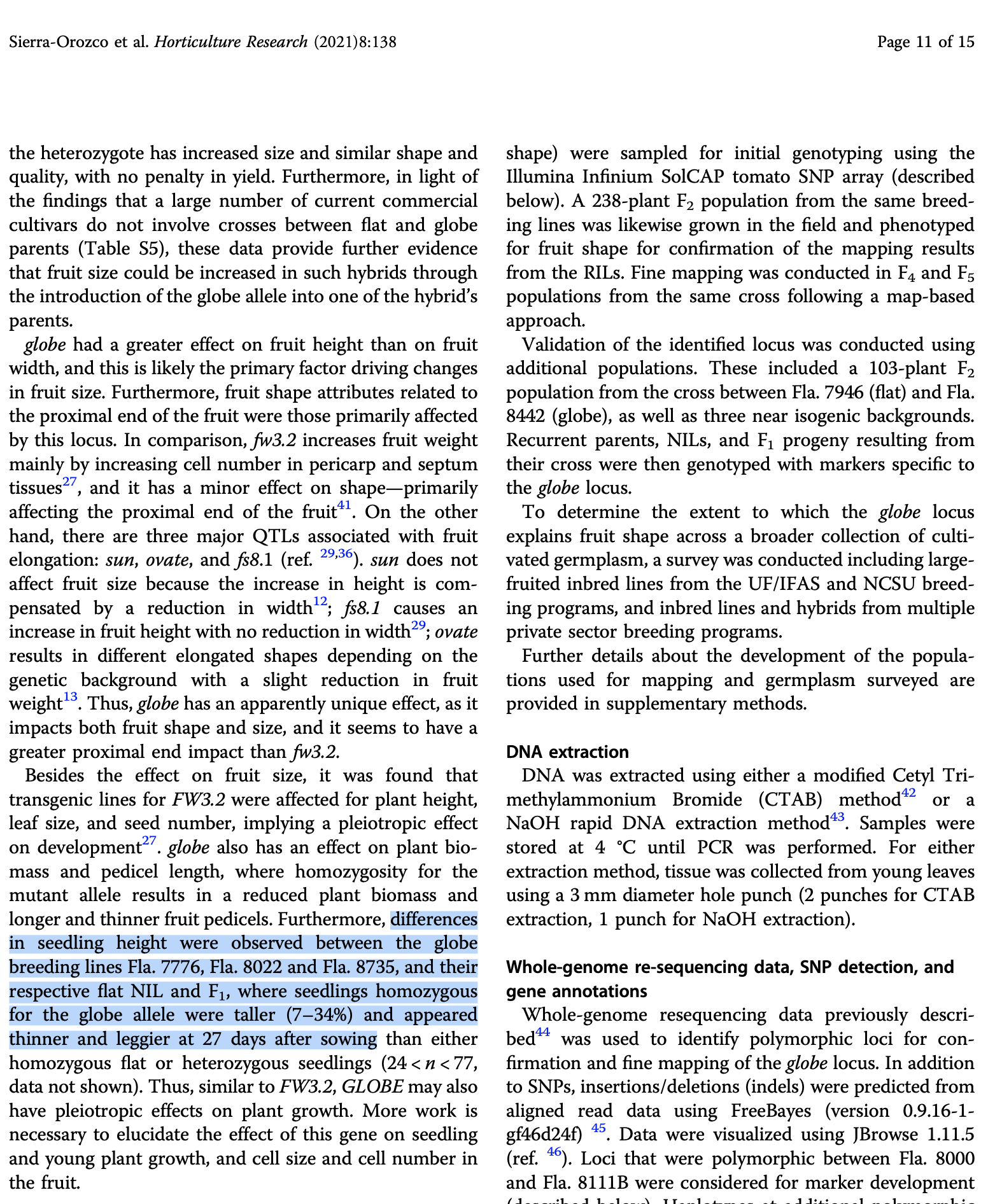
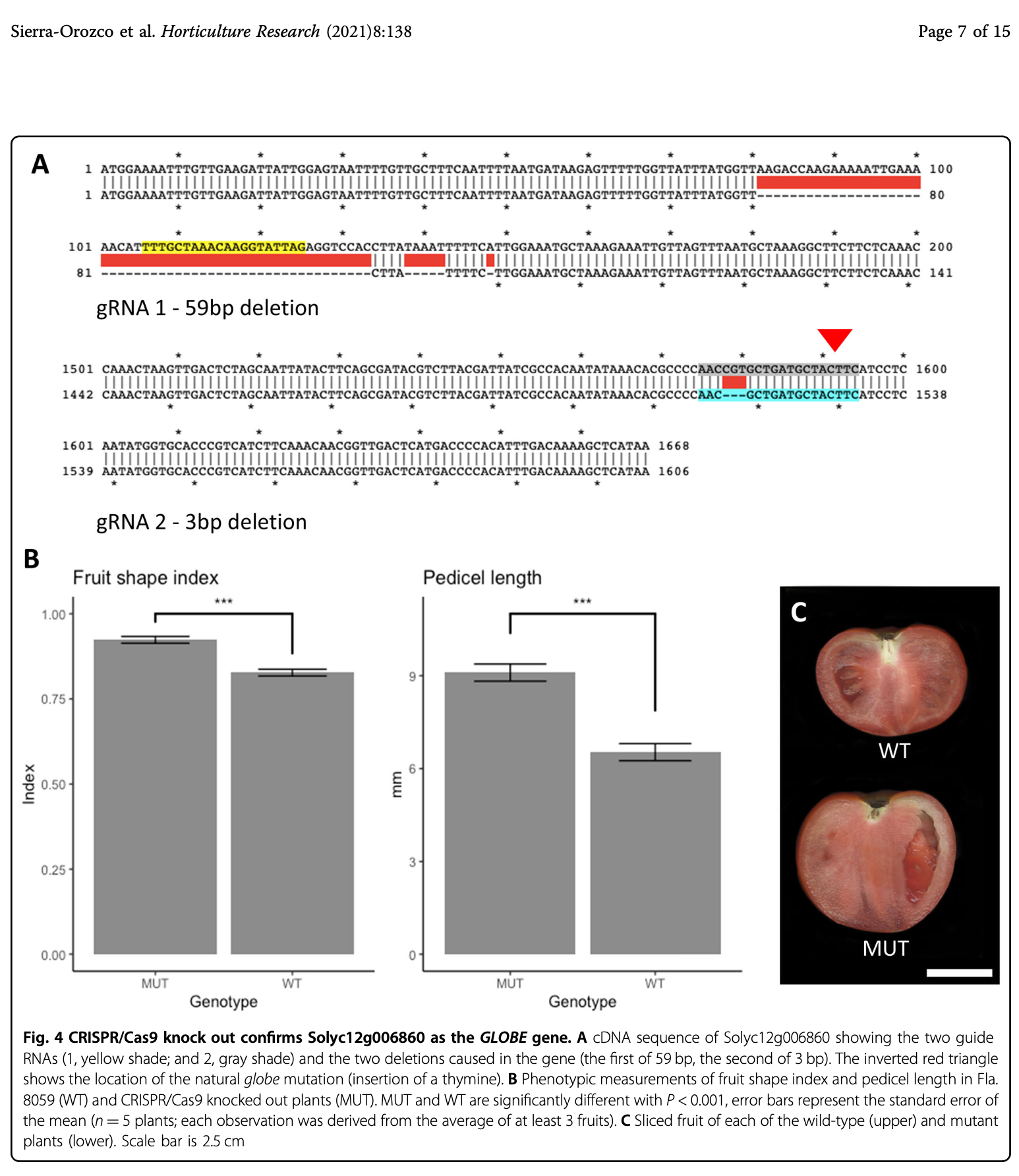
This paper shows the effects of the globe gene.
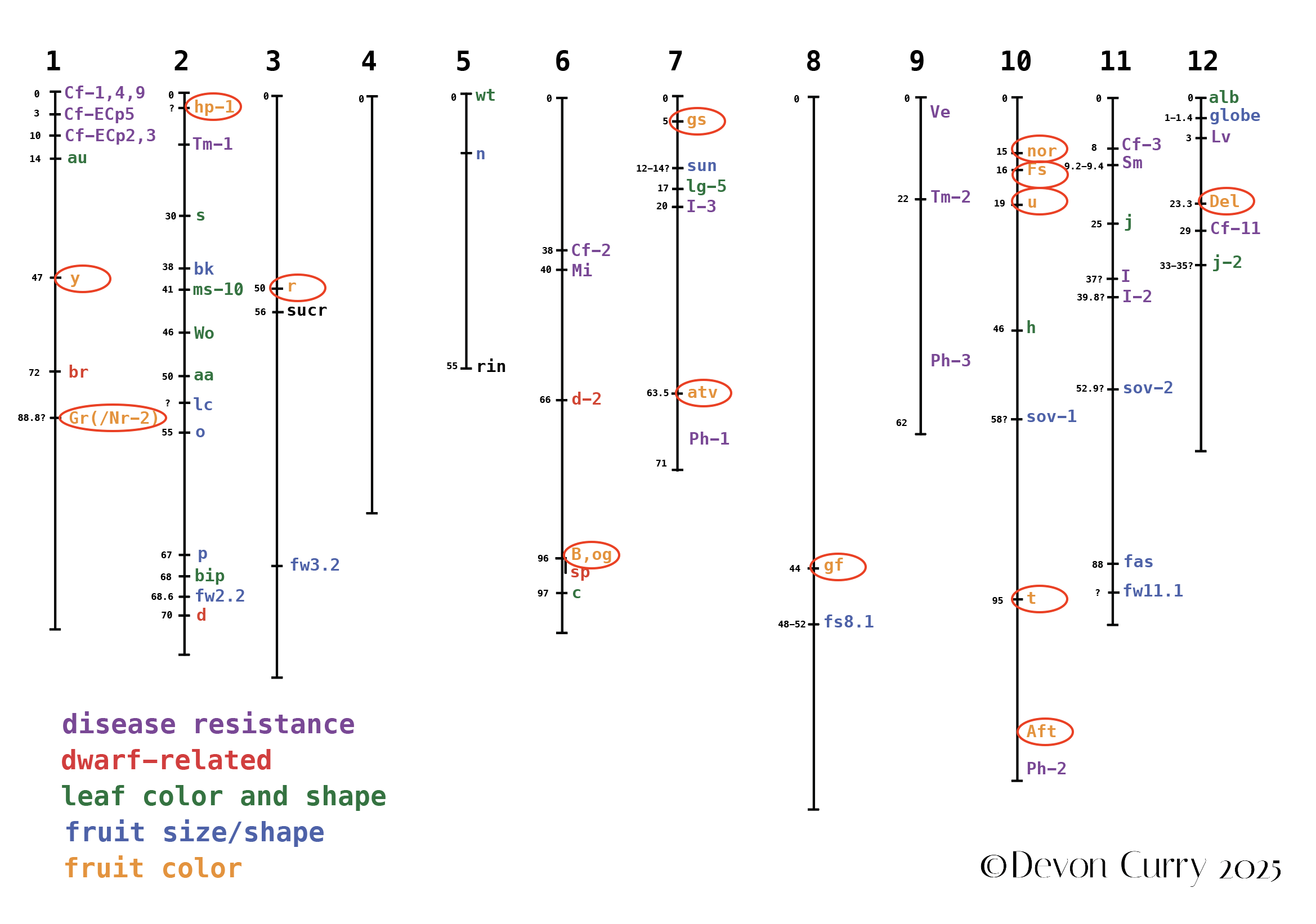
Fruit color genes
(y)- clear skin; skin is clear instead of yellow, lack of pigment naringen chalcone
(Gr/Nr-2)- Green ripe aka Never-ripe 2; related to ethylene response, chlorophyll remains, green outside but red (or orange or yellow?) inside
(hp-1)- high-pigment 1; higher carotenoid and ascorbic acid levels, but brittle stems, reduced production
(r)- yellow flesh; or bicolor alleles, phytoene synthase 1 is partially or totally dysfunctional; precursor of all carotenoid development, (80 percent lower than R allele)
(B)- Beta-carotene; lycopene is converted into beta-carotene; from Solanum habrochaites among others?
(og)- old gold crimson, null beta-carotene; more lycopene and no beta-carotene, redder, red locular gel
(gs)- greenstripe; stripes on epidermis due to methylation, can be on any color background
(atv)- atroviolacea; higher level of anthocyanin in whole plant, from Solanum cheesmaniae
(gf)- greenflesh; chlorophyll in fruit doesn’t break down during ripening
(nor)- non-ripening;
(Fs)- Fruit stripe; radial stripes on fruit along locules; more visible in Anthocyanin varieties; might be allele of (u)- uniform ripening
(u)- uniform ripening; fruit lacks dark green shoulders and ripens in one color; detrimental to flavor development
(t)- tangerine orange; carotenoid isomerase gene nonfunctional, so prolycopene (tetra-cis-lycopene) accumulates instead of being converted
(Aft)- Anthocyanin fruit; anthocyanin on epidermis; from Solanum chilense
(Del/Ctrl-e)- Delta-carotene; lycopene converted into delta-carotene; from Solanum pennellii
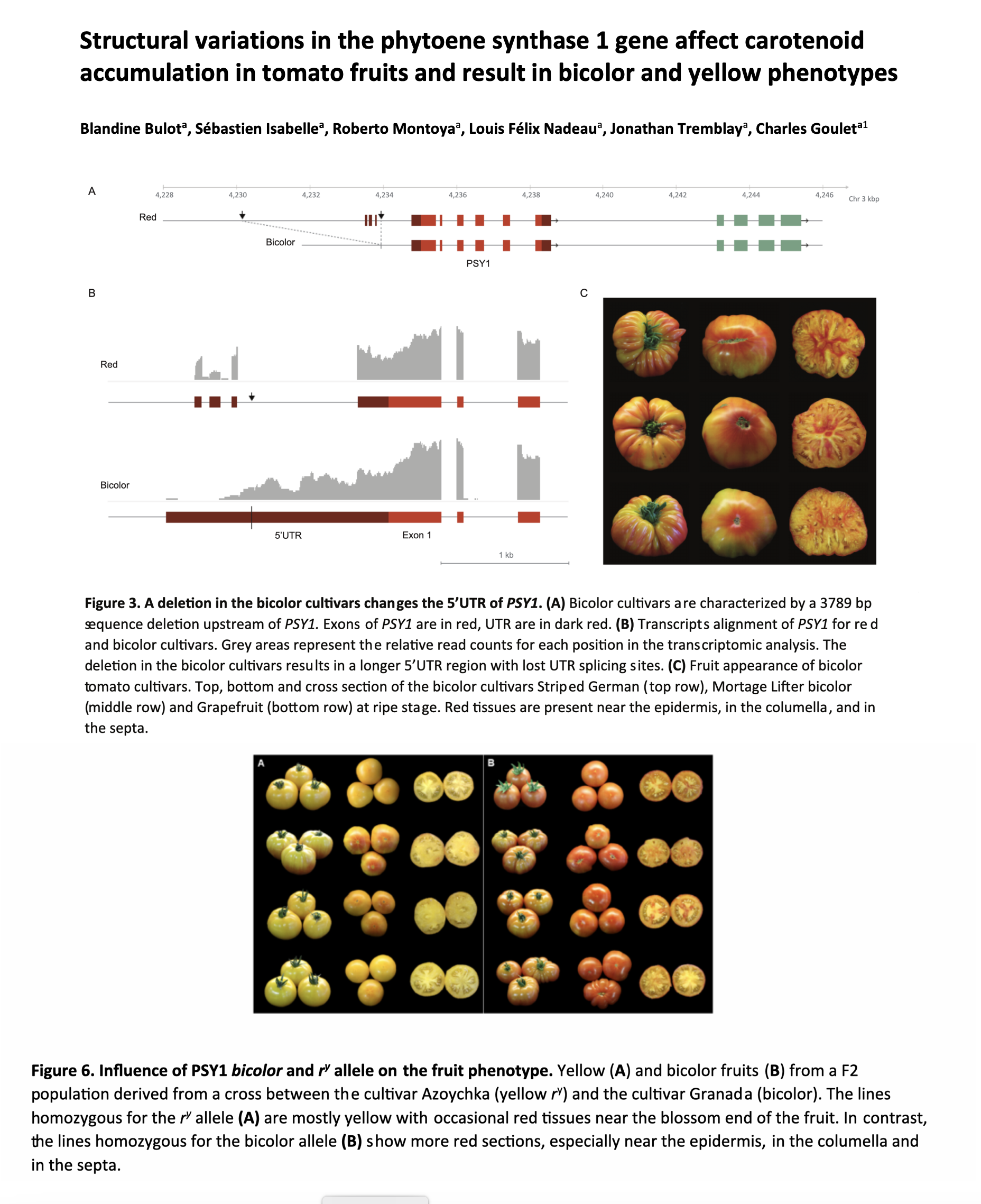
Color in tomatoes is like a layering, starting from the inside out and from the top of the carotenoid creation process to the bottom:
At the R locus, you can have the wild-type (R) red allele, the mutant (r) yellow allele or a mutant (ry or bicolor) bicolor allele.
What’s happening is that that a gene called phytoene synthase 1 (PSY1) is partially (bicolor) or totally (yellow-flesh) dysfunctional.
PSY1 is a precursor to all carotenoid development, so a tomato with two copies of the (r) allele that creates no PSY1 has something like 80 percent lower carotenoids than a tomato with the (R) allele.
In the bicolor allele, the gene has a very ineffective copy of the gene; it has a huge insertion it it’s promoter, so it takes longer to read the gene, and makes only small amounts of what becomes lycopene. That lycopene then naturally goes to certain places in the fruit first as it develops, and thus the pattern of red streaks.
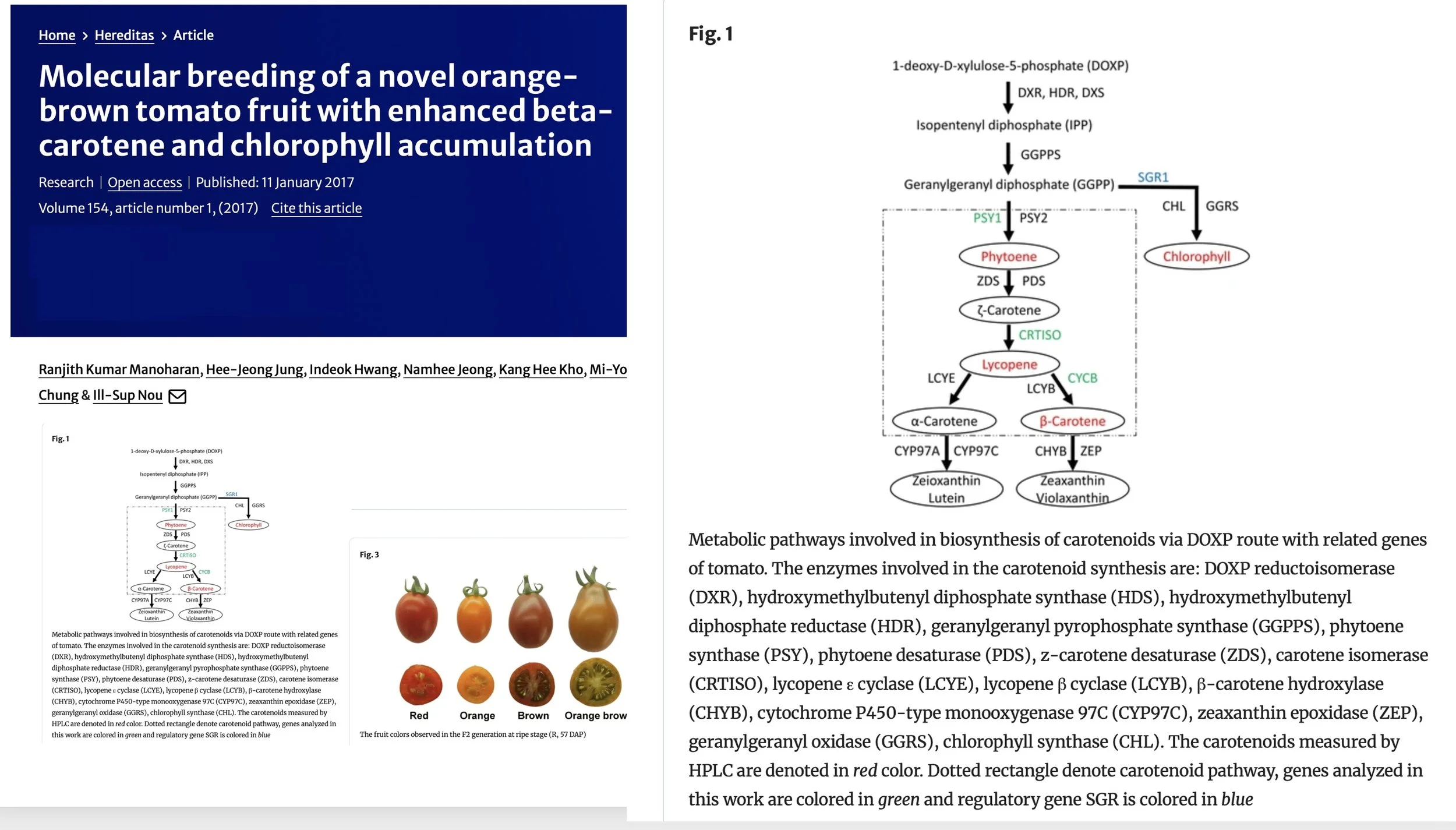
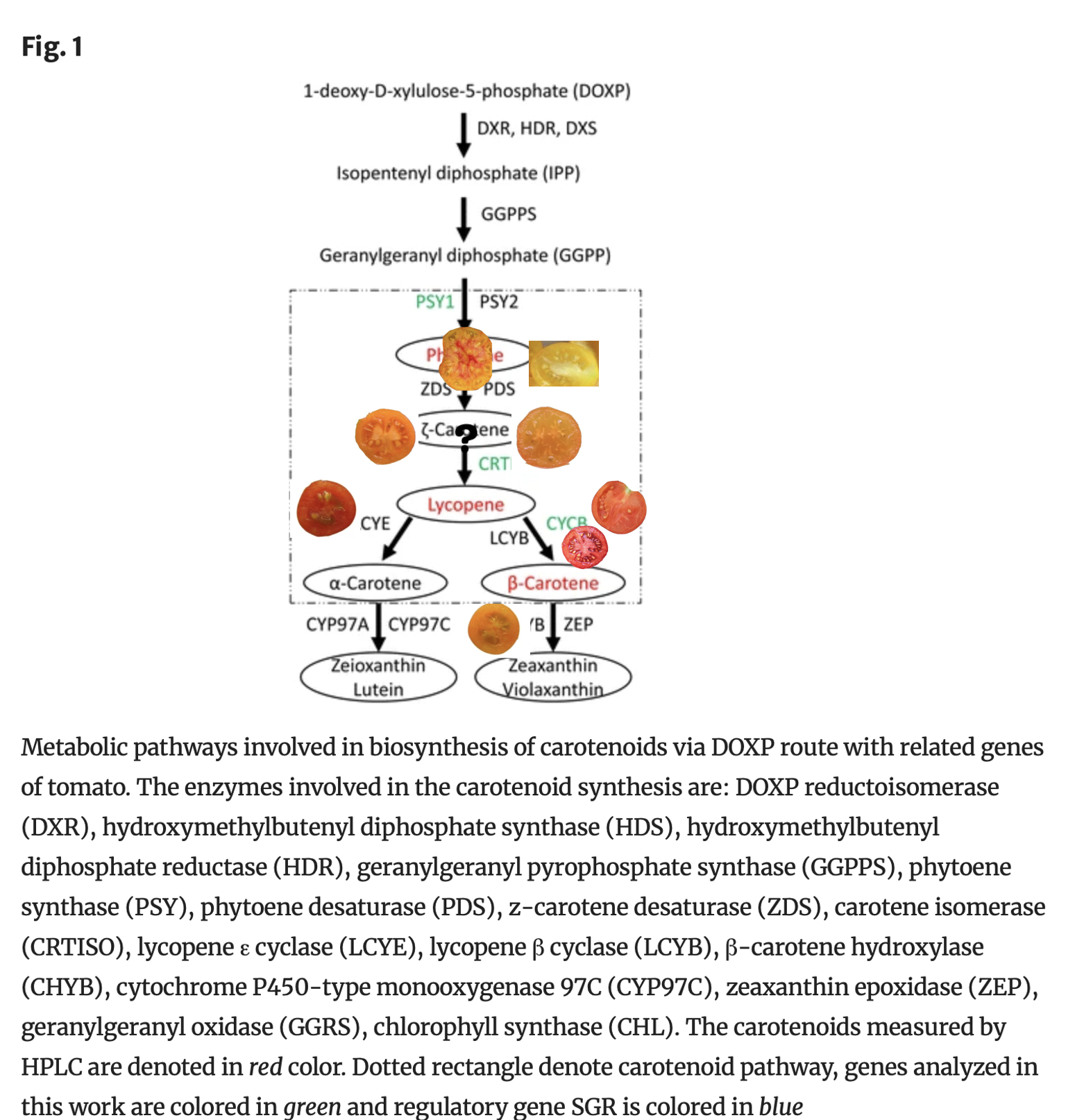
The next step in the carotenoid pathway is called carotenoid isomerase (CRTISO) created by the T gene.
This gene allows orange-colored prolycopene (aka tetra-cis-lycopene) to be converted into red-colored lycopene.
If the gene is dysfunctional as in the mutant (t) allele, then the tomato accumulates prolycopene, and no lycopene is made; it is orange, “tangerine orange” after a representative tomato which has that gene. Typically tastes fruitier than beta orange and is solid orange.
If there is at least one copy of the T allele to create CRTISO, then red lycopene is made. This is the typical red tomato.
But from there, if there is a copy of the Beta gene as well, the lycopene that is created is then converted into orange beta-carotene, this is a “beta orange,” typically tastes more carroty, and often has reddish center.
Or if there are two copies of the recessive B og allele (null-beta “old-gold”) then no beta-carotene at all is made, which leaves more lycopene. These are known as old-gold or “crimson” tomatoes, which are a redder color of red, and have red locules (gel surrounding seed is red instead of green). (They are called old-gold because of their characteristic flower color pattern).
Or if the Del gene is present, then Delta-carotene is created, converted from lycopene.
It seems reasonable to suppose that “tangerine orange” tomatoes with the bicolor gene would be mostly light orange but might have a slightly more solid orange center. And it also seems reasonable to suppose that a bicolor tomato that is otherwise red in the center, if it had the Beta orange gene, would be orange at the center instead, with yellow surrounding. Experiments will confirm.
It also seems reasonable to suppose that a tomato with og crimson (null beta) and Del gene would be a different shade of orange that just Del gene, experiments will confirm this too.
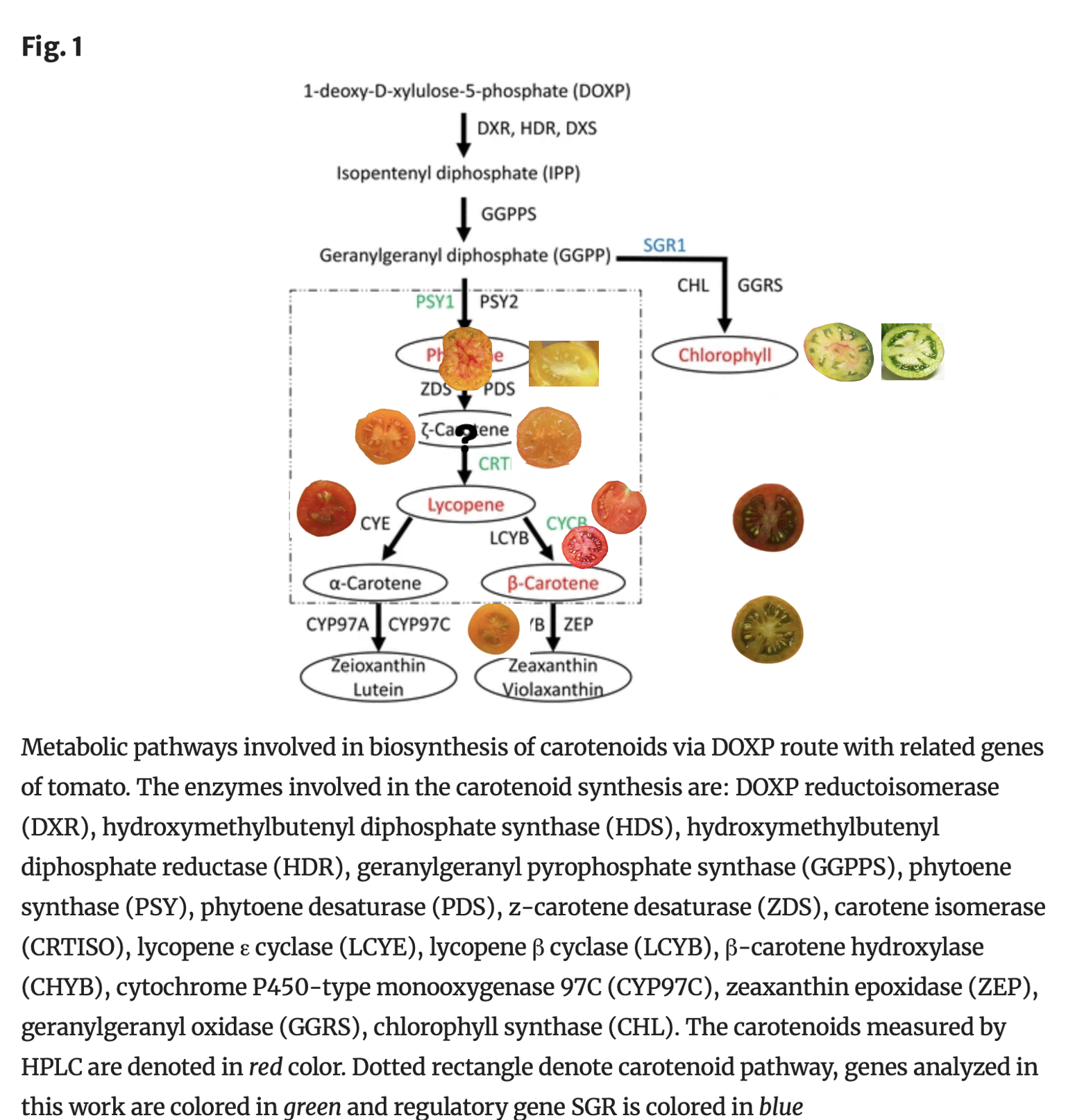
The next layer is when the (gf)greenflesh gene is present. This combines with the carotenoid genes to make different colors.
On red background, brown tomato
•On pink background (red with clear epidermis (y gene, next topic), purple tomato
On orange background, ochre (brownish green color)
On yellow background, yellow green
•On white/ivory background (yellow with clear epidermis (y gene, next topic), clear green
On bicolor background, red in center mostly green flesh
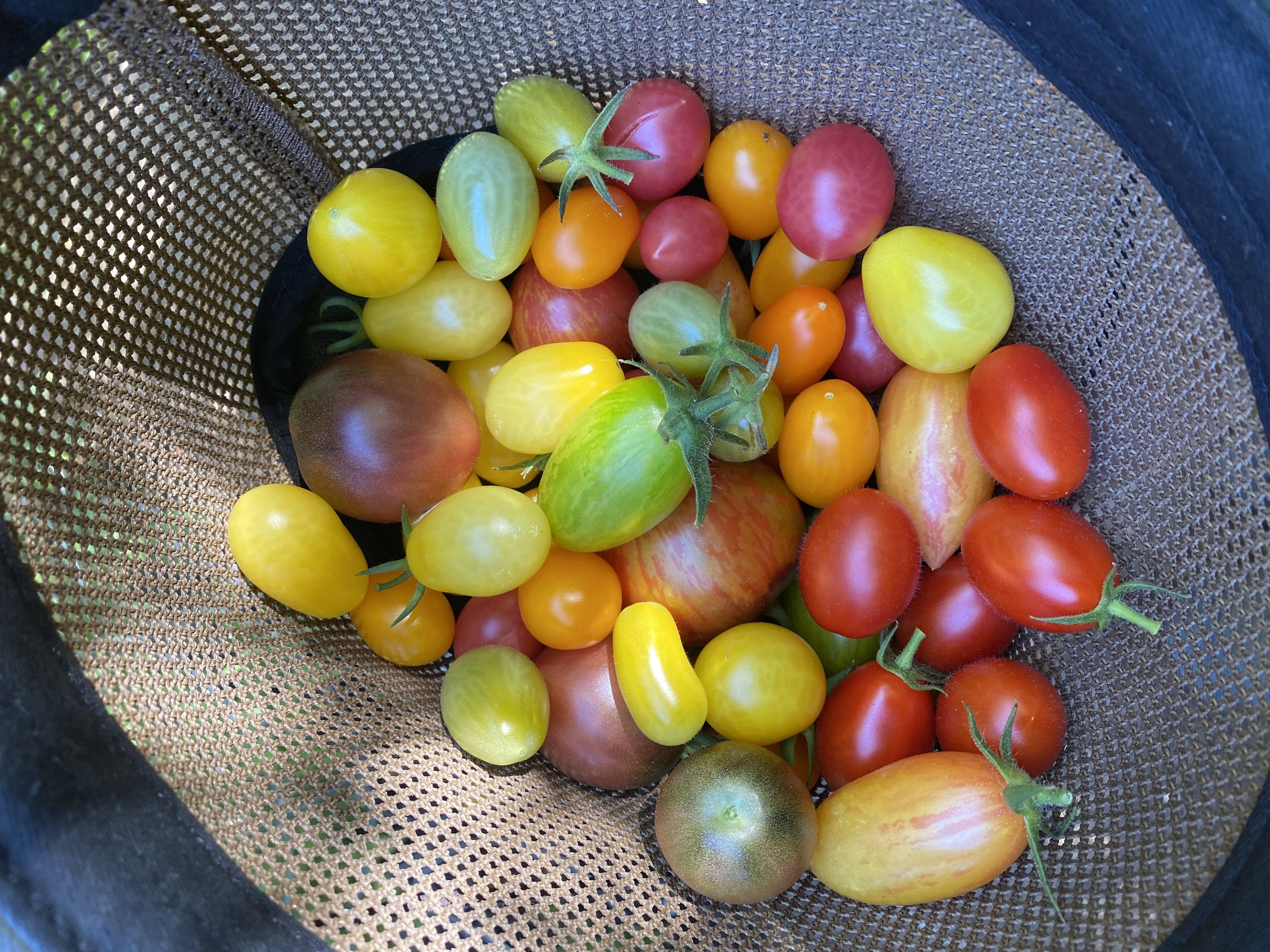
At the Y locus, there can be the wild-type (Y) yellow epidermis or the mutant (y) clear epidermis.
This accounts for the difference between:
Red(yellow epidermis), brown(yellow epidermis), green(yellow epidermis), yellow(yellow epidermis), orange(yellow epidermis) and
pink(clear epidermis), purple(clear epidermis), clear green(clear epidermis), white/ivory(clear epidermis), light orange(clear epidermis)
Two more layers that can occur in combination with any other layers are the Aft (anthocyanin fruit) gene, an introgression from the wild species Solanum chilense, and the greenstripe (gs) gene, which can be other colors besides just green, what causes the stripes are methylation of pigment molecules in the non-stripe areas.