Tangerine Dawn
When tomatoes were first introduced to the new world, because they were called “pomo d’oro” or “golden apples,” there is some suggestion that they may have been a specific type of color called “tangerine” orange that have high levels of prolycopene (a.k.a. tetra-cis-lycopene) instead of regular red lycopene or yellow lutein or orange beta-carotene (the other main source of orange in tomatoes). These tangerine orange tomatoes have two copies of the recessive t gene which causes the enzyme carotenoid isomerase (CRTISO) to not work, and so the prolycopene accumulates instead of being made into lycopene.
According to research by the Heritage Food Crops Research Trust in New Zealand, the prolycopene tomatoes are healthier than regular red lycopene tomatoes, because the prolycopene stays in the blood plasma for much longer periods of time than lycopene, and is able therefore to provide more beneficial effects.
Although they may have been prevalent in the first tomatoes encountered by Europeans, and were perhaps well-known to the most intensive domesticators of tomatoes, the Aztecs, who called them tomatl, these tangerine orange tomatoes were largely lost to the whims of selection, with red tomatoes being favored. That is until a mutant plant emerged with the t gene, a variety called ‘Tangerine’ (where the gene and color got its name) which was released as a variety by Burpee in 1937.
There may have been heirlooms lost to time that independently had the same mutation; one that HAS been passed down is Kellogg’s Breakfast. This variety was a local heirloom in West Virginia, a railroad worker there gave the original seeds to Darrell Kellogg, a railroad supervisor living in Michigan. He grew and stabilized the variety, and then shared the seeds and it was introduced to the public via the Seed Savers Exchange in 1993.
In 2002, Kellogg’s Breakfast potato-leaf aka KBX, arose as a mutation in the garden of Martha Hufford in Virginia. It was thought to be a mutation and not a cross because the fruit were identical in appearance and only the leaves were changed. What the potato-leaves conferred was an ability to resist disease, grow more vigorously, and provide more surface area compared to fruit volume (termed by scientists “source to sink” metabolics) that results in more flavor and sugars in the fruit. This is one of the most productive and best tasting tangerine orange tomatoes available.
But to my particular sensibility, it’s not all that interesting to look at, and it’s not all that round— would it be possible to make a very round potato-leaf tangerine orange slicer with anthocyanin stripes?
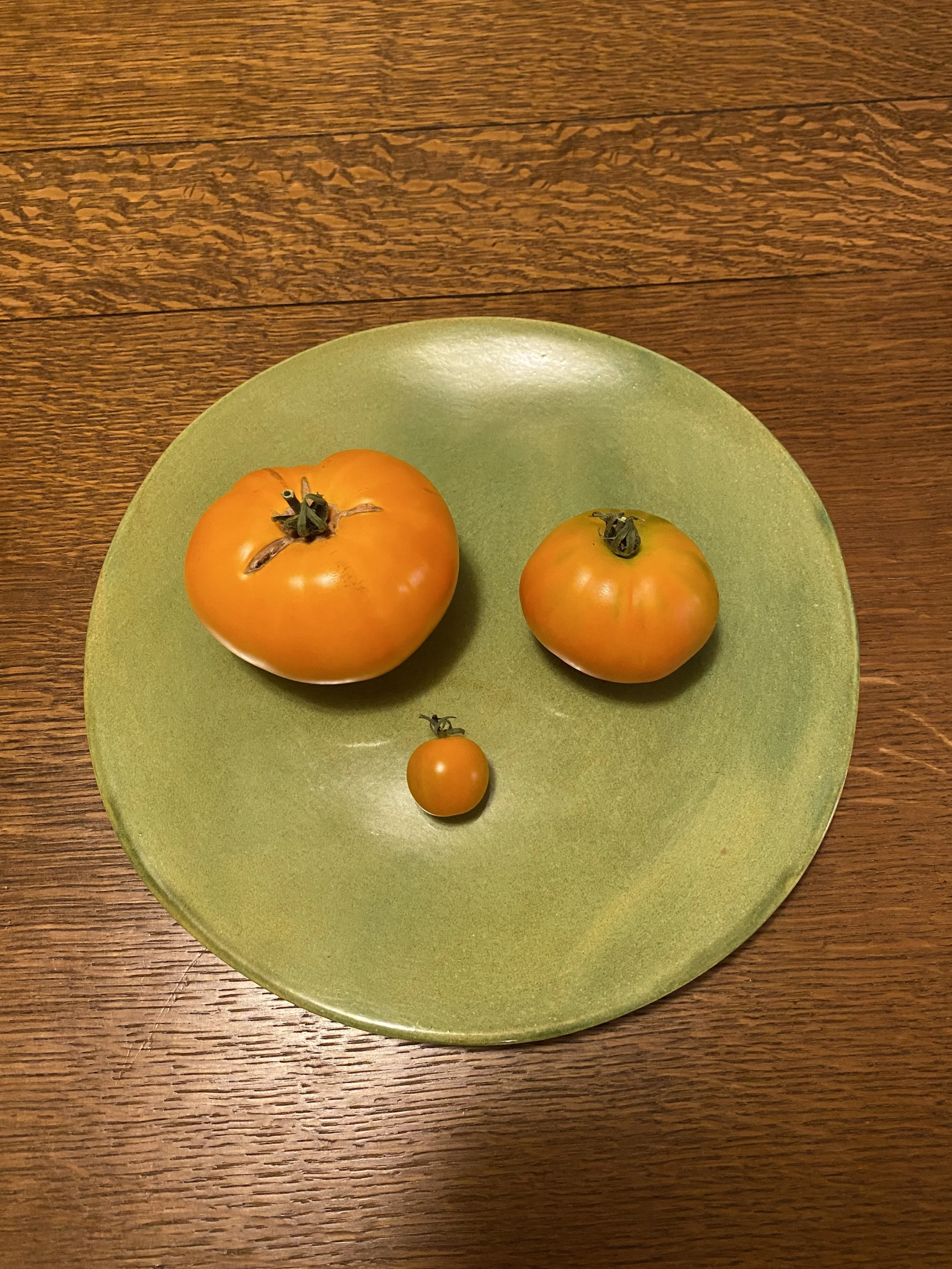
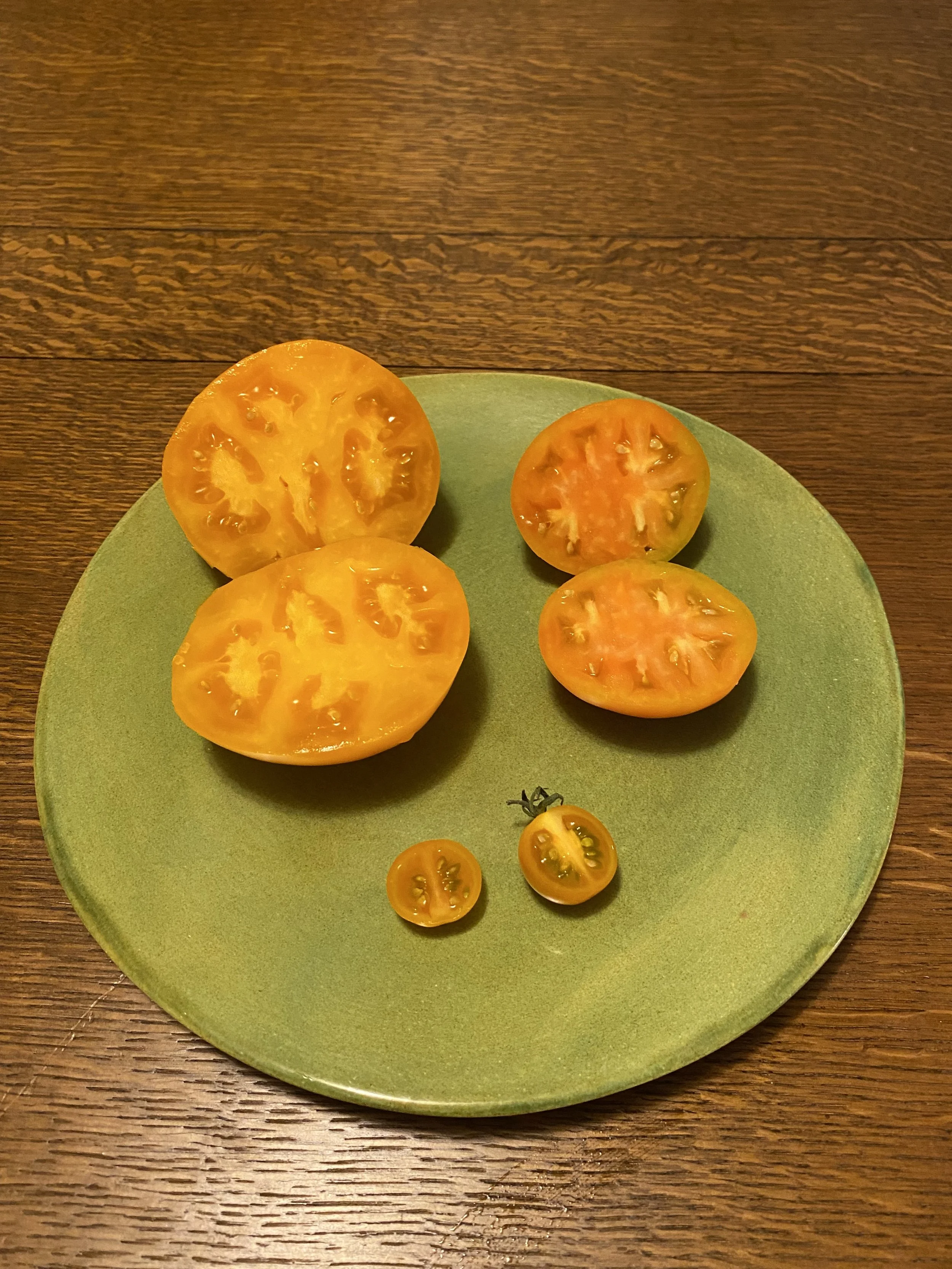
Clockwise from top left: Moonglow x KBX cross, Apricot Zebra x KBX cross, Tangerine Grape x Apricot Zebra cross.
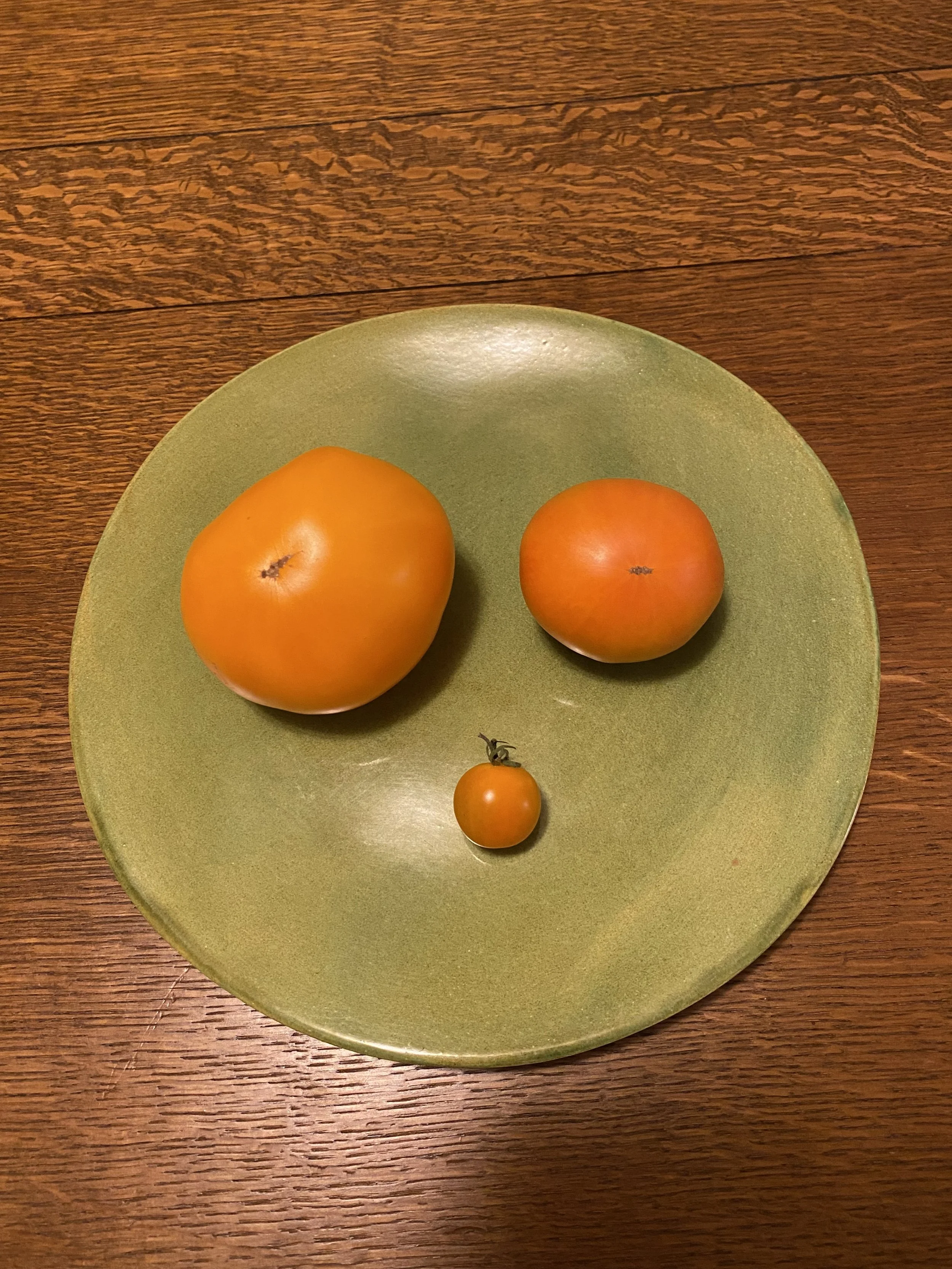
Moonglow x KBX is double recessive for the tangerine orange gene, and will make a good base for finding an especially round potato-leaf tangerine orange tomato, an important step in the project.
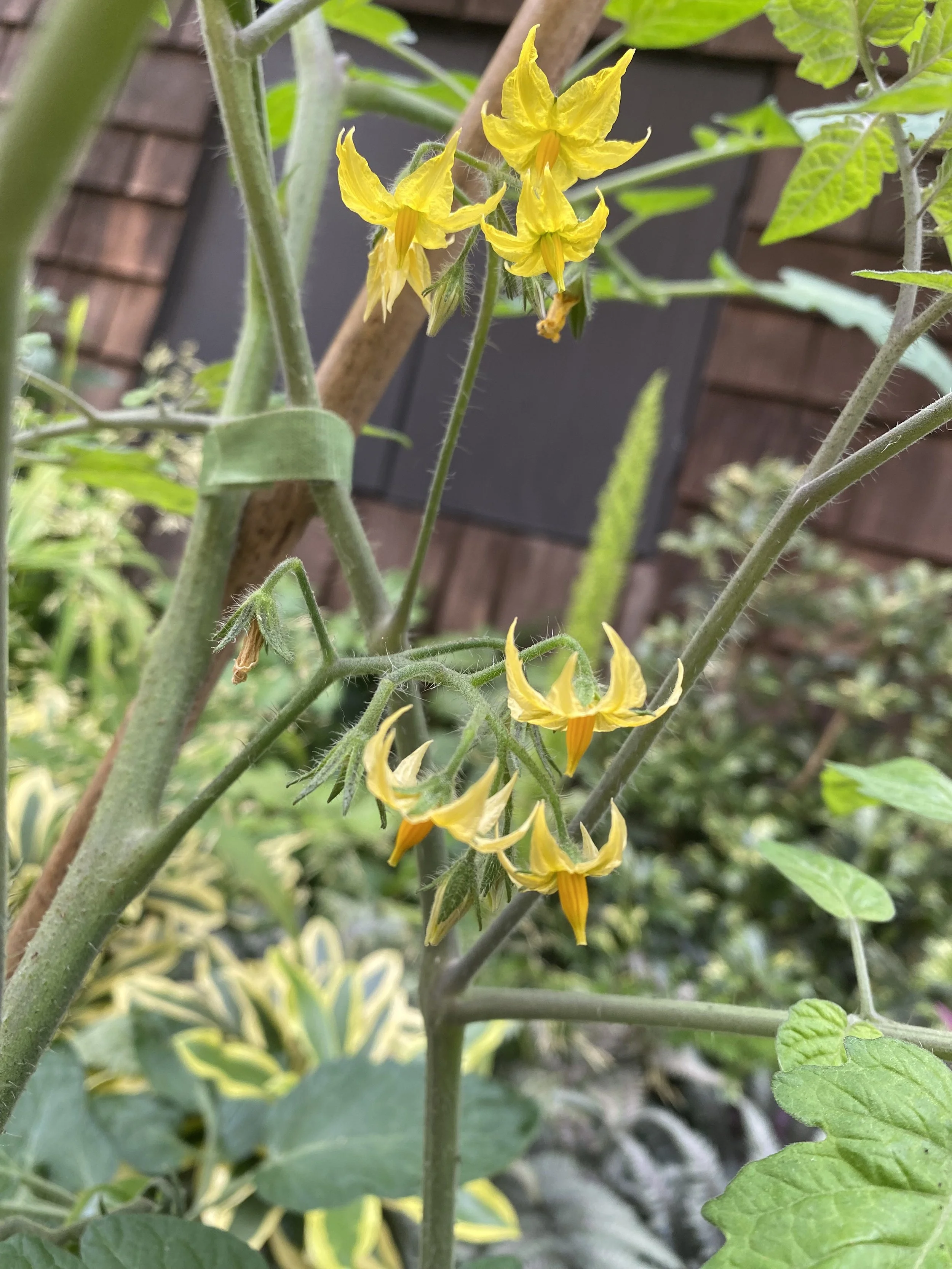
Apricot Zebra can be confirmed as Beta orange and not tangerine orange. Two pieces of evidence: the flowers on the Apricot Zebra cross (above in pic) are yellow and do not have the tawny orange hue that is characteristic for tangerine orange (double recessive t gene), such as in the flowers of the Tangerine Grape x KBX cross (below in pic).
Secondly, the interior displays a redness in the center that is typical of Beta orange, while tangerine orange is a uniform color. I may use the Apricot Zebra crosses for other projects, as they did taste good, just not what I imagine for this project.