Dry and Cold
Saving and Storing Seeds
Saving seeds can help select for vigor and flavor within the local environment; if you save and keep seeds year after year, this is like the process of heirloom seed saving. It’s wonderful to grow your favorites year after year, and to share them with friends and family and even pass them down generation after generation.
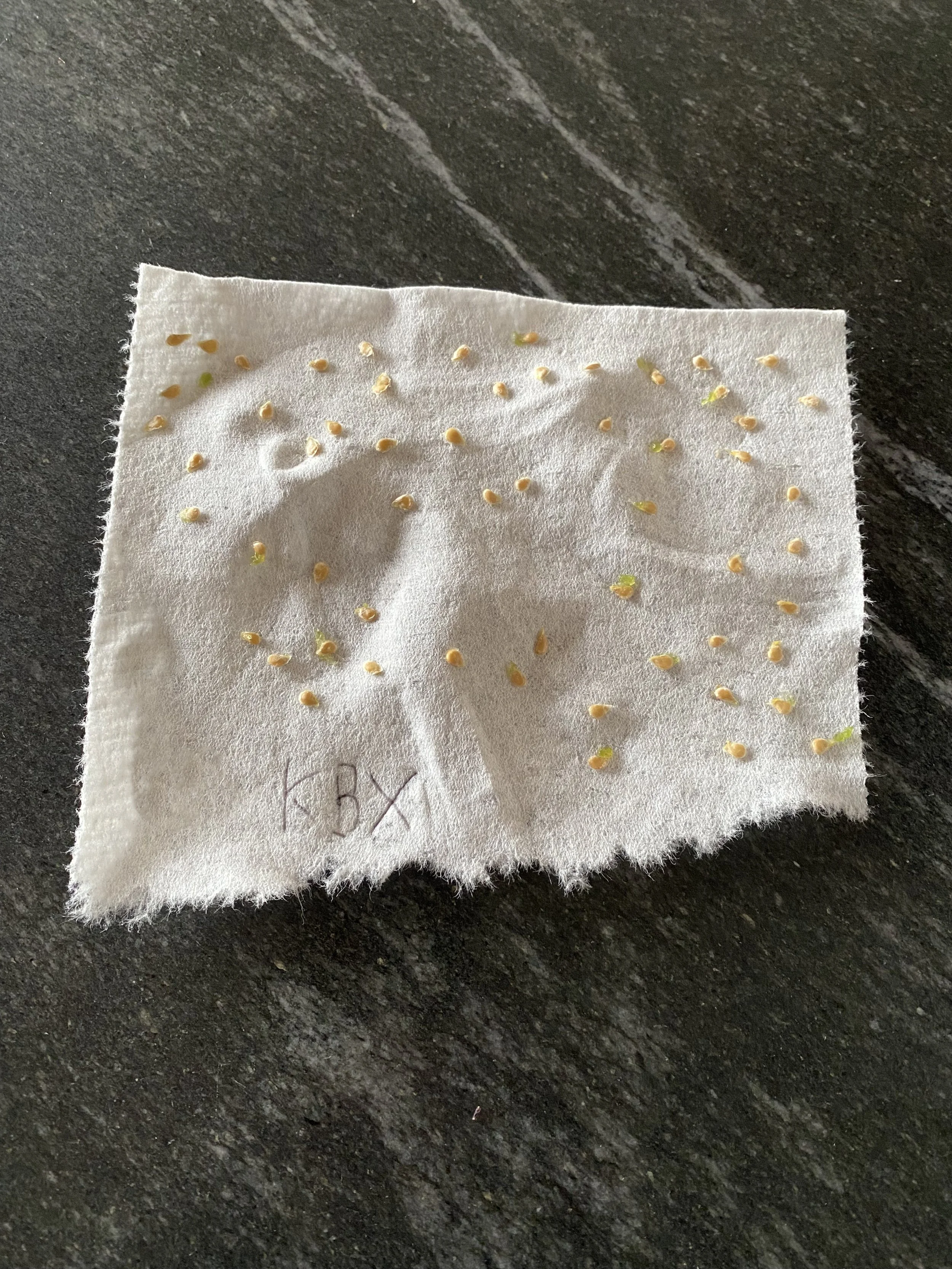
Saving seeds is the first step. You can save seeds from existing varieties, year after year selecting the ones that grow most vigorously and taste best to you. That’s very fulfilling in itself. If you’re saving a few, all you need is a paper towel, a pen and a piece of tape. If saving more, then cups or buckets, and a strainer, and paper plates (for drying); ferment 3-5 days and pour off scum and add water and swirl pouring off bad floating seeds and rinse until clean and strain, spread thin on paper plates and dry for a few weeks. Hybrid varieties (F1) seeds won’t be “true” (the same as the parent) and sometimes have unforeseen traits like male-sterile (in which you would need to hand-pollinate each and every flower to get fruit) and so can be frustrating to get involved with, but also an experiment. Some varieties are patented and the seeds are not legal to save.
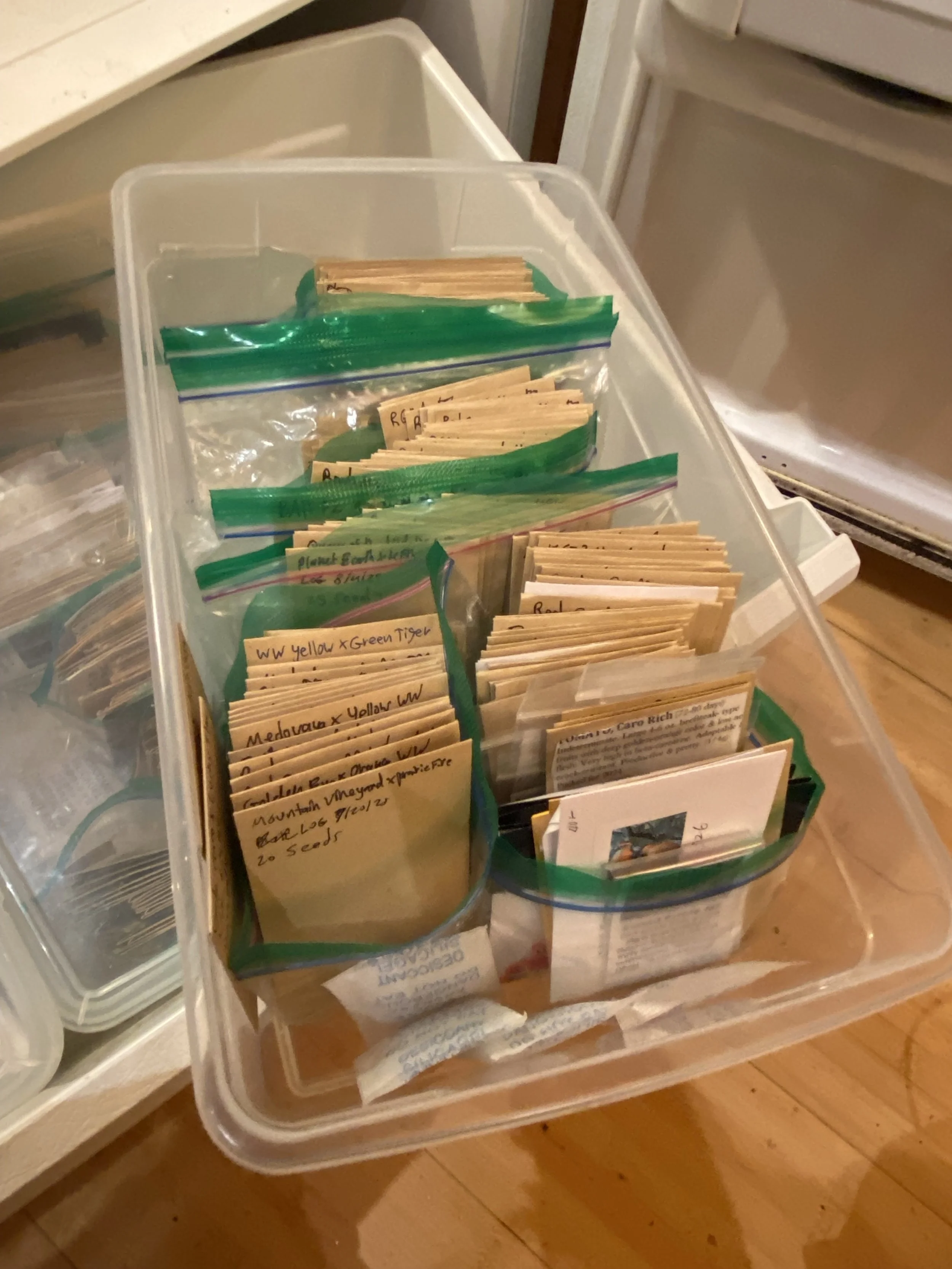
It’s not necessary, but if there’s one thing that makes a big difference, it’s saving your seeds in the fridge. My germination rates are really excellent. I have ten year old seed that are almost all germinating. For fresh seed, make sure they air dry for a few days, before putting them in a paper envelope (breathable) and store in gallon bag or Tupperware with desiccant packs. They like to be cold and DRY. This is worth doing if you are serious about any kind of seed saving.
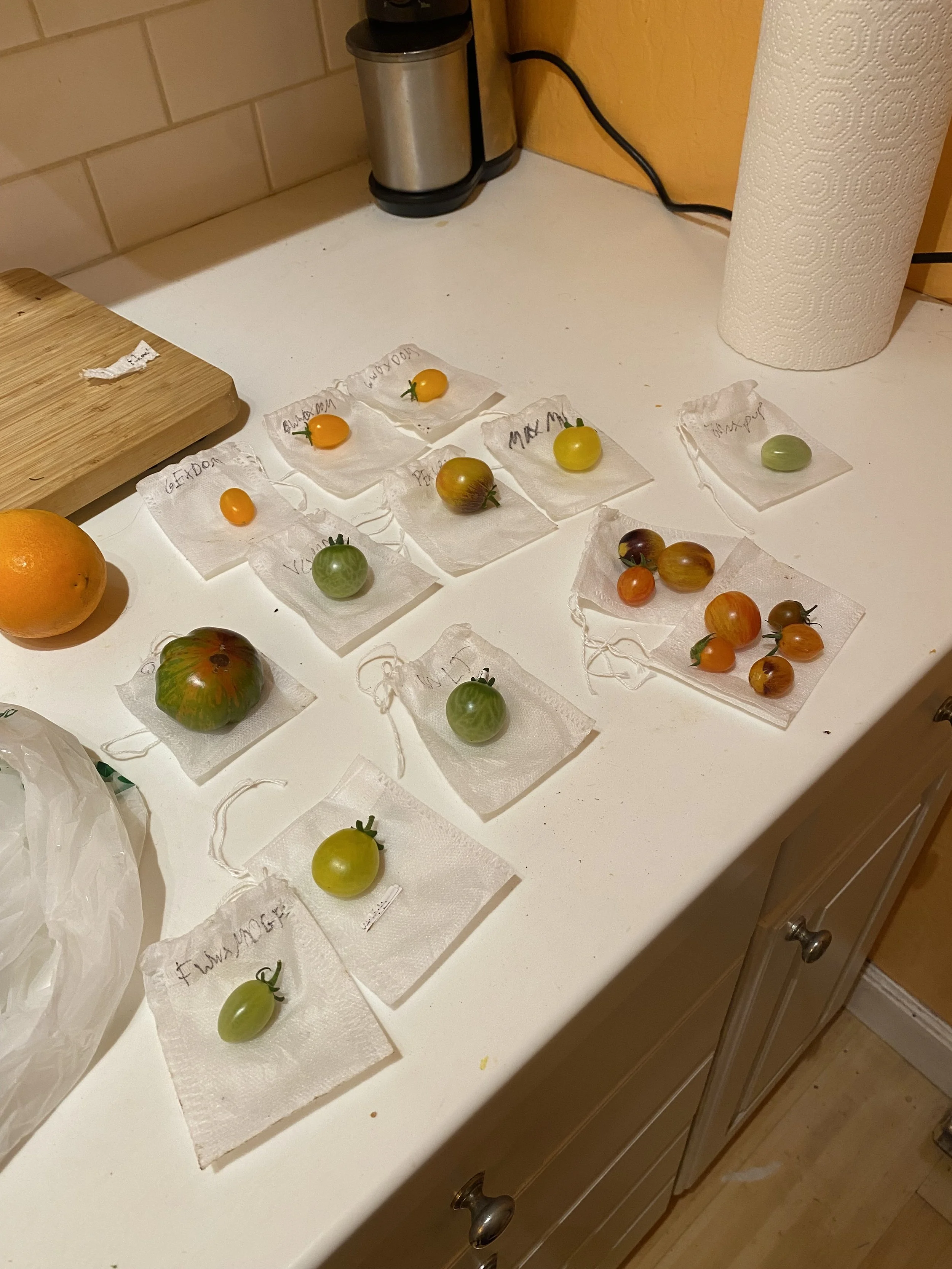
Putting tea bags around fruit as they develop helps keep track of them and limits loss.
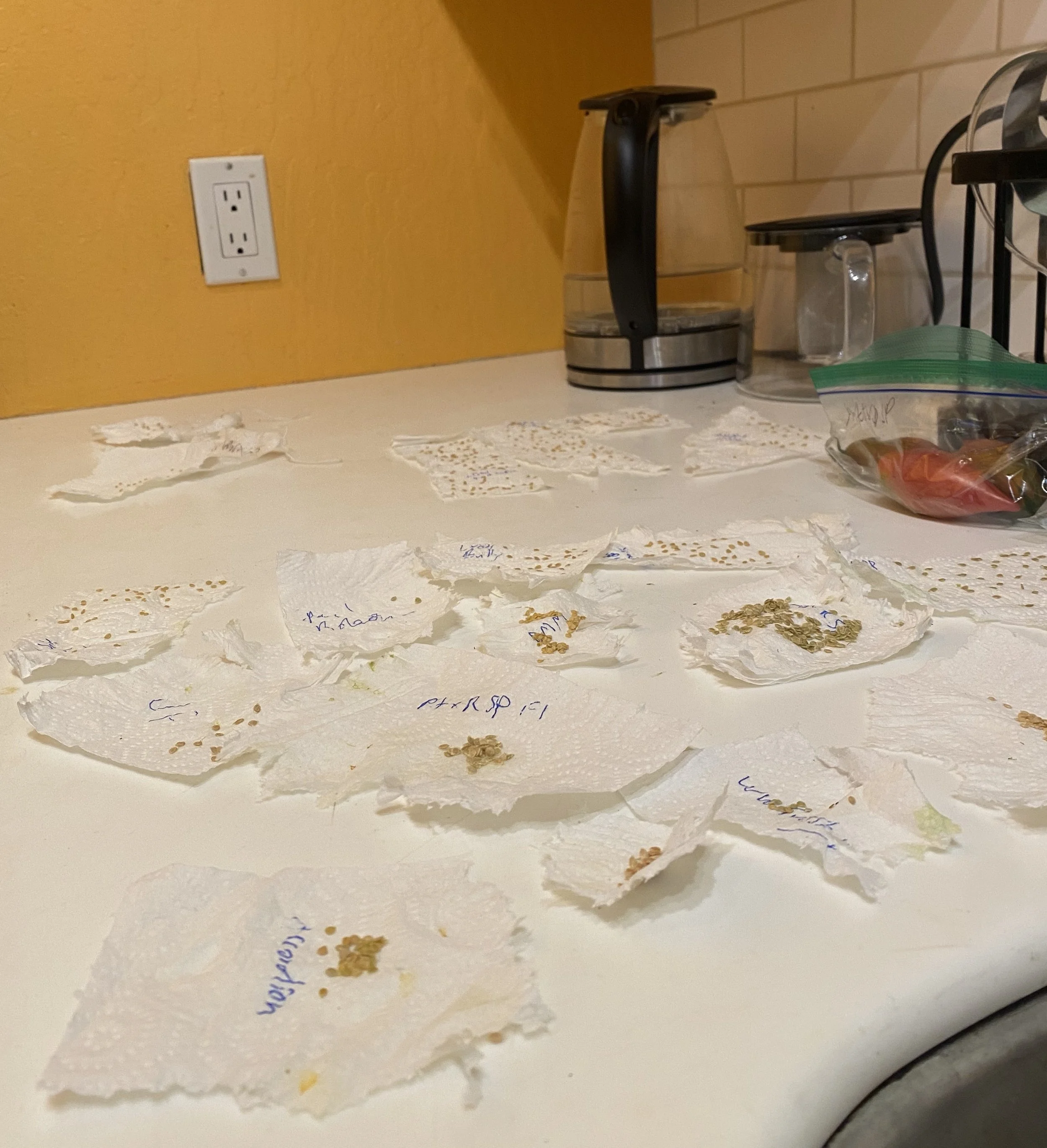
After seeds are cleaned of their gel by pulling them across paper towel, I let them dry for a week, then put them in the labelled envelopes and enter the info in a spreadsheet. Organization is important. I use a spreadsheet to count number of seeds, origin, date, and notes on genetics, flavor, etc.