Fruit Color Dynamics: Layers and Flows
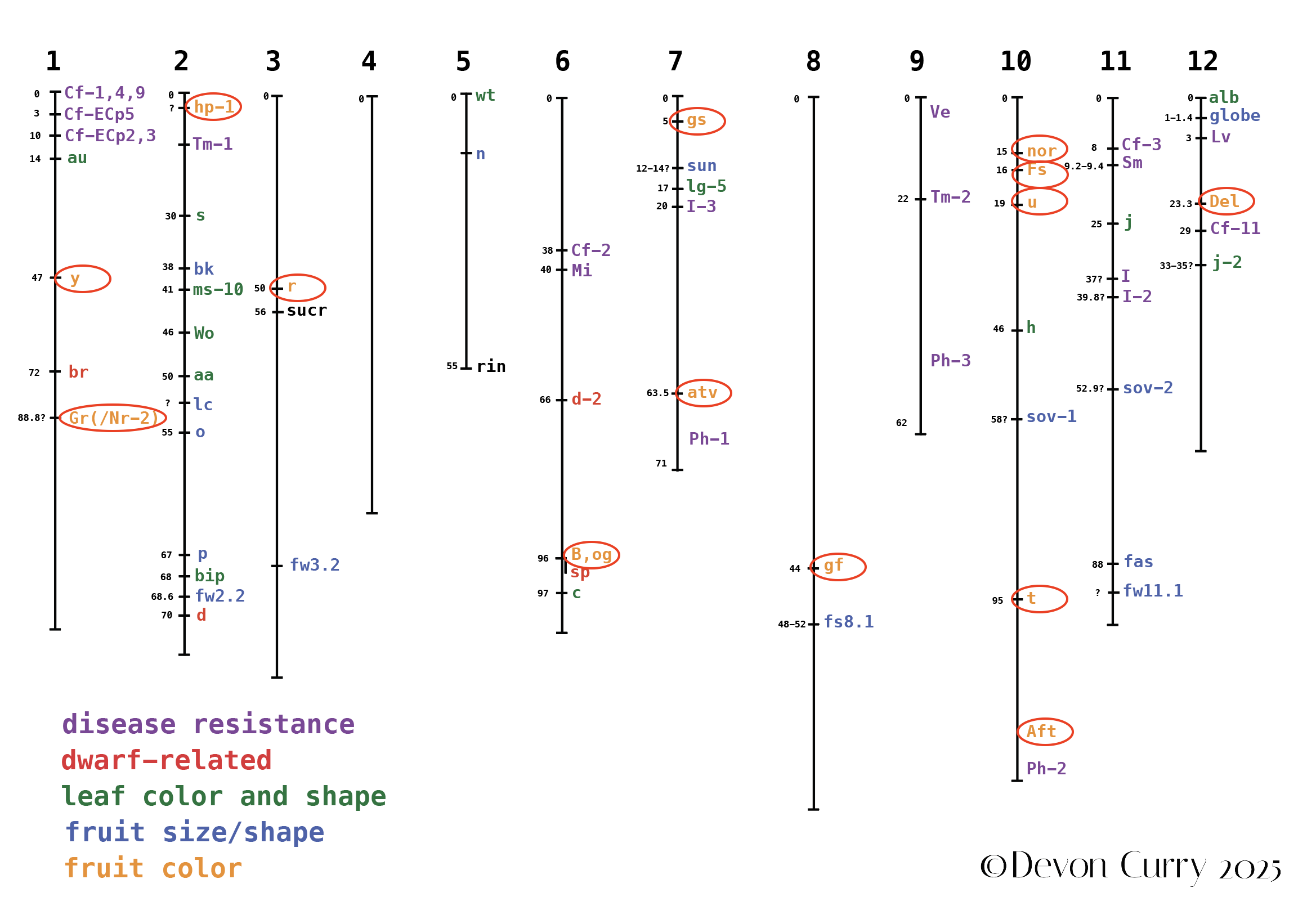
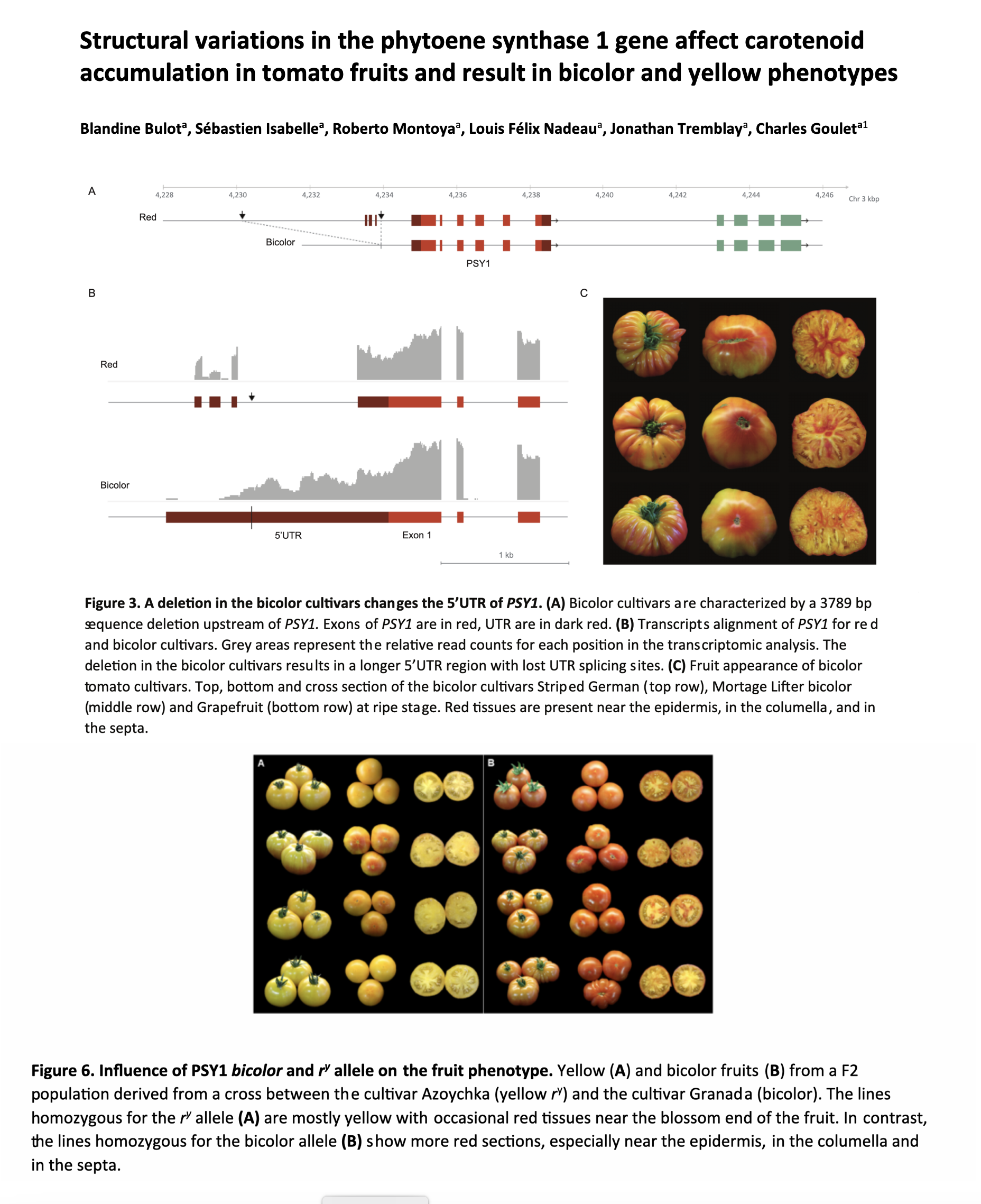
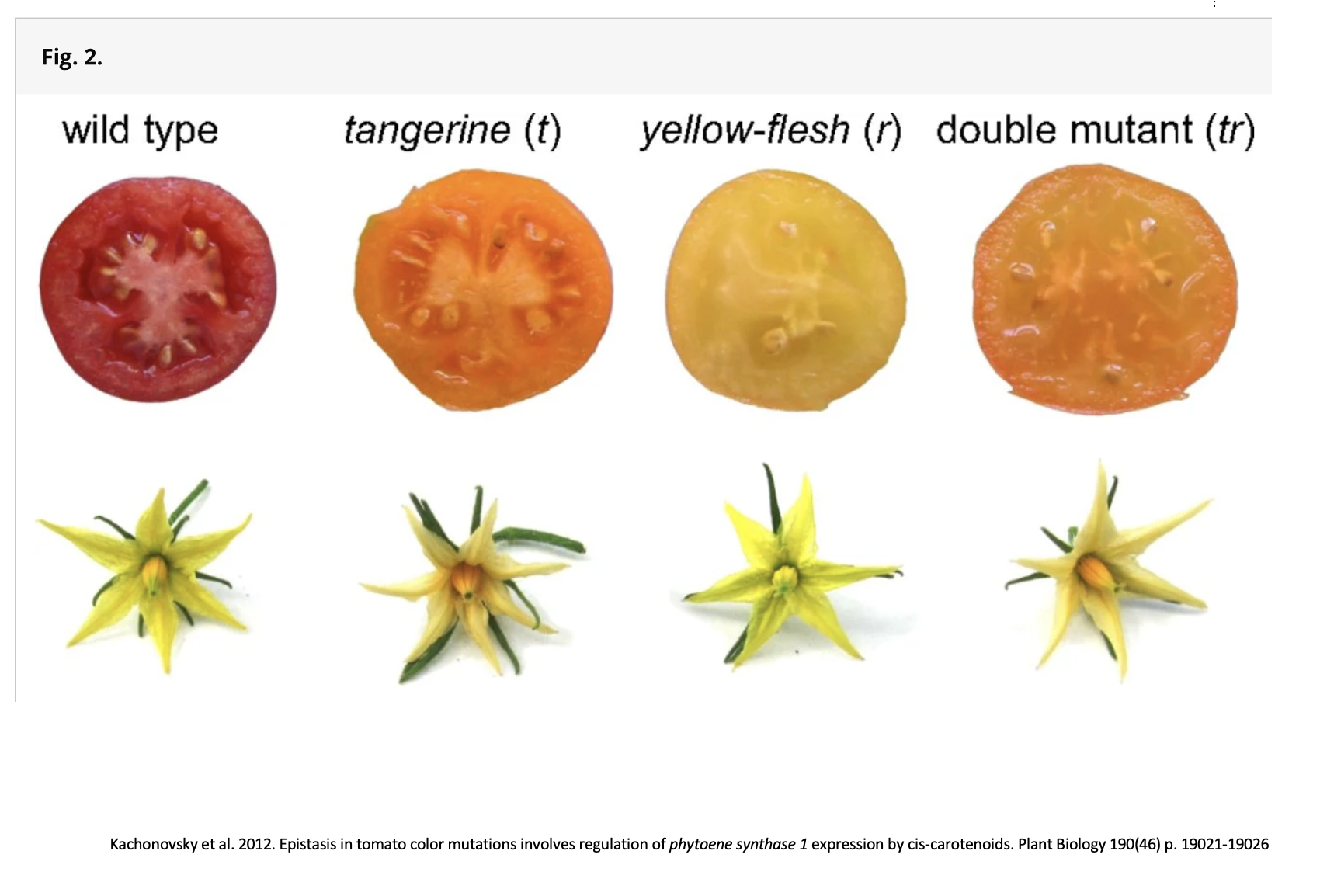
Color in tomatoes is like a layering, starting from the inside out and from the top of the carotenoid creation process to the bottom: At the R locus, you can have the wild-type (R) red allele, the mutant (r) yellow allele or a mutant (ry or bicolor) bicolor allele. What’s happening is that that a enzyme called phytoene synthase 1 (PSY1) is partially (bicolor) or totally (yellow-flesh) dysfunctional. PSY1 is a precursor to all carotenoid development, so a tomato with two copies of the (r) allele that creates no PSY1 has something like 80 percent lower carotenoids than a tomato with the (R) allele. In the bicolor allele, there is a very ineffective copy of the gene; it has a huge insertion it it’s promoter, so it takes longer to read the gene, and makes only small amounts of what becomes lycopene. That lycopene then naturally goes to certain places in the fruit first as it develops, and thus the pattern of red streaks.
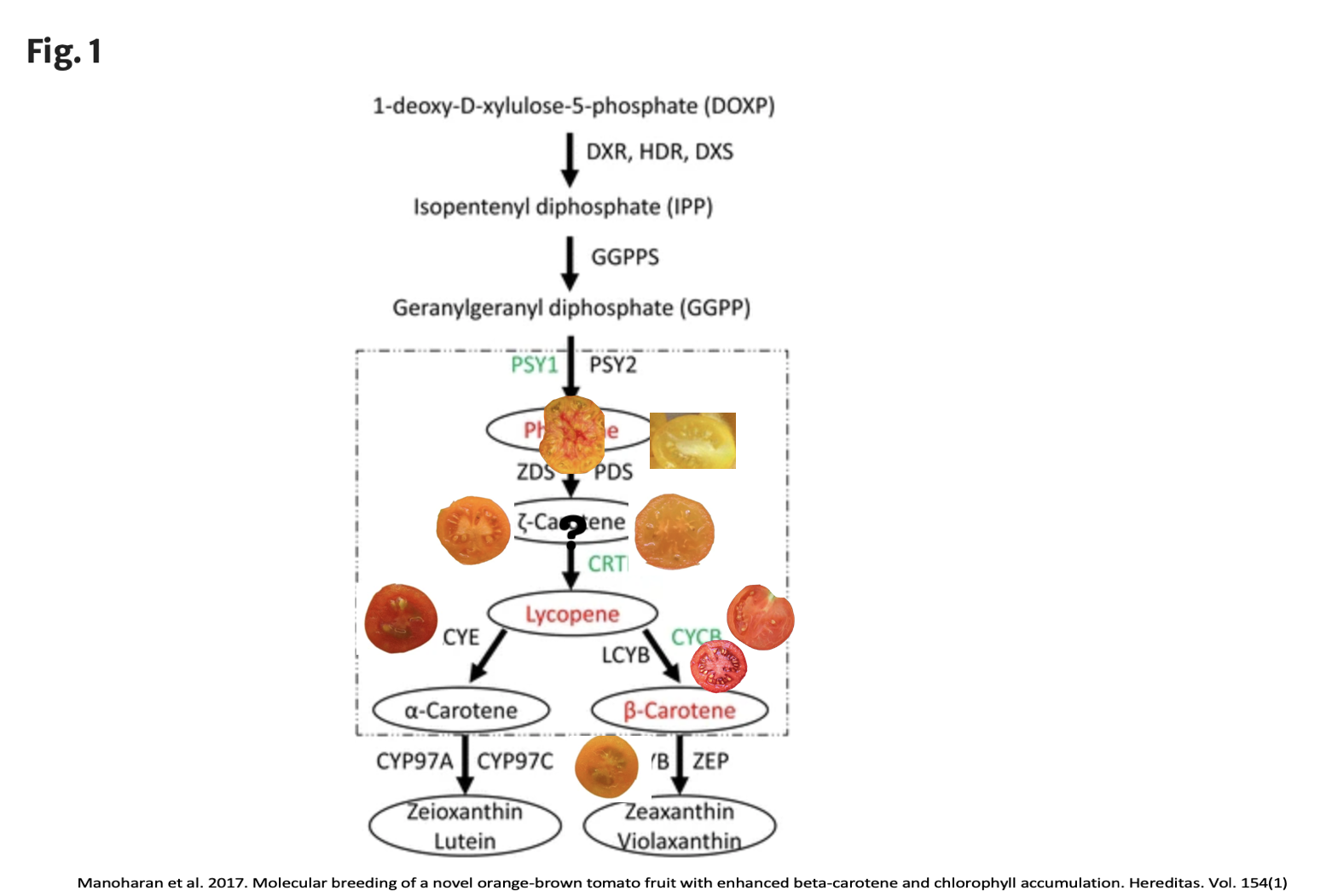
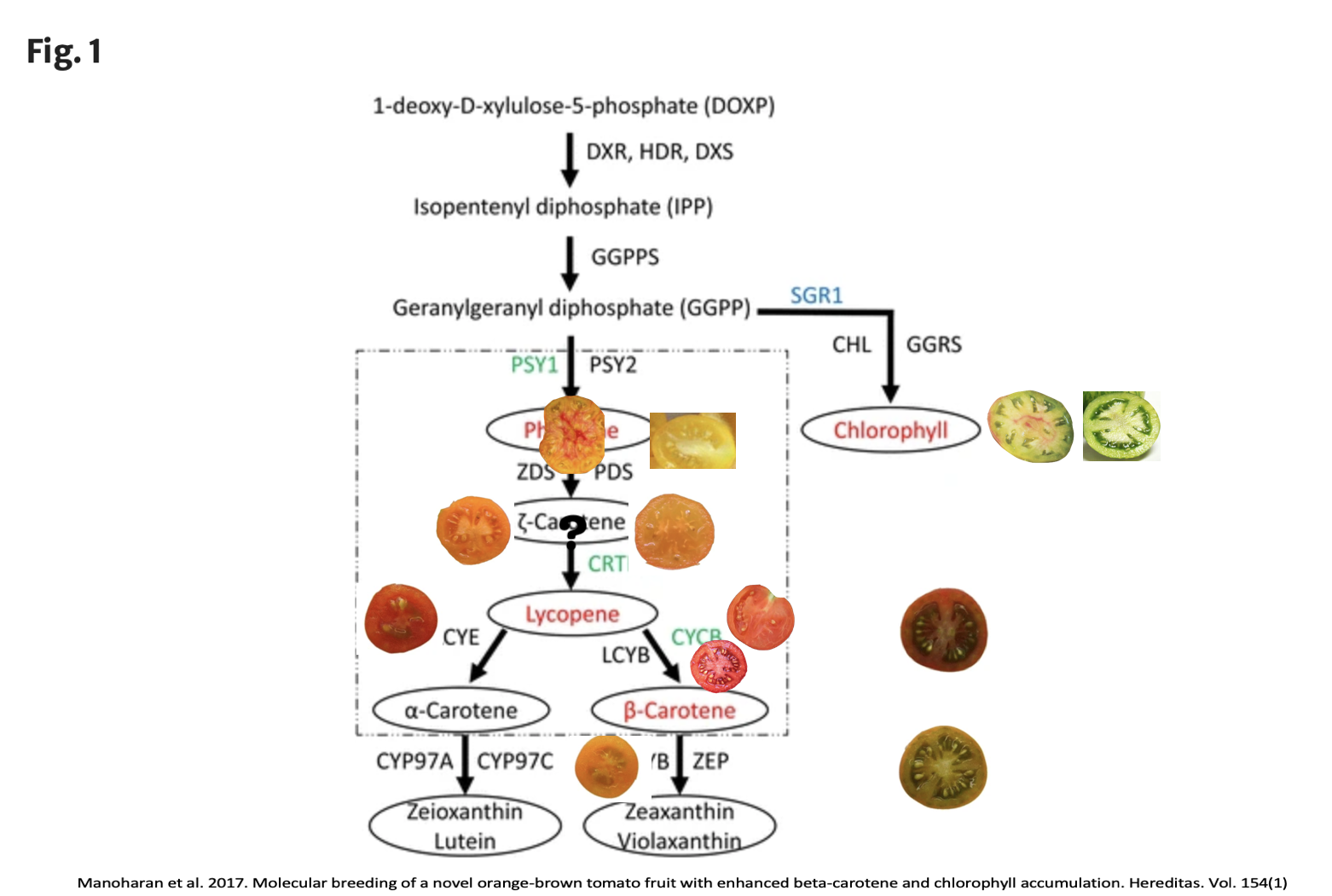
This image shows how bicolor, yellow, tangerine orange, red, beta orange and delta orange are related. The next step in the carotenoid pathway is called carotenoid isomerase (CRTISO) created by the T gene. This gene allows orange-colored prolycopene (aka tetra-cis-lycopene) to be converted into red-colored lycopene. If the gene is dysfunctional as in the mutant (t) allele, then the tomato accumulates prolycopene, and no lycopene is made; it is orange, “tangerine orange” after a representative tomato which has that gene. Typically tastes fruitier than beta orange and is solid orange. If there is at least one copy of the T allele to create CRTISO, then red lycopene is made. This is the typical red tomato. But from there, if there is a copy of the Beta gene as well, the lycopene that is created is then converted into orange beta-carotene, this is a “beta orange,” typically tastes more carroty, and often has reddish center. Or if there are two copies of the recessive B og allele (null-beta “old-gold”) then no beta-carotene at all is made, which results in more lycopene remaining. These are known as old-gold or “crimson” tomatoes, which are a redder color of red, and have red locules (gel surrounding seed is red instead of green). (They are called old-gold because of their characteristic flower color pattern). Or if the Del gene is present, then the orange-colored Delta-carotene is created, converted from lycopene. This is a more unusual gene.
With the addition of the (gf) greenflesh gene other colorations are possible. It combines with the products of the carotenoid genes to make different colors. With an otherwise red tomato, the greenflesh gene would make it a brown tomato •For a pink tomato (red with clear epidermis (y gene, next topic), the greenflesh gene would make it a purple tomato For orange , it would become ochre (brownish green color) For yellow, it would become yellow green, “green” •For white/ivory (yellow with clear epidermis (y gene, next topic), it would become “clear green” With a bicolor tomato that’s yellow with red in the center, it would become green with red in the center
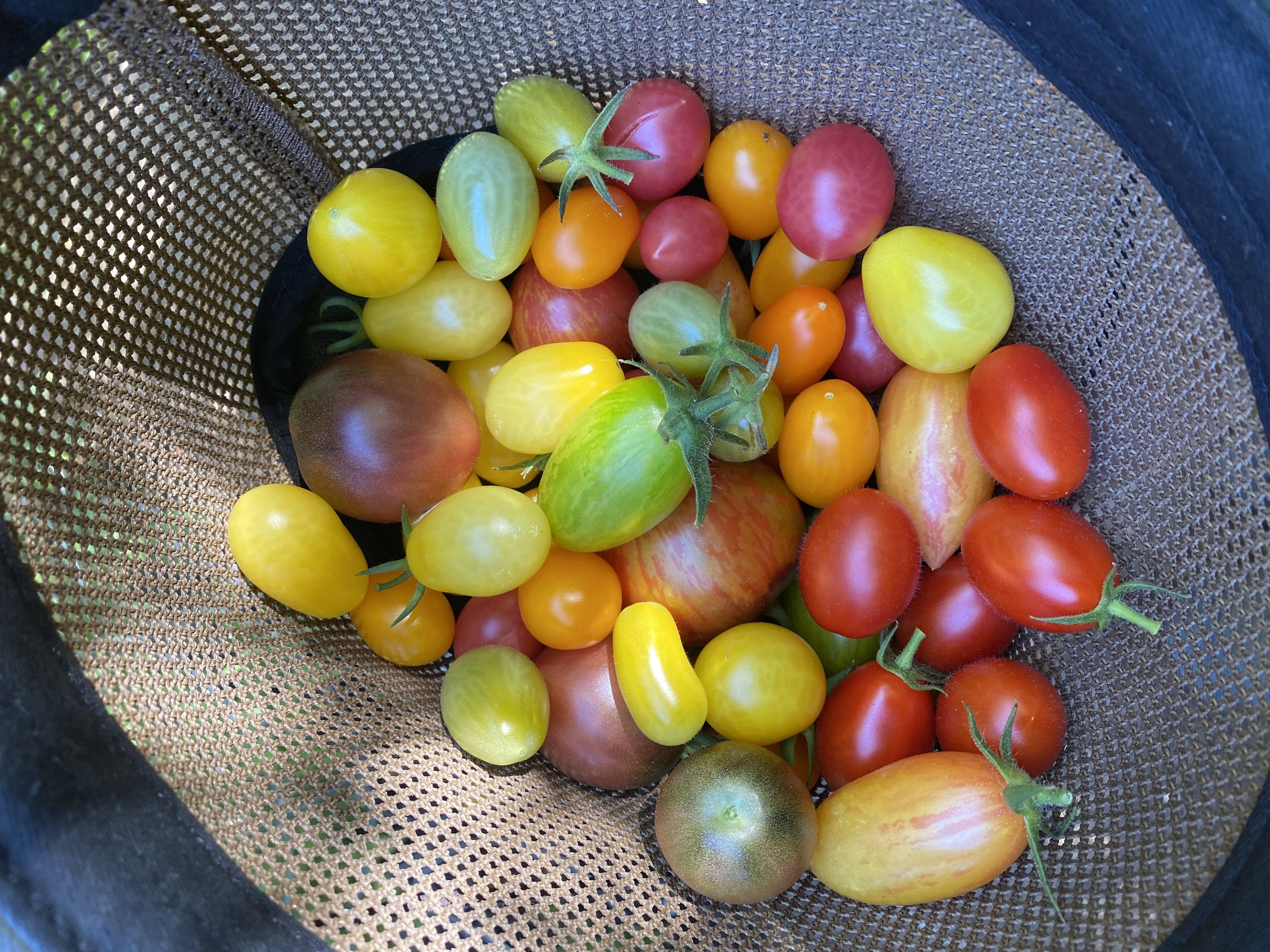
The next layer to understanding tomato color is at the Y locus: There can be the wild-type (Y) yellow epidermis (aka skin) or the mutant (y) clear epidermis. This accounts for the difference between: Red(yellow skin), brown(yellow skin), green(yellow skin), yellow(yellow skin), orange(yellow skin) and pink(clear skin), purple(clear skin), clear green(clear skin), white/ivory(clear skin), light orange(clear skin) Two more layers that can occur in combination with any other combination are the Aft (anthocyanin fruit) gene, an introgression from the wild species Solanum chilense that causes the purplish or “blue” color on the skin, and the greenstripe (gs) gene, which can be other colors besides just green. And there’s also a Fruitstripe (Fs) allele that provides a different pattern of stripes, radial ones that meet at the bottom.
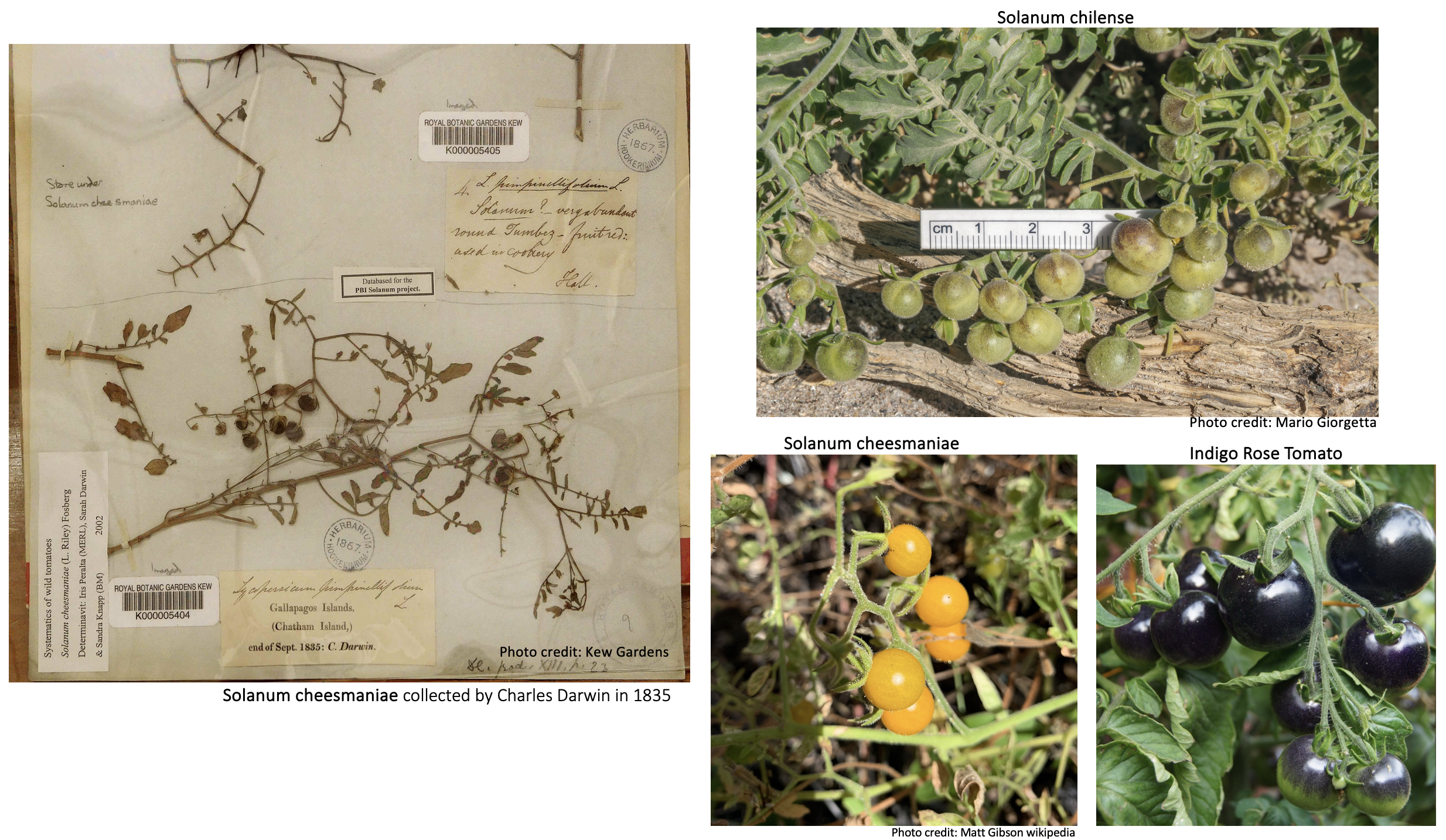
Jim Myers of Oregon State University created the Indigo Rose tomato which has the Aft (Anthocyanin fruit) gene from Solanum chilense as well as the atv (atroviolaceae) gene from Solanum cheesemaniae, which upregulates anthocyanin expression in the whole plant, synergizing to have especially strong anthocyanin in the fruit epidermis. There is a variety of tomato called Purple Smudge that has a gene from Solanum peruvianum that is similar to Aft and causes purple traces on the shoulders in sunlight; chromosome location unknown.