Dance Steps (Gene Map):
I arrived at the concept that tomatoes (their chromosomes) are “dancing” and swapping “skills” (genes) to explain their behavior.
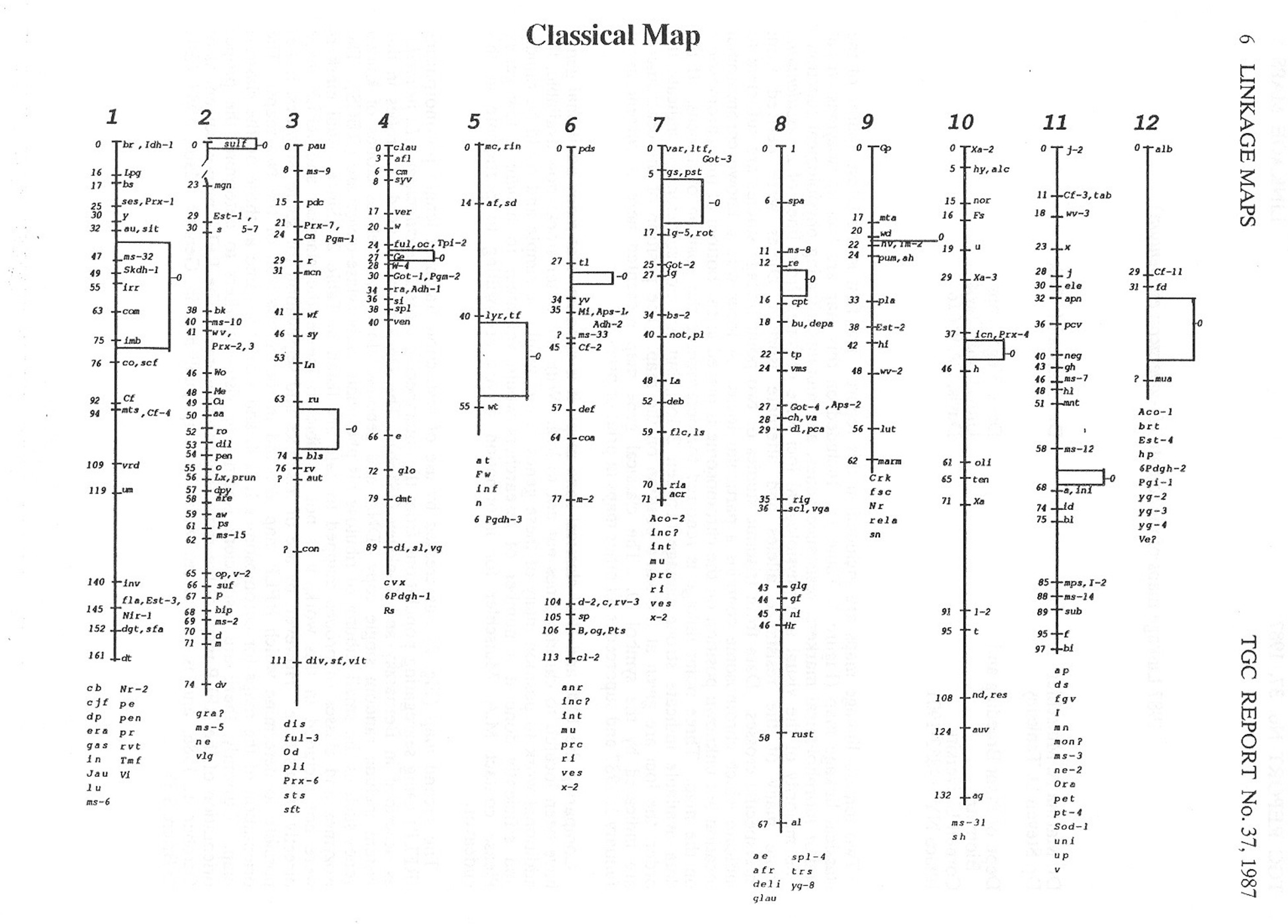
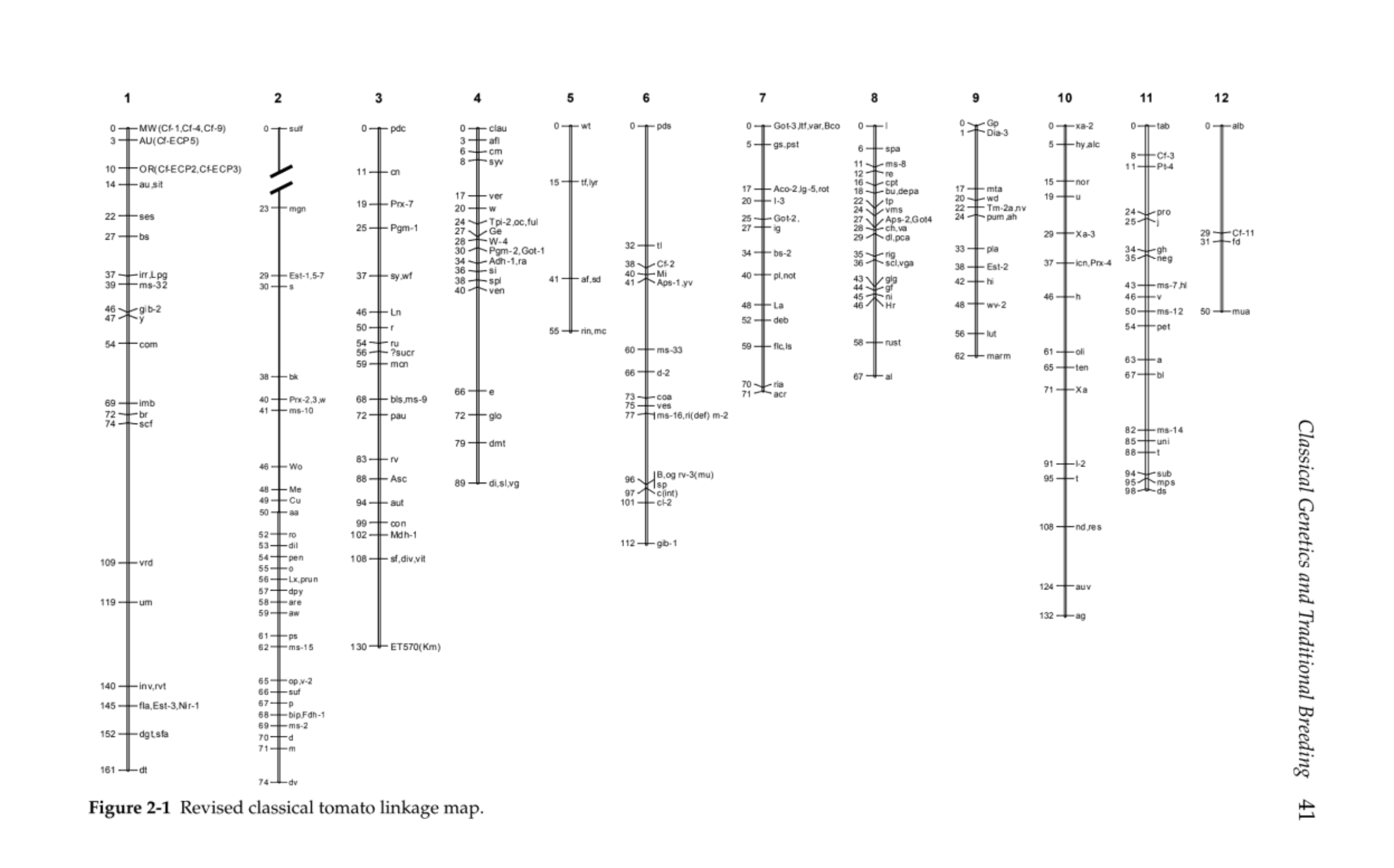
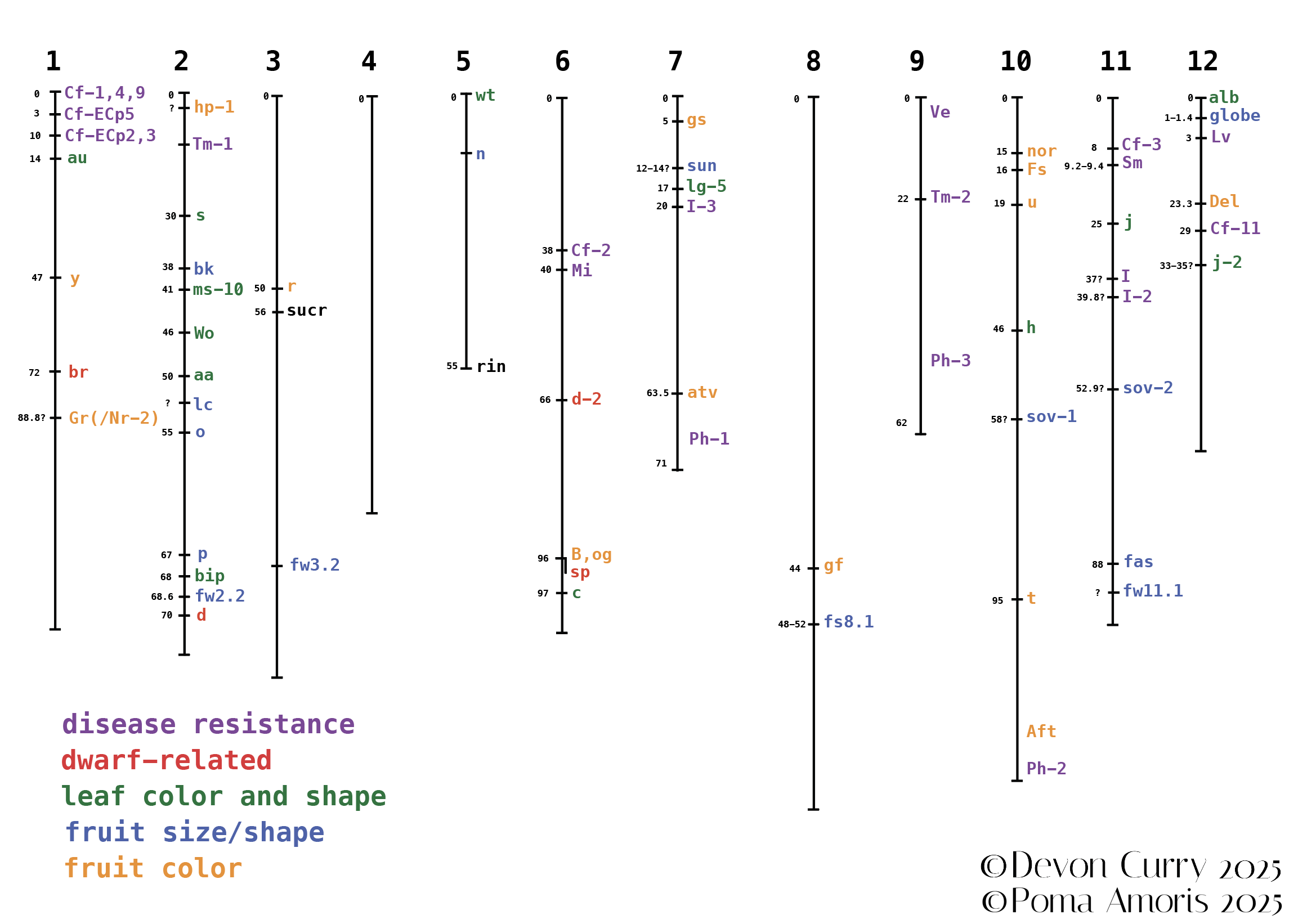
This is a map of where many genes are located on the tomato chromosome, the locus (physical location; “skill slot” in our analogy) of each allele (version of a gene; “skill” in our analogy).
I use this map to keep track of the genes in various projects and update it as I learn more.
For each difference between two tomatoes in skills, there is a step that must be made, and it can go one way or another. To pay attention to which step is taken (to the extent that we can) is to watch the dance unfold, and to watch a new tomato variety be born.
The more differences between the tomatoes, the more possible variants can emerge, the more chaotic the dance can be.
Choosing two similar tomatoes that have only a few genes different means that the dance will be very measured, and the pool of possibilities will be smaller. I prefer to take it one step at a time. Sometimes it’s reasonable to do 2 steps at a time (two differences between tomatoes); and look through about 20 tomatoes to find the ¼ x ¼ =1/16 chance of finding them (for recessive genes).
Trying to combine more steps than that is possible with another kind of technique; screening at the seedling stage (e.g. for potato leaf, or tangerine orange, or anthocyanin can reduce the number of variables and the number of seedlings required to find what you are looking for.
A larger operation might be able to grow out hundreds or thousands of plants and look for varieties, I am working in the range of about 20 to 80 seedlings at a time.